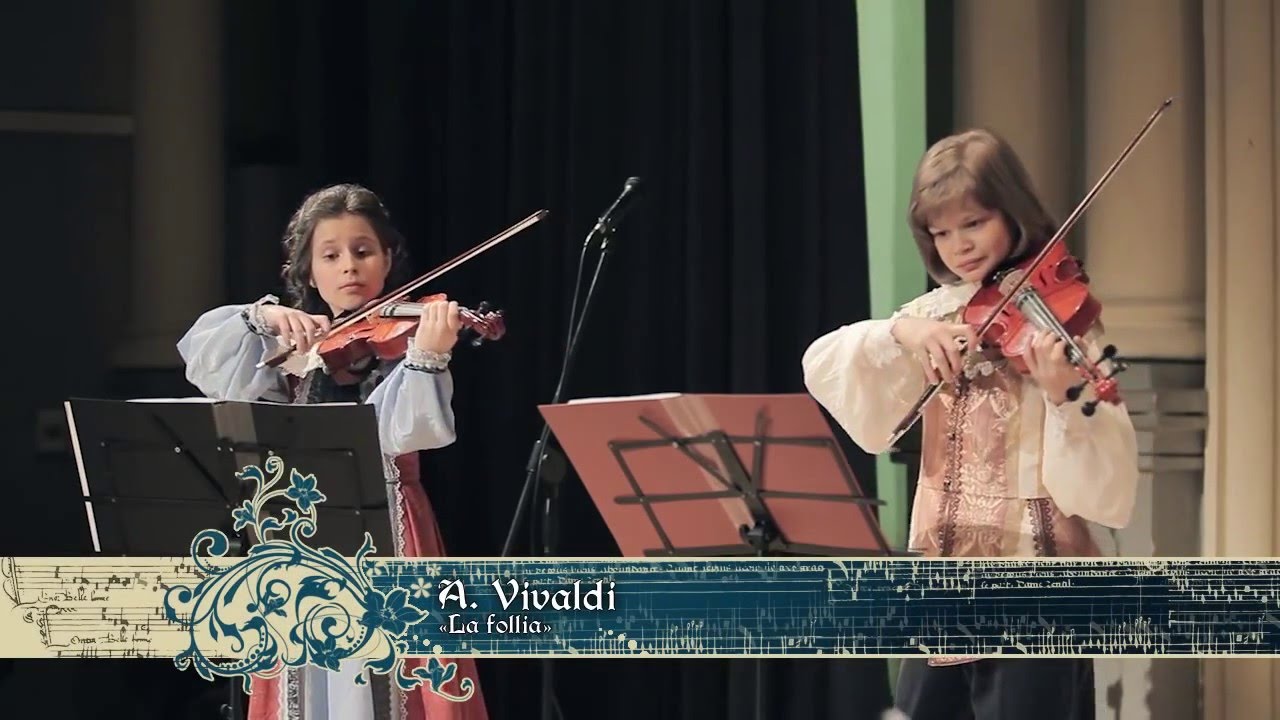
Trio Sonata in D minor, Op. 1 No. 12, "La Follia," by Antonio Vivaldi
Автор: Shelter Music Boston
Загружено: 2022-03-28
Просмотров: 646
Описание:
Please CLICK THE LINK HERE to let us know what you think of the music! Thank you. https://www.sheltermusicboston.org/sm...
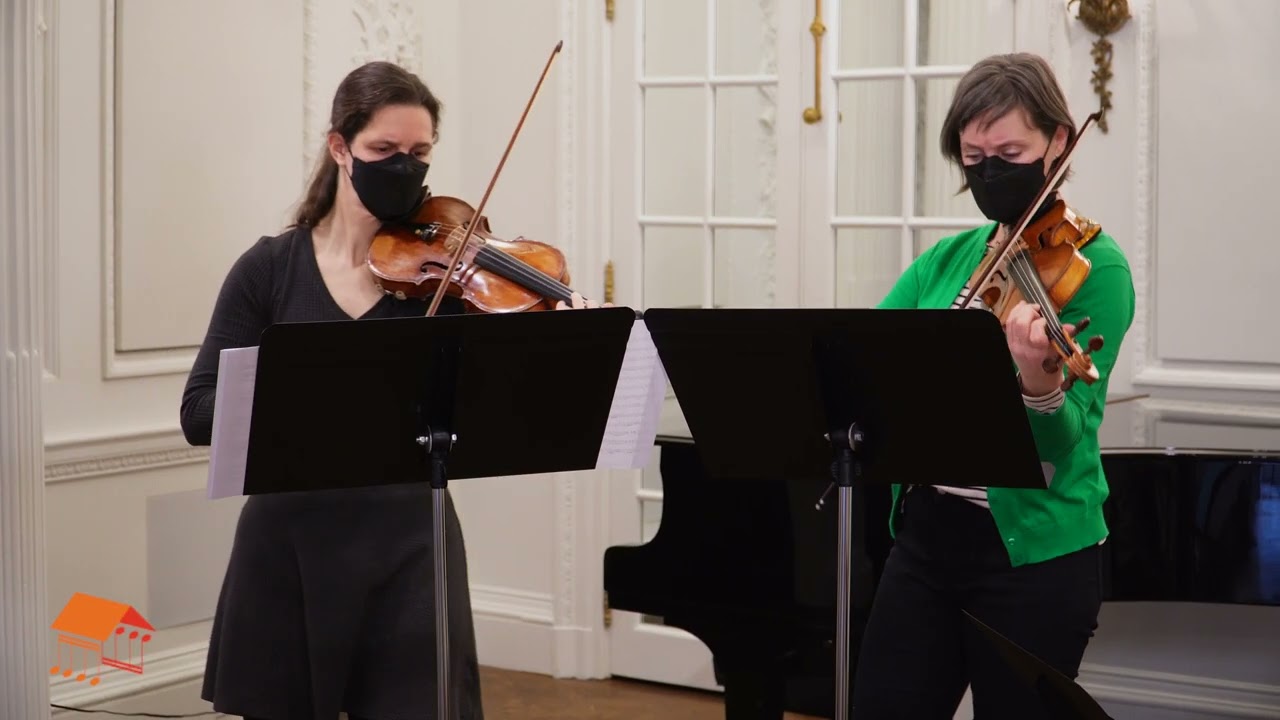
Trio Sonata in D minor, Op. 1 No. 12, "La Follia"
Music by Antonio Vivaldi
Annegret & Sasha, violins
Leo, cello
Video and audio by Josh Wareham
https://joshwareham.com
This concert was recorded live and is not a studio production. We hope the music brings joy, comfort, and well being to all who listen and watch.
Antonio Vivaldi (March 4, 1678 – July 28, 1741), nicknamed il Prete Rosso ("The Red Priest") because of his red hair, was an Italian Baroque composer, priest, and virtuoso violinist, born in Venice. His influence during his lifetime was widespread over Europe. Vivaldi is known mainly for composing instrumental concertos, especially for the violin, as well as sacred choral works and over 40 operas. His best known work is a series of violin concertos known as The Four Seasons.
Many of his compositions were written for the female music ensemble of the Ospedale della Pietà, a home for abandoned children where Vivaldi worked from 1703 to 1715 and from 1723 to 1740. Vivaldi also had some success with stagings of his operas in Venice, Mantua and Vienna. After meeting the Emperor Charles VI, Vivaldi moved to Vienna hoping for royal support. The Emperor died soon after Vivaldi's arrival, and the composer died a pauper, without a steady source of income.
The twelfth and last trio sonata of Antonio Vivaldi’s opus 1 is, in actuality, a set of variations upon “La folia,” a musical theme dating back to roughly the late 15th century. A harmonic structure similar to the modern-day 12-bar blues and based around the tonic and dominant harmonies of a minor key (usually D minor) and its relative major, “La folia” has served as the foundation of many pieces throughout the history of music. Vivaldi begins his variations on “La folia” with the theme in a triple meter and with a rhythm typical of the Sarabande. Twenty variations then follow. The first of these build in ornamentation and introduce imitative figures between the two violins, florid sixteenth note passages and eventually syncopations. The mood begins to change with Variation XIII, as eighths are interspersed with triplets while the following variation introduces imitative melodies between the violins with poignant dissonances. A sorrowful tone is adopted in Variation XII as the first violin utters a mournful tune above the folia bass. Beginning with Variation XVII, the music gradually builds in momentum culminating in the rapid figurations of the final two variations. Finally, a brief coda returning to the Sarabande rhythm with which the theme was announced placed over the octave figurations of the last variation closes the piece.
This concert was recorded live and is not a studio production. We hope the music brings joy, comfort, and well being to all who listen and watch.
Повторяем попытку...
Доступные форматы для скачивания:
Скачать видео
-
Информация по загрузке: