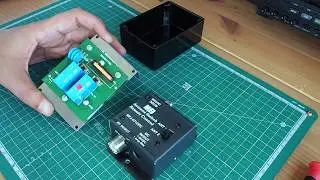
Ham Radio Remote Antenna Switch Made from Raspberry Pi 0 2 W.
Автор: WY6Y
Загружено: 2025-04-05
Просмотров: 1111
Описание:
WY6Y-PI Switch: A DIY Remote HF Antenna Switch for Digital Modes & More!
Welcome to my latest project—the WY6Y-PI Switch! As a ham radio operator who primarily operates remotely on HF bands, I wanted a solution to quickly switch between my antennas while operating from anywhere. I use VNC to remote into my shack computer 95% of the time, diving into digital modes like VARAC, FT8, PSK31, Winlink, and even remote SSB. With two permanent antennas (a Doublet and an Emcomm III-B) and a third Aux port for future expansion, I needed a reliable, remote-controlled antenna switch. After searching for a commercial option and coming up empty-handed, I decided to build my own—and I’m thrilled to share the result with you!
🌟 From Noob to Tinkerer: My Journey
I’m a complete Raspberry Pi and Linux noob, but I taught myself how to write a Python script to control relays and switch antennas in seconds via a sleek web interface. I call this creation the WY6Y-PI Switch, powered by a Raspberry Pi Zero 2 W. I’ll be honest—I’m not great at soldering (I even bricked a Pi Zero while learning!), but by the end of this project, I got much better. This journey took three iterations to get right, and I learned a ton along the way.
⚡ Features That Make It Special
Remote Antenna Switching: Switch between my Doublet, Emcomm III-B, and Aux antennas in seconds via a cyberpunk-style web UI—perfect for remote operation!
Failsafe Grounding: The switch has a failsafe state that grounds all antennas when power is lost to the Pi, ensuring safety during power outages.
Storm Mode: With a single click, I can ground all antennas via the web interface in "Storm Mode," offering limited protection during thunderstorms (though nothing beats disconnecting the antenna completely!).
SWR Performance: After testing, I achieved an SWR of 1.73:1 on 10m (28.074 MHz) with the Doublet—pretty solid for a DIY setup!
🛠️ The Evolution: From V1 to V3
This project wasn’t without its challenges! Here’s how it evolved:
V1 (Unshielded Wire): My first attempt used unshielded wire, which led to high SWR on all bands (2.4:1 to 3:1 on 10m). Lesson learned—shielding matters!
V2 (RG-400 Coax): I switched to shielded RG-400 coax, but it was too clunky for the tight bends in my compact L-shaped board design, causing shorts and frustration.
V3 (RG-316 Coax): Finally, I landed on RG-316 with SMA connectors, which worked perfectly for my needs—flexible, reliable, and delivering excellent SWR (1.73:1 on 10m).
📍 Future Plans
I’m currently testing the WY6Y-PI Switch in my shack, where it’s bonded to the shack ground bus and performing flawlessly. My ultimate goal is to:
Mount this in my DX Engineering Single Point Ground (SPG) Box outside near my ground rod, eliminating the need for multiple coax runs into the shack.
Create a shack model housed in a compact box for indoor use, making it even more user-friendly.
I have also just started playing around with Node Red. I want to integrate some Node Red features into the Switch UI.
💡 Your Feedback Matters!
This prototype works, and I’m proud of what I’ve built as a new tinkerer—but I know there’s room for improvement! I’d love to hear your constructive criticism and ideas for making the WY6Y-PI Switch even better. Whether you’re a seasoned ham or a fellow DIY enthusiast, your feedback means a lot to me. Drop a comment below, and let’s chat—73, WY6Y!
🔗 Links & Resources
Source Code on GitHub: https://github.com/WY6Y/CyberPunkAnte...
Raspberry Pi Zero 2 W: The heart of the WY6Y-PI Switch.
Freenove Breakout Board HAT: Made GPIO connections a breeze.
RG-316 Coax with SMA Connectors: The key to reliable wiring in V3.
Subscribe for more ham radio projects, and hit the bell 🔔 to stay updated on my journey as I continue to tinker and improve this setup!
Повторяем попытку...
Доступные форматы для скачивания:
Скачать видео
-
Информация по загрузке: