St. Gellert International Music Festival 2024 / Orchestra Concert "Mozart Bright and Dark" / Part I
Автор: Wolfgang Amadeus
Загружено: 2024-10-06
Просмотров: 386
Описание:
Symphony Nr. 35 in D Major, KV 385 "Haffner"
00:28 Allegro con spirito
05:53 Andante "World Premiere" of the new orchestration
Concerto for Cello and Orchestra in B-flat Major, KV 191 " World Premiere"
(based on the Bassoon Concerto)
12:20 Allegro
19:04 Andante ma adagio
26:04 Rondo.Tempo di Menuettin
30:46 Don Giovanni, ossia Il dissoluto punito, K. 527 / Act II: "Crudele!-Ah no, mio bene!" -...
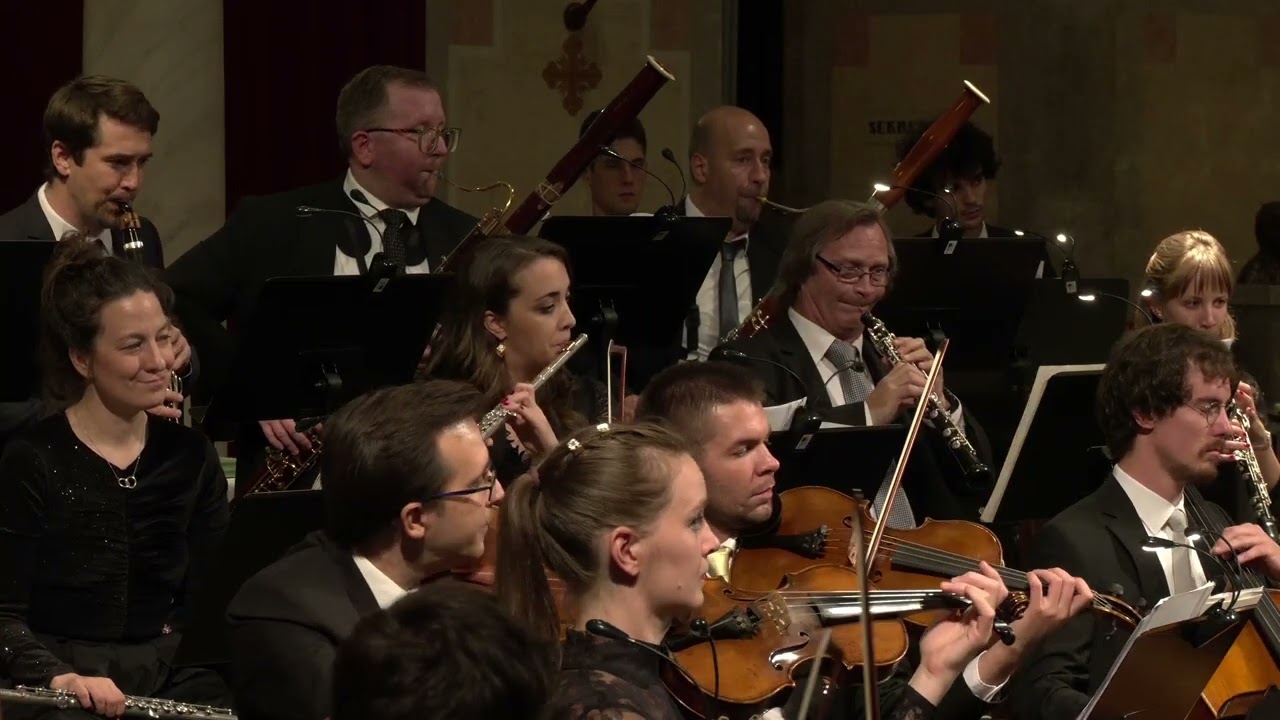
Anima Musicae Chamber Orchestra under the direction of Yoon Kuk Lee performed with the soloists Lila on Cello and Anastasia Churakova, singing as Donna Anna in the Cathedral in Szeged on 28.09.2024
Notes to the program from the conductor:
The Haffner Symphony was performed in two parts exactly the way Mozart had it in the only performance of this symphony in his lifetime. Our third and fourth movements are presented in our video Part II.
Briefly, I would like to explain the reasons behind the new orchestration of the wind parts in Andante and Minuet, thereby redistributing the musical material.
The symphony was a commission from Salzburg (Mozart was already residing in Vienna at the time) and he had to complete it as quickly as possible due to the tight deadline in Salzburg.
In December 1782, he asked his father to send back the Haffner Symphony because he needed urgently (again under time pressure) a symphony for his upcoming Academy concert. Apparently, upon looking at it again, he could not remember any of the composition and was amazed at its quality, given the fact that it was composed in so short a time. He added 2 clarinets and 2 flutes, but given the time until the concert, he had no other choice but to give them simple doubling of octaves within the woodwinds in the 1st and 4th movements.
Surely, it was not lack of imagination. If the clarinets and flutes were to be integrated in the same degree of importance as the other woodwinds, then he would have to recompose the entire woodwind ensemble, which he probably could have done quickly but the time it would take to write out all the new parts must have discouraged him finally to do so.
Another aspect to consider is that, there was only one performance of the symphony in Mozart's lifetime, which was the usual standard at the time. Not only could he not have imagined that this work would be repeated so many times around the globe every year, but he would also be very much against it because he conceived of it truly as only one time use, with all the surprise effects composed with this in mind.
Given our reality of still loving the work in the 21st century and considering
2 aspects above, I feel we must perform his works constantly refreshed and new and as if it were the first and last time ever. Clear, I am not even a shadow of Mozart's shadow, but all these thoughts urged me to integrate clarinets and flutes in the middle movements, giving them new roles.
Regrettably, Mozart did not compose a concerto for violoncello, as opposed to his five violin concertos, 27 concertos for piano, and 9 concertos for various wind instruments.
Apart from 27 piano concertos, which he mostly composed for himself, the concertos were all the result of his personal encounter with instrumentalists who inspired him. In this light, he apparently never met a cellist who was brilliant and artistic enough to excite him. I am certain that had Mozart discovered an impressive cellist such as Lila (featured in the present video), he would have surely composed not only several concertos but numerous sonatas as well. These thoughts convinced me to make a few minor changes to his concerto for bassoon and present it to all the cellists in the world. Yoon Kuk Lee
Повторяем попытку...
Доступные форматы для скачивания:
Скачать видео
-
Информация по загрузке: