The "Lazy" Garden That Waters Itself For 20 Years — Why Did We Forget It?
Автор: The Living Soil Lab
Загружено: 2026-01-29
Просмотров: 232
Описание:
💧 What if you could drought-proof your garden using free materials that create underground water reservoirs? Buried wood colonized by specific fungi transforms into moisture-retaining sponges that hold water at 200 to 300 percent of dry weight. A 4x8-foot bed with buried logs stores 12 to 18 gallons of water in the root zone, buffering plants through drought while reducing irrigation by 40 to 60 percent.
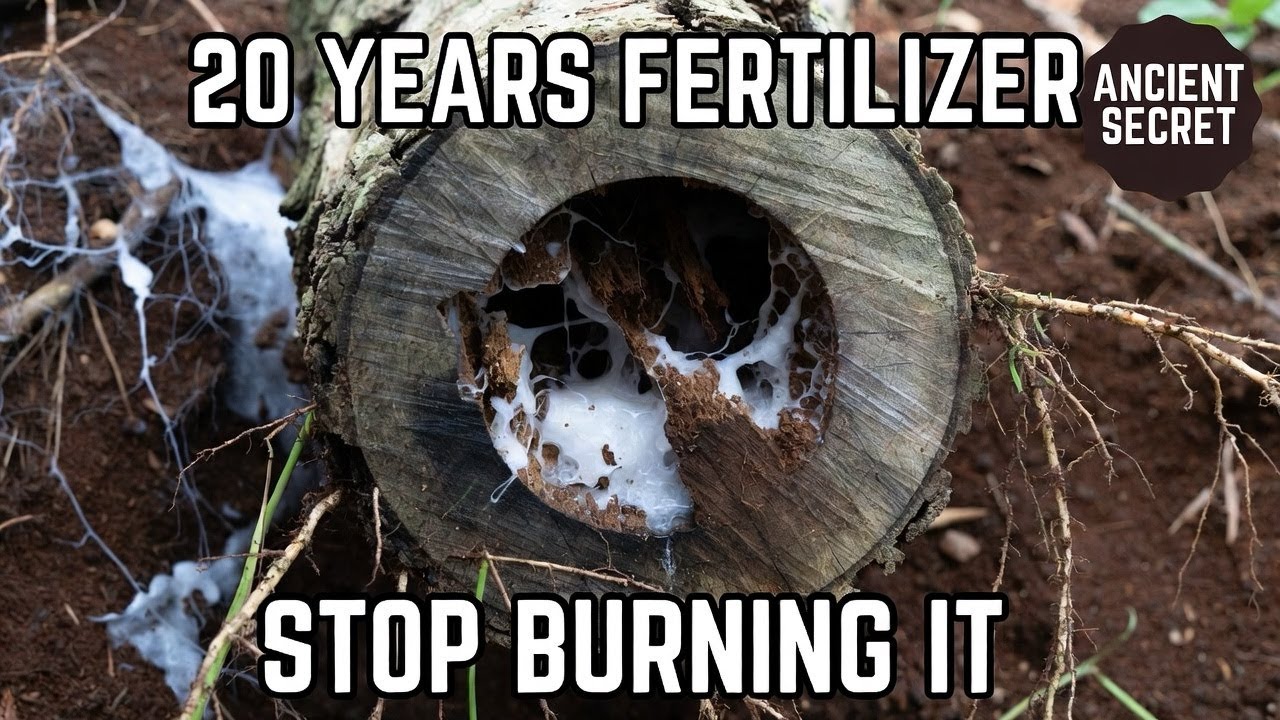
🍄 THE FUNGAL ENGINEERS: White rot fungi including Trametes versicolor and Pleurotus species produce enzymes that break down lignin and cellulose, creating microscopic channels throughout wood structure. Applied and Environmental Microbiology research tracked colonization over three years, documenting transformation from solid timber to sponge-like material riddled with cavities that trap water through capillary action. Montana State University's Center for Biofilm Engineering found well-colonized wood stores 2 to 3 gallons per cubic foot, releasing moisture gradual as surface soil dries.
🦠 BACTERIAL PARTNERS: Nitrogen-fixing bacteria including Azotobacter colonize fungal-modified wood, converting atmospheric nitrogen to plant-available forms and countering the nitrogen immobilization that fresh wood decomposition can cause. Actinomycetes produce polysaccharides that improve soil aggregation around buried wood, creating water-stable structures. Cornell research identified increased aggregation adjacent to decomposing wood. Bacterial biofilms coating wood surfaces increase water holding by 15 to 25 percent beyond the wood structure itself.
🪵 MATERIAL SELECTION: Hardwoods like oak and maple provide water retention for 10 to 20 years but require 2 to 3 years to establish capacity. Softwoods like pine offer 5 to 10 years duration but begin functioning within 12 to 18 months. Combine both types for immediate and sustained benefits. Use logs 4 to 12 inches diameter, avoiding treated lumber and naturally antifungal species like black walnut or cedar. Inoculate with oyster or wine cap mushroom spawn to accelerate beneficial colonization.
🏗️ INSTALLATION TECHNIQUE: Dig trenches 12 to 18 inches deep down bed centers. Place logs close together with small gaps for soil and root penetration. Inoculate with beneficial fungal spawn. Cover with 4 to 6 inches of mixed compost, aged manure, and topsoil. Water thorough to initiate colonization. First season requires consistent moisture for establishment. By second season, irrigation needs drop 40 to 60 percent compared to standard beds, as documented by Organic Growers School research in North Carolina.
⏰ PERFORMANCE TIMELINE: Moisture retention peaks between years 3 and 8 for softwoods, years 3 and 15 for hardwoods, when wood has transformed to spongy material while maintaining structure. Nutrient release increases through seasons 2 to 7 as decomposition liberates potassium, calcium, magnesium, and trace elements. After peak years, wood collapses into soil-like material with reduced but still elevated water retention. Add new wood every 5 to 7 years to maintain self-watering capacity indefinite.
Subscribe to The Living Soil Lab for biological solutions to gardening challenges. Share this with gardeners battling drought and water restrictions.
Disclaimer: Educational content. Start with small test beds to observe decomposition patterns in your climate before scaling up.
#Hugelkultur #BuriedWood #SelfWateringSoil #DroughtProof #WaterRetention #FungalNetworks #PermacultureGardening #RegenerativeAgriculture #SustainableGardening #WaterConservation #SoilHealth #MicrobialGardening #OrganicGardening #HomesteadGardening #ClimateAdaptation #LivingSoil #BackyardGardening #WoodDecomposition #SoilMoisture #GardenWisdom
Повторяем попытку...
Доступные форматы для скачивания:
Скачать видео
-
Информация по загрузке: