Why Did Eaker Send the Eighth Air Force Back to Schweinfurt After the First Raid Was a Bloodbath?
Загружено: 2026-06-02
Просмотров: 447
Описание:
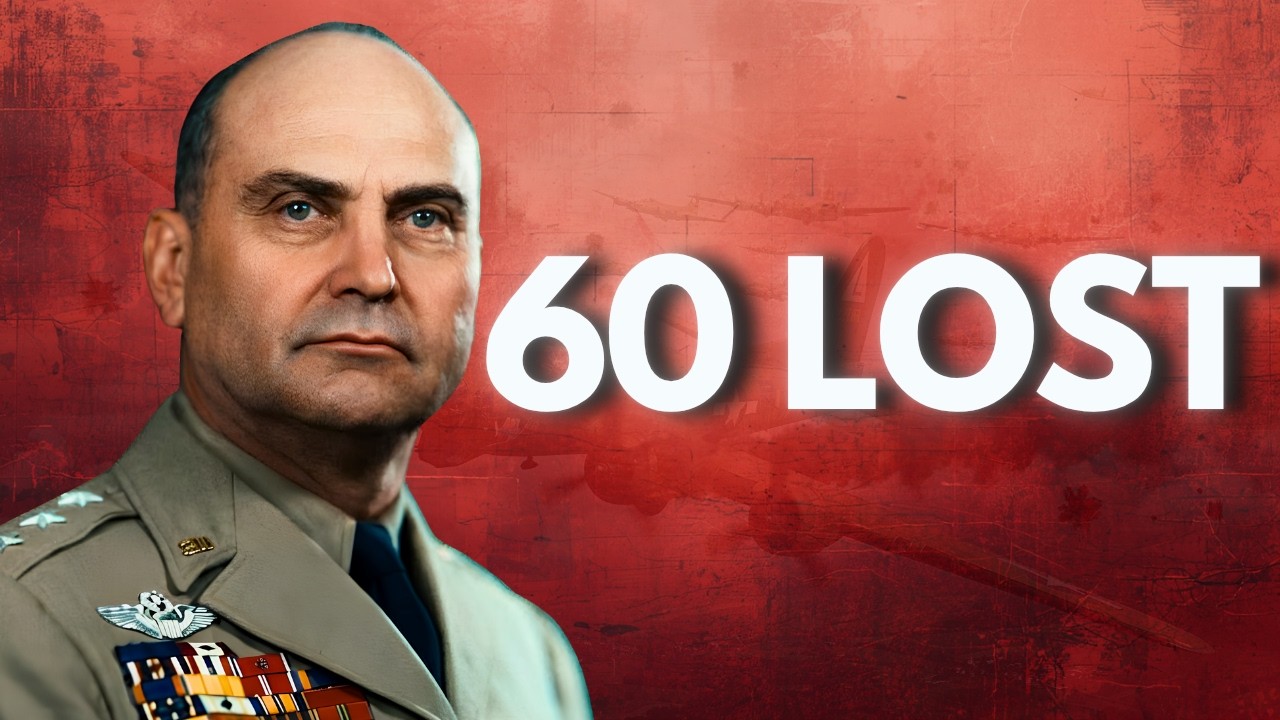
On August 17, 1943, the Eighth Air Force lost 60 heavy bombers attacking the ball-bearing factories at Schweinfurt. Eight weeks later, Ira Eaker sent them back. This is the story of why.
The second Schweinfurt raid — "Black Thursday," October 14, 1943 — cost the Eighth 60 B-17s shot down, 17 more scrapped, 121 damaged, and roughly 650 airmen killed, captured, or missing: more than a quarter of the attacking force gone in a single afternoon. It was the bloodiest mission of the 1943 daylight campaign, and it broke the doctrine the entire American bomber force had been built around — the belief that a formation could defend itself without fighter escort.
So why did a careful, intelligent commander order it? This video reconstructs the decision rather than the legend. The Pointblank Directive had ranked ball bearings the second-most-vital target in Germany. Intelligence claimed the August raid had cut production by a third. The Overlord clock was running, Hap Arnold was demanding results, and the long-range escort that would have changed everything — the P-51 Mustang — was still weeks from its first mission. Eaker knew August had fallen short the same night it was flown. He went back anyway.
We weigh the verdict honestly: a defensible target choice that became a catastrophe because the doctrine was wrong, the escort gap was unsolved, and the planners believed a Luftwaffe that was actually growing was on its "last gasp." The bearing campaign failed to choke German production — the U.S. Strategic Bombing Survey found no measurable effect on the war economy — but the slaughter forced the change that did win the air war: long-range escort, Doolittle's fighters off the leash, and air superiority by spring 1944. It also cost Eaker his command.
This is the operational level of the air war — the decisions, not just the machines.
— PRIMARY SOURCES —
U.S. Strategic Bombing Survey, Summary Report (European War), 1945
U.S. Strategic Bombing Survey, The German Anti-Friction Bearings Industry, November 1945
The Pointblank Directive (Combined Bomber Offensive plan), June 14, 1943
The Casablanca Directive, February 4, 1943
— ARCHIVAL SOURCES —
Air Force Historical Research Agency (AFHRA), VIII Bomber Command mission records, Missions 84 and 115
National Archives and Records Administration (NARA), Missing Air Crew Reports
— ARTICLES & SCHOLARSHIP —
Craven & Cate, eds., The Army Air Forces in World War II, Vol. II: Europe — Torch to Pointblank (Univ. of Chicago Press) — official history, Ch. 20 "Pointblank"
Tami Davis Biddle, Rhetoric and Reality in Air Warfare (Princeton Univ. Press)
Donald L. Miller, Masters of the Air (Simon & Schuster)
Stephen L. McFarland & Wesley Phillips Newton, To Command the Sky (Smithsonian)
James Parton, "Air Force Spoken Here": General Ira Eaker and the Command of the Air
Air & Space Forces Magazine, "The Cost of Schweinfurt"
Eagle Command — Where America's Air War Was Won.
Повторяем попытку...
Доступные форматы для скачивания:
Скачать видео
-
Информация по загрузке: