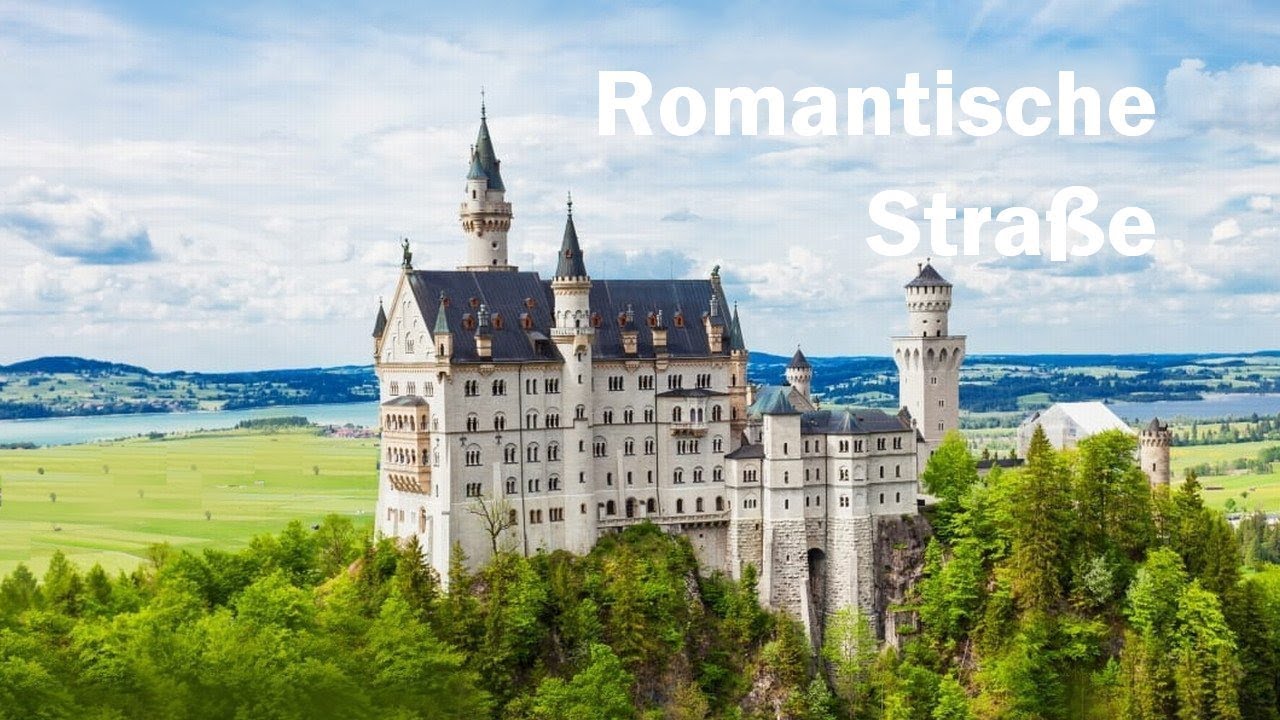
Romantische Straße - Romantic Road
Автор: Damir Medurecan
Загружено: 2022-06-23
Просмотров: 2174
Описание:
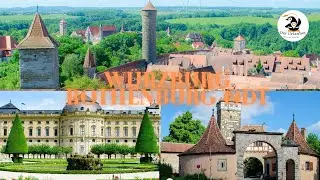
The Romantic Road (German: Romantische Straße) is a "theme route" devised by promotion-minded travel agents in the 1950s. It describes the 460 kilometres of surface roads between Würzburg and Füssen in southern Germany, specifically in Bavaria and Baden-Württemberg, linking a number of picturesque towns and castles. In medieval times, part of it was a trade route that connected the center of Germany with the south. Today, this region is thought by many international travellers to possess "quintessentially German" scenery and culture, in towns and cities such as Nördlingen, Dinkelsbühl and Rothenburg ob der Tauber and in castles such as Burg Harburg and the famous Neuschwanstein.
Nature, culture, art, culinary delights and hospitality on Germany’s oldest and most popular holiday route.
The name Romantic Road expresses what many guests from home and abroad feel on seeing medieval towns or the fairy-tale castle at Neuschwanstein: fascination and the sense of being transported back in time. From Würzburg to Füssen, the Romantic Road opens up a wealth of European history, art and culture to travellers. On the way from north to south, the landscape changes from river valleys, fertile agricultural land, forests and meadows to dramatic mountain scenery: from Würzburg and wine, the Tauber Valley and Rothenburg, via the Ries, Lechfeld and Pfaffenwinkel districts to the castles of King Ludwig.
However, a journey along the Romantic Road offers much more than beautiful countryside and culinary delights. The Romantic Road thrives on the harmony of culture and hospitality, on the unending series of new vistas in polymorphic landscapes, on towns with impressive buildings that have preserved their original appearance over the centuries. Balthasar Neumann designed the Residence in Würzburg. Tilman Riemenschneider is present throughout the Tauber Valley. Carl Spitzweg was fascinated by Rothenburg and Dinkelsbühl. In the Ries district, you can see the history of the earth for yourself. Augsburg bears witness to the Romans and, with the Fuggerei, is distinguished by the first social housing, which dates back to the 16th century. The ’Wieskirche‘, one of the most famous Rococo works of art, is to be found in the Pfaffenwinkel district. Hohenschwangau and, above all, Neuschwanstein, the world-famous castle of Bavarian King Ludwig II, are dreams in stone of bygone times and mark the end of the Romantic Road at the foot of the Bavarian Alps.
If you are travelling by car, mobile home or motorcycle, simply follow the brown signs that link the individual towns along the Romantic Road. Cyclists can follow the green signs of the Romantic Road Long Distance Cycle Trail about 500 km from Würzburg to Füssen. Under the number D9, this route is also part of the German Bicycle Club (ADFC) network of cycle routes. The blue signs mark the long-distance walking trail, a genuine pleasure route of almost 500 kilometres that passes through beautiful countryside and romantic towns and villages. Take time to explore the landscape, art and culinary delights that await you along the Romantic Road. On the way from the River Main to the Alps, you can be sure of discovering a host of extraordinary, inspiring and amazing sights well off the beaten path of mass tourism.
Video by Damir Medurecan
From 05.06.2022. to 10.06.2022.
Повторяем попытку...
Доступные форматы для скачивания:
Скачать видео
-
Информация по загрузке:




![The Romantische Straße in Spring - Germany [Top Travel Destinations, Travel with Music]](https://image.4k-video.ru/id-video/gd3TDLrGcdw)