Camille Saint-Saëns - The Carnival of the Animals - Finale
Автор: Галерея классической музыки
Загружено: 2021-10-07
Просмотров: 61
Описание:
Camille Saint-Saëns - The Carnival of the Animals - Finale
The Carnival of the Animals (Le Carnaval des animaux) is a humorous musical suite of fourteen movements by the French composer Camille Saint-Saëns. The work, about 25 minutes in duration, was written for private performance by two pianos and chamber ensemble; Saint-Saëns prohibited public performance of the work during his lifetime, feeling that its frivolity would damage his standing as a serious composer. The suite was published in 1922, the year after his death. A public performance in the same year was greeted with enthusiasm, and the work has remained among his most popular. In addition to the original version for chamber ensemble, the suite is frequently performed with a full orchestral complement of strings.
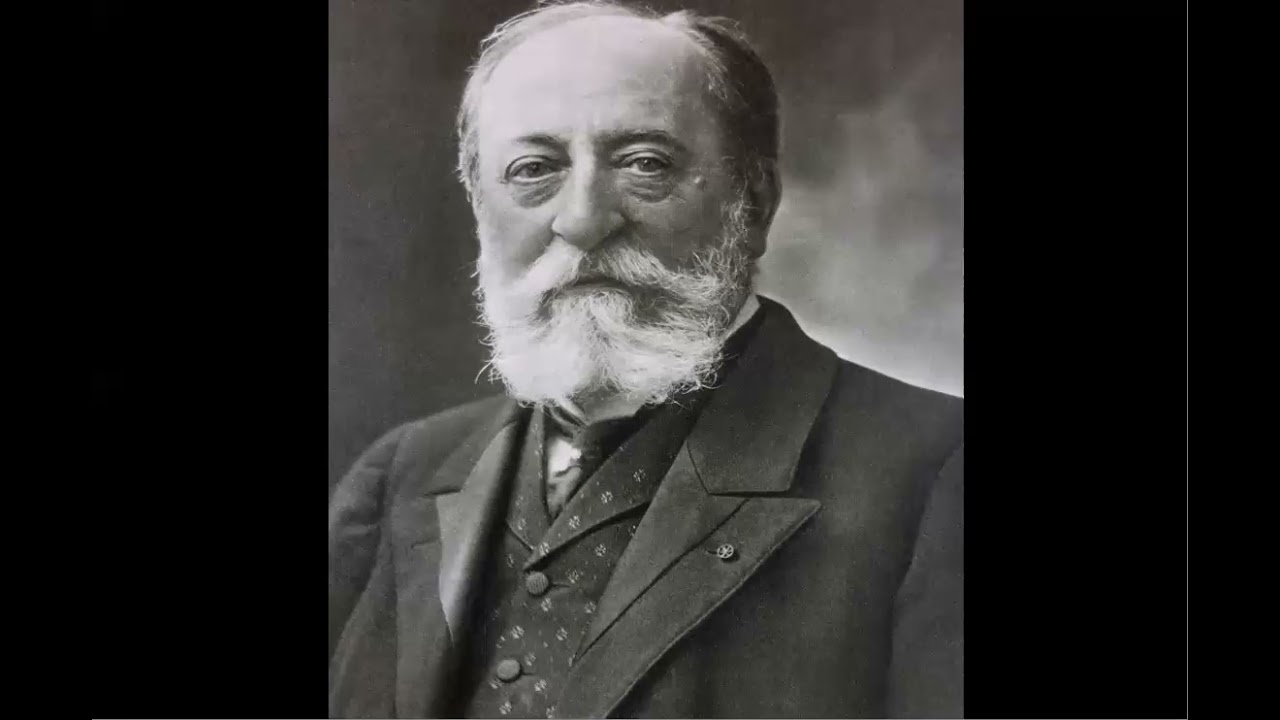
Charles-Camille Saint-Saëns born on 9 October 1835 and died on 16 December 1921.
Saint-Saëns was a French composer, organist, conductor and pianist of the Romantic era. His best-known works include Introduction and Rondo Capriccioso (1863), the Second Piano Concerto (1868), the First Cello Concerto (1872), Danse macabre (1874), the opera Samson and Delilah (1877), the Third Violin Concerto (1880), the Third ("Organ") Symphony (1886) and The Carnival of the Animals (1886).
Saint-Saëns was a musical prodigy; he made his concert debut at the age of ten. After studying at the Paris Conservatoire he followed a conventional career as a church organist, first at Saint-Merri, Paris and, from 1858, La Madeleine, the official church of the French Empire. After leaving the post twenty years later, he was a successful freelance pianist and composer, in demand in Europe and the Americas.
As a young man, Saint-Saëns was enthusiastic for the most modern music of the day, particularly that of Schumann, Liszt and Wagner, although his own compositions were generally within a conventional classical tradition. He was a scholar of musical history, and remained committed to the structures worked out by earlier French composers. This brought him into conflict in his later years with composers of the impressionist and dodecaphonic schools of music; although there were neoclassical elements in his music, foreshadowing works by Stravinsky and Les Six, he was often regarded as a reactionary in the decades around the time of his death.
Saint-Saëns held only one teaching post, at the École de Musique Classique et Religieuse in Paris, and remained there for less than five years. It was nevertheless important in the development of French music: his students included Gabriel Fauré, among whose own later pupils was Maurice Ravel. Both of them were strongly influenced by Saint-Saëns, whom they revered as a genius.
Enjoy!
Повторяем попытку...
Доступные форматы для скачивания:
Скачать видео
-
Информация по загрузке: