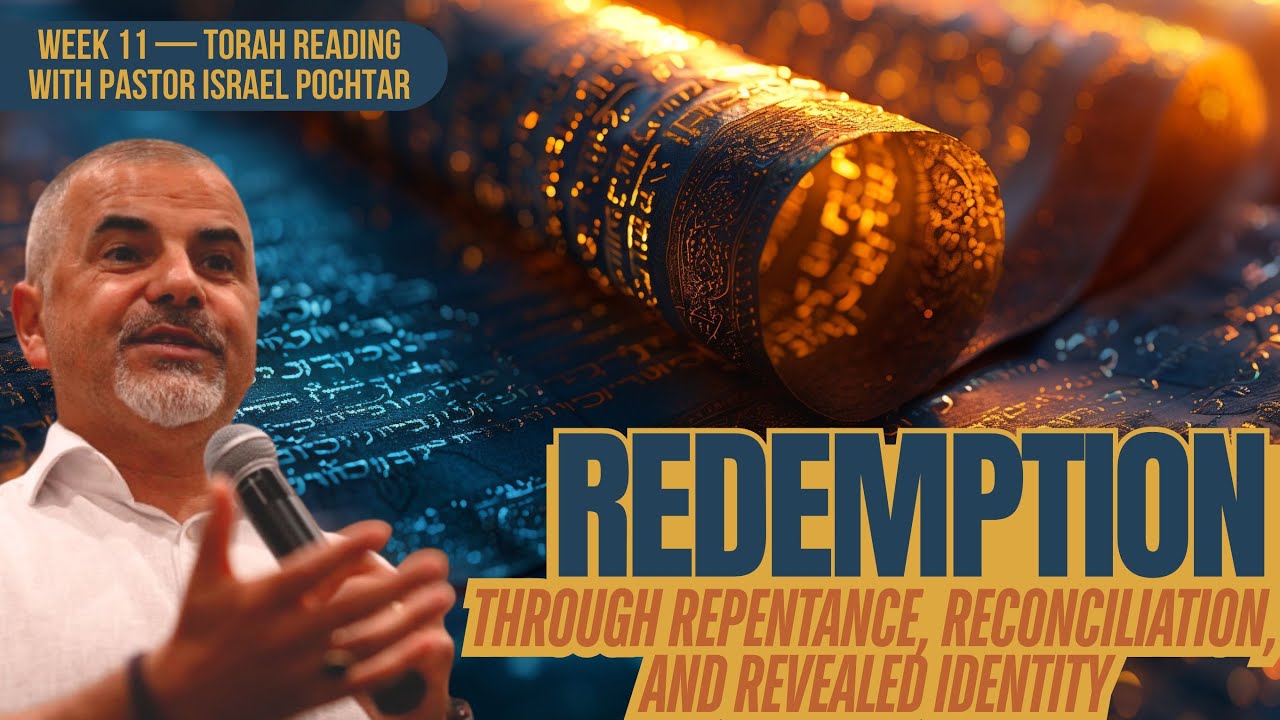
Redemption Through Repentance, Reconciliation, and Revealed Identity — Torah Reading (Week 11)
Автор: Beit Hallel Israel
Загружено: 2026-01-04
Просмотров: 1838
Описание:
This week we are reading Parashat (Torah Portion) Vayigash, which simply means “And he drew near.” It is the weekly Torah portion from Genesis 44:18–47:27, and it brings us to one of the most emotional and decisive moments in the entire story of Joseph and his brothers.
This is one of the most tender and redemptive passages in all of Scripture. It is not loud or dramatic in the way we might expect. Instead, it unfolds quietly, on holy ground — marked by courage that has been hard won, pride that has finally been laid down, and hearts that are at last exposed. Here, years of pain, guilt, and silence meet repentance, responsibility, and grace.
The Torah tells us simply: “Vayigash elav Yehudah” — “Judah drew near.”
That small phrase carries enormous weight.
Judah does not send a message from a distance. He does not defend himself. He does not revisit old arguments or blame the past. He steps forward. He draws near. And in that single movement, everything begins to change.
Judah pleads for Benjamin and offers himself in his brother’s place. This is the same Judah who once suggested selling Joseph. This is a man who has been shaped by loss, failure, and deep repentance. Now he embodies arevut — responsibility — not because he is forced to, but because love has transformed his heart.
So often, real healing begins right here. When we stop running. When we stop protecting ourselves. When we draw near — to God, to those we’ve hurt, and to conversations we’ve avoided for far too long. God uses this kind of humility to heal families, restore trust, and rewrite stories we thought were beyond repair.
Judah’s willingness to stand in another’s place quietly points us to something even greater — a Redeemer who would one day offer Himself fully, not just for a brother, but for us all.
And then comes the moment no one could have imagined.
Joseph can no longer restrain himself. The walls finally fall. And with trembling emotion he says, “Ani Yosef.”
“I am Joseph.”
In an instant, decades of confusion, shame, and fear are overwhelmed by revelation. The brother they believed was lost forever is standing before them — alive, powerful, and full of compassion.
Joseph does not shame them. He does not seek revenge. Instead, he lifts their eyes higher and invites them to see God’s hand in the story:
“God sent me ahead of you… to preserve life.”
This is one of the most healing truths Scripture offers us. What people intend for harm, God can weave into salvation. What feels like unbearable loss, He can redeem into purpose. Sometimes reconciliation does not come through explanations or arguments, but through revelation — when God Himself steps in and shows us what He has been doing all along.
There are moments in life we simply cannot fix. We need God’s timing, God’s unveiling, God’s gentle but powerful intervention. And when that moment comes, it changes everything.
When the brothers return to Jacob and tell him that Joseph is alive, the Torah describes something deeply moving: the spirit of Jacob revived. Hope breathes again into a heart that had lived too long in grief. Joy — simcha — returns, not as shallow happiness, but as resurrection of the soul.
God is still doing this today. He revives weary hearts. He restores what years have taken. He brings life where we assumed only loss remained. Never underestimate what God can heal in a single moment of truth and grace.
As Jacob journeys down to Egypt, he pauses in Beersheba, and there God speaks words every generation needs to hear:
“Do not be afraid… I Myself will go down with you.”
Egypt represents uncertainty. Transition. Exile. The unfamiliar. Yet even there, God promises His presence. Even when the path leads somewhere we never planned to go, God is already there — preparing provision, protection, and future redemption.
Parashat Vayigash reminds us that redemption is rarely instant, but it is always intentional. Repentance softens hearts. Responsibility restores trust. Revelation heals what time alone cannot. And through it all, God never leaves His people — not in Canaan, not in Egypt, not in exile, and not today.
In Yeshua, we see the greatest expression of Vayigash — God drawing near to humanity. The Lion of Judah and the greater Joseph meet in Him: self-giving love, revealed identity, and redemption that brings life to many.
May this portion encourage you to draw near — to God, to healing, and to hope. The story is not over. God is still revealing, restoring, and reviving hearts.
https://www.beithallel-israel.org
#pastorisraelpochtar
#beithallelashdod
#prayforisrael
#istandwithisrael
#messianicjudaism
#yeshua
Повторяем попытку...
Доступные форматы для скачивания:
Скачать видео
-
Информация по загрузке: