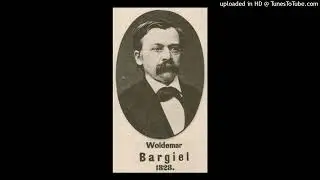
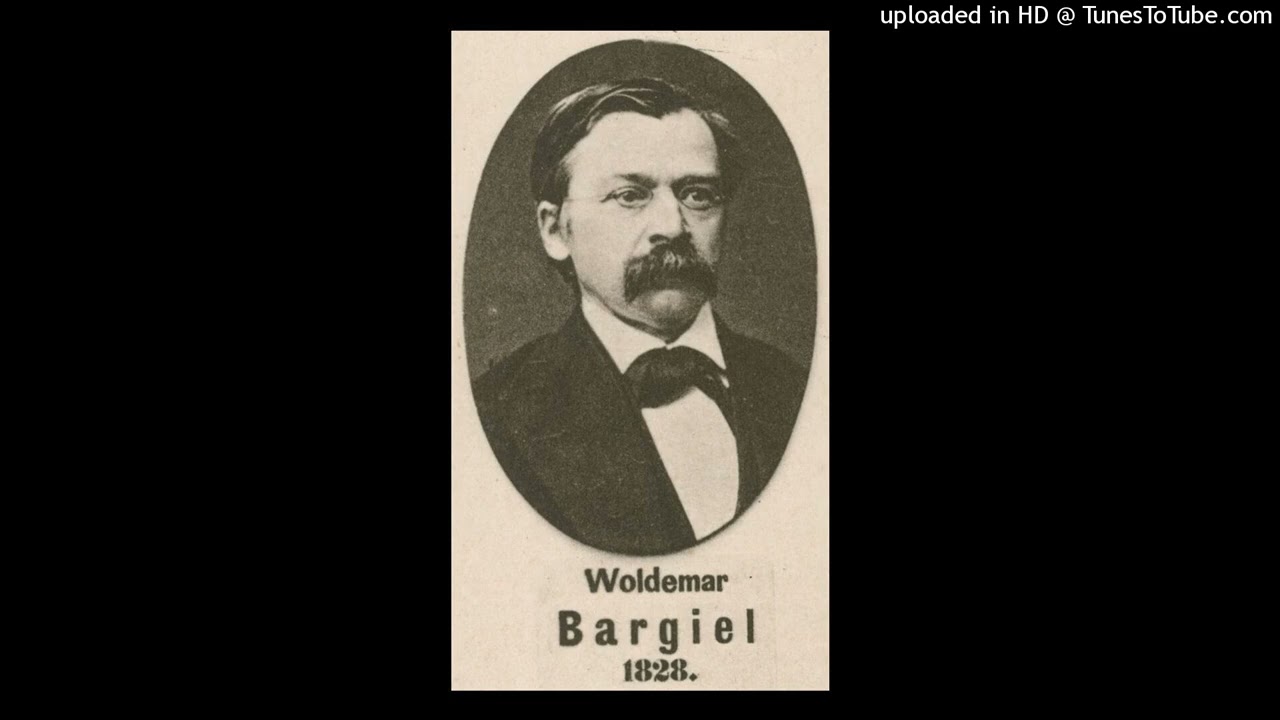
Woldemar Bargiel - Suite in G Minor for Solo Piano, Op. 31 - ( 1865 )
Автор: Justin Walsh
Загружено: 2026-01-01
Просмотров: 6
Описание:
Woldemar Bargiel's Suite in G Minor, Op. 31 for Solo Piano
Woldemar Bargiel's Suite in G minor, Op. 31 (also known as Suite No. 2), composed around 1864–1865, exemplifies the composer's mature mastery of form and Romantic expression during a transitional phase in his career. This five-movement work revives the Baroque suite genre while infusing it with mid-19th-century lyricism, harmonic subtlety, and virtuosic flair, bridging Mendelssohn's neoclassical elegance and Schumann's emotional depth.
Born October 3, 1828, in Berlin, Bargiel was the half-brother of Clara Schumann through their mother, Mariane Tromlitz (ex-wife of Friedrich Wieck). His father, Adolph Bargiel, directed a musical academy, providing early training in piano, violin, and theory. Further studies with Siegfried Dehn in Berlin led to enrollment at the Leipzig Conservatory (1846–1850), where mentors like Ignaz Moscheles, Niels Gade, and Julius Rietz shaped his style. Clara and Robert Schumann championed his talent; Robert's 1853 Neue Bahnen essay praised him alongside Brahms.
By the early 1860s, Bargiel had published fantasies (Opp. 5, 12, 19) and his first suite (Op. 21, 1860). Appointed professor at Cologne Conservatory in 1859, he composed Op. 30 Symphony (1864) amid orchestral ambitions. Op. 31 followed, published in 1865 by Breitkopf & Härtel—no dedication noted, unlike Op. 8 to Clara. The G minor key evokes pathos, suiting the era's introspective mood post-Schumann's death (1856).
The structure, per IMSLP score and catalogs:
Präludium – Brooding, improvisatory with rhythmic drive and rich suspensions.
Elegie – Lyrical, melancholic, Schumann-esque in its songful melancholy.
Marcia fantastica – Whimsical march with grotesque rhythms and vivid contrasts.
Scherzo – Playful, Mendelssohnian fleetness in fleet passagework.
Adagio & Finale – Contemplative adagio transitions to a brilliant, triumphant rondo-finale, lauded for vitality.
Bargiel's "Vorhaltsharmonik" (suspension harmonies) adds color, with cyclic echoes unifying the suite. At ~27 minutes, it demands concert-level technique.
In 1865, Bargiel moved to Rotterdam Conservatory, marrying Hermine Tours; later Berlin Hochschule (1874). As a "Kleinmeister," he co-edited Schumann/Chopin editions with Brahms, prioritizing craft over innovation. Op. 31 received positive but niche acclaim amid Wagnerian dominance.
Revived via Daniel Blumenthal's 1994 Marco Polo/Naxos recording (with Fantasies Opp. 5/12), praised for lyricism; score on IMSLP. It endures as a Romantic gem—sincere, balanced—affirming Bargiel's legacy until his death February 23, 1897.
Повторяем попытку...
Доступные форматы для скачивания:
Скачать видео
-
Информация по загрузке: