KALAPANI – LIPULEKH – LIMPIYADHURA – IDEATION FOR RESOLUTION
Автор: SECURITY RISKS ASIA
Загружено: 2020-05-29
Просмотров: 705
Описание:
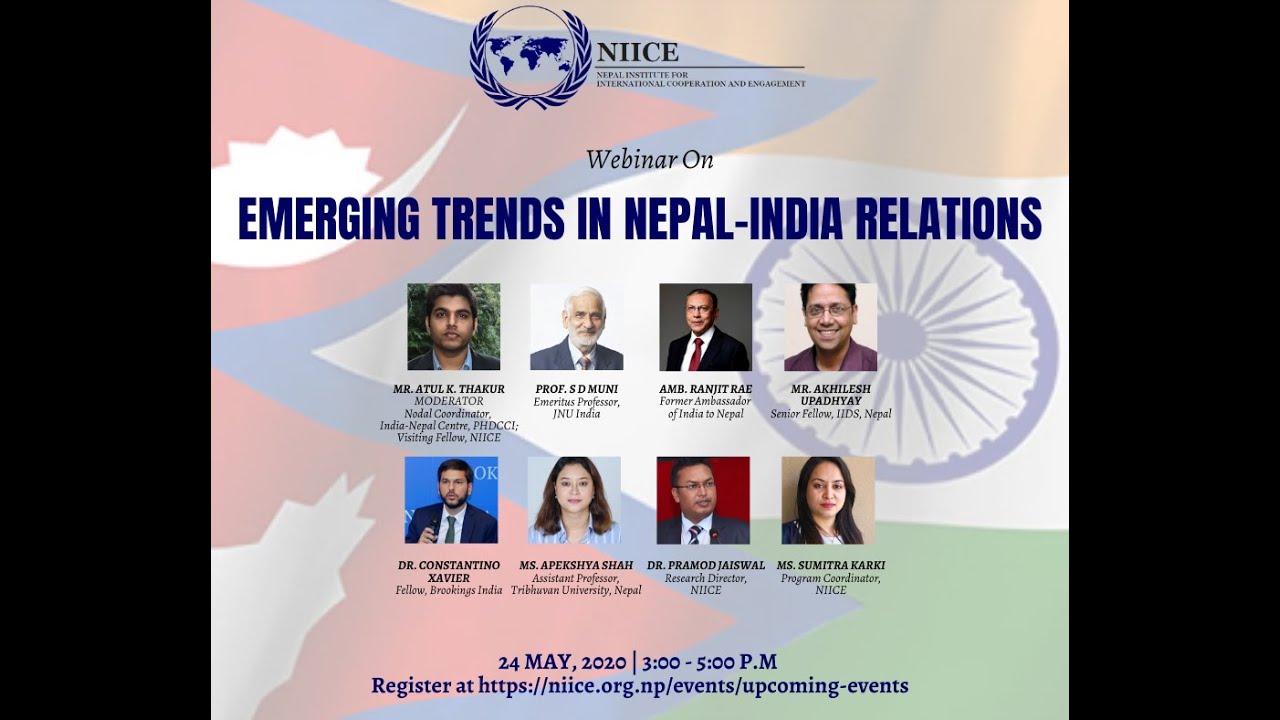
1. Possibly the first of its kind Round Table on the subject of India Nepal Boundary issue in the current scenario was held on May 27, by leading experts from the two countries with a view to ideate a resolution. Named “Kalapani – Lipulekh – Limpiyadhura – Ideation For Resolution,” the event was jointly organised by the Asian Institute of Diplomacy and International Affairs [AIDIAAASIA] AND Security Risks Asia [SRA], the focus was on brainstorming resolution of the current impasse. The following eminent panellists participated in the Round Table which was moderated by Brig Rahul K Bhonsle (Retd) Director SRA.
Panellists
India Nepal
Professor Emeritus SD Muni - Member Executive Council IDSA. Professor Emeritus JNU. Served BHU and NUS (Singapore). Mr. BishnuRijal, Deputy Chief of Department of Foreign Affairs, Nepal Communist Party
Major General Ashok K Mehta (Retired) – Noted author and expert from the Gorkha Regiment, has known Nepal since 1959 and trekked extensively across the country. Mr. Raju Nepal, Think Tank Member, Central, Policy Research and Training Academy, Nepali Congress
Major General UmongSethi (Retd)– Distinguished Fellow Centre for Joint Warfare Studies Mr. Prem Khanal, Assistant Professor, Department of International Relations and Diplomacy, Tribhuvan University
Key Issues
The issues discussed with reference to Kalapani – Lipulekh – Limpiyadhura were as follows:-
1. Main claims of India and Nepal?
2. Attempts made to resolve these in the past and reasons for success or otherwise?
3. Mechanisms available for resolution.
4. Suggested models for resolution of boundary – regional and global experience
5. Recommendations for resolution of the current impasse in specific terms?
Consensus Arrived at During Discussion
The panellists conducted a very open debate in an atmosphere of joint conviviality with the common objective of resolving sensitive issue related to India Nepal Boundary at the soonest. Consensus arrived at during the discussion is summarised as follows:-
1. Unique Relations Need to be Preserved. Relations between India and Nepal are unique with deep linkages extending to political, cultural, socio-economic, people to people and military. In fact, military relations stand out as the most distinct which have no parallel elsewhere. There was strong consensus that the unique relations should be preserved and thus differences arising from time to time should not be allowed to deteriorate into conflict.
2. Early Diplomatic Dialogue. Participants recommended an early diplomatic dialogue using existing mechanism of the Foreign Secretary to resolve the current impasse. This would prevent further speculation in the public domain which is vitiating amicable India Nepal Relations.
3. Source of Mahakali River. There are differences over source of the Mahakali River which is central to the dispute. Joint Technical Committee comprising survey officials of both sides could be re-examined to arrive at a cartographic resolution.
4. Regional and Global Models. A number of regional and global models of resolution were discussed by the participants including the India Bangladesh land boundary, India Sri Lanka Kachchativu, land swap, joint sovereignty and so on. Mechanisms available between India and Nepal for resolution were also discussed.
5. Political Directions.Political directions through mutual consensus should be a key to resolution of differences over the Kalapani – Lipulekh – Limpiyadhura boundary as well as various other issues of contention.
6. Early Resolution. Given fanning of nationalist sentiments with active media and social media, an early resolution is critical using available communication means such as video conferencing. Statements on the issue by leaders and officials including military till then are best avoided.
Повторяем попытку...

Доступные форматы для скачивания:
Скачать видео
-
Информация по загрузке:



![The Door in the Wall 🚪 (Learn English with a Short Story) [962]](https://imager.clipsaver.ru/LZArpRwziE8/max.jpg)