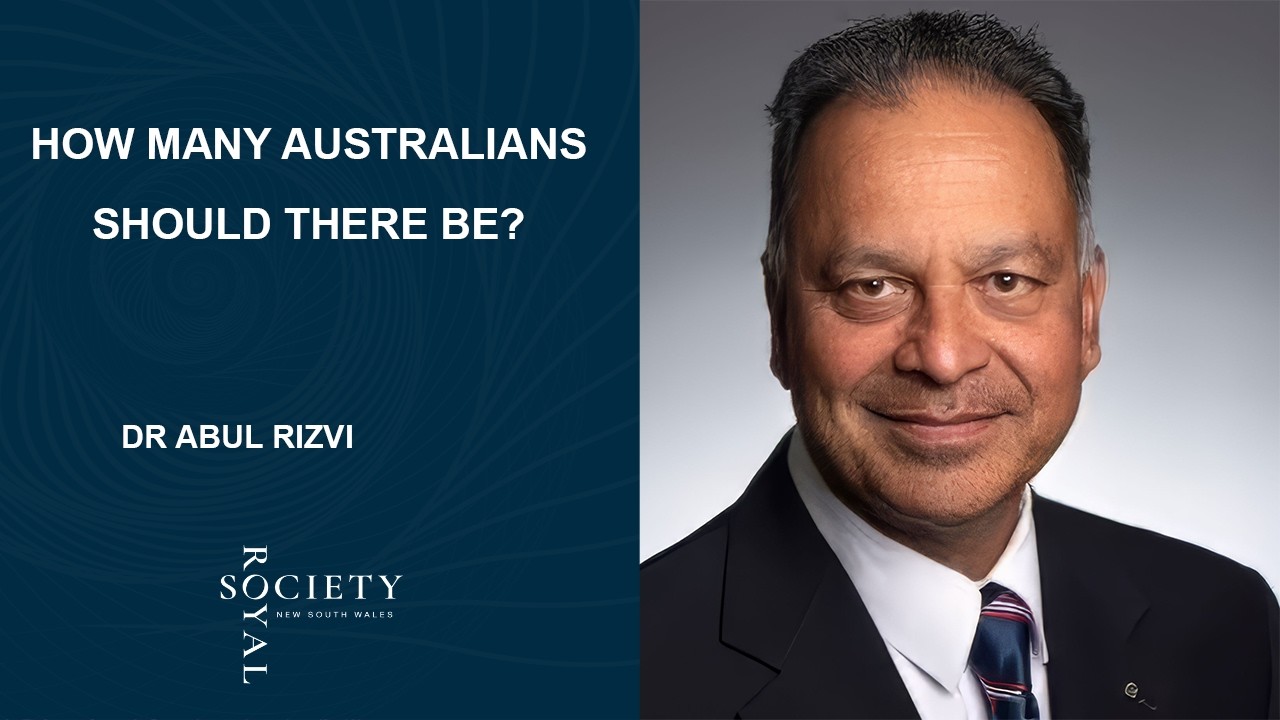
How many Australians should there be?
Автор: Royal Society of NSW
Загружено: 2026-02-14
Просмотров: 32
Описание:
1338th Ordinary General Meeting and Open Lecture of the Royal Society of NSW — 11 February 2026
"How many Australians should there be?"
Dr Abul Rizvi PSM FRSN
Former Deputy Secretary, Department of Immigration
The presentation commences at 02:12
Timing Marks:
00:00:00 Introduction: Emeritus Professor Christina Slade FRSN, President, Royal Society of NSW
00:02:12 Presentation: Dr Abul Rizvi PSM FRSN
00:33:12 Audience Q&A
01:15:51 Vote of Thanks: Emeritus Professor Christina Slade
01:18:10 Meeting Close
https://www.royalsoc.org.au/events/13...
Summary: Australia lacks a formal population policy, relying instead on immigration policies without clear ministerial accountability for net migration outcomes. Political reluctance to discuss population targets has led to a policy vacuum, with recent surges in migration after COVID-19 sparking public debate and anti-immigration protests. The 2025 Federal Election saw immigration become a contested issue, with major parties offering vague or reactive commitments to migration levels but failing to explain the rationale or consequences of their targets.
Treasury forecasts Australia’s population will grow from 27.6 million in 2024-25 to 31.6 million by 2035-36, driven by both natural increase and net migration. However, these projections are not backed by concrete government policy or ministerial responsibility, and there is little clarity on how targets will be met or what policy changes are needed. The absence of a comprehensive population plan has allowed extreme proposals, such as zero net migration or a pause in immigration, to gain traction, echoing trends in other countries facing similar debates.
A robust population plan would need to address demographic trends, economic impacts, labour force needs, infrastructure, housing, service delivery, family migration, social cohesion, humanitarian obligations, and environmental sustainability. Immigration is shown to benefit the economy and budget, especially when migrants are young, and is crucial for sectors like health and aged care. However, infrastructure and housing have lagged behind population growth, contributing to current crises. Social cohesion and public confidence are threatened by the lack of long-term planning and rising contestation over migration. Globally, many nations are experiencing population decline and ageing, making Australia’s approach to population and immigration policy increasingly significant.
About the Speaker: Abul Rizvi is an economics, accounting and public policy graduate from the ANU and holds a PhD in immigration and population policy from Melbourne University. From 1998, Rizvi managed major growth in overseas students, skilled temporary migration, visitors and working holiday makers, including the development of pathways to permanent migration. Between 1996 and 2006, Rizvi was Chair of the Commonwealth/State Working Party on State-Specific and Regional Migration which gave state/territory governments a much greater role in immigration to their jurisdictions.
He was responsible for commissioning research on the demographic, economic and budgetary impact of immigration that was extensively used in the development of the 2002 and 2007 Intergenerational Reports. He was Deputy Secretary responsible for all aspects of immigration, humanitarian, citizenship and settlement policy from 2005.
Rizvi was awarded the Public Service Medal and the Centenary Medal for services to the development and implementation of Australian immigration policy. Rizvi is a frequent media commentator on population, immigration and its impact on Australia’s economic and budget directions. He was invited to participate in the 2022 Jobs and Skill Summit and recently published a book in the ‘In the National Interest’ series titled ‘Population Shock’. Rizvi recently presented on immigration policy in a televised address to the National Press Club.
Повторяем попытку...
Доступные форматы для скачивания:
Скачать видео
-
Информация по загрузке: