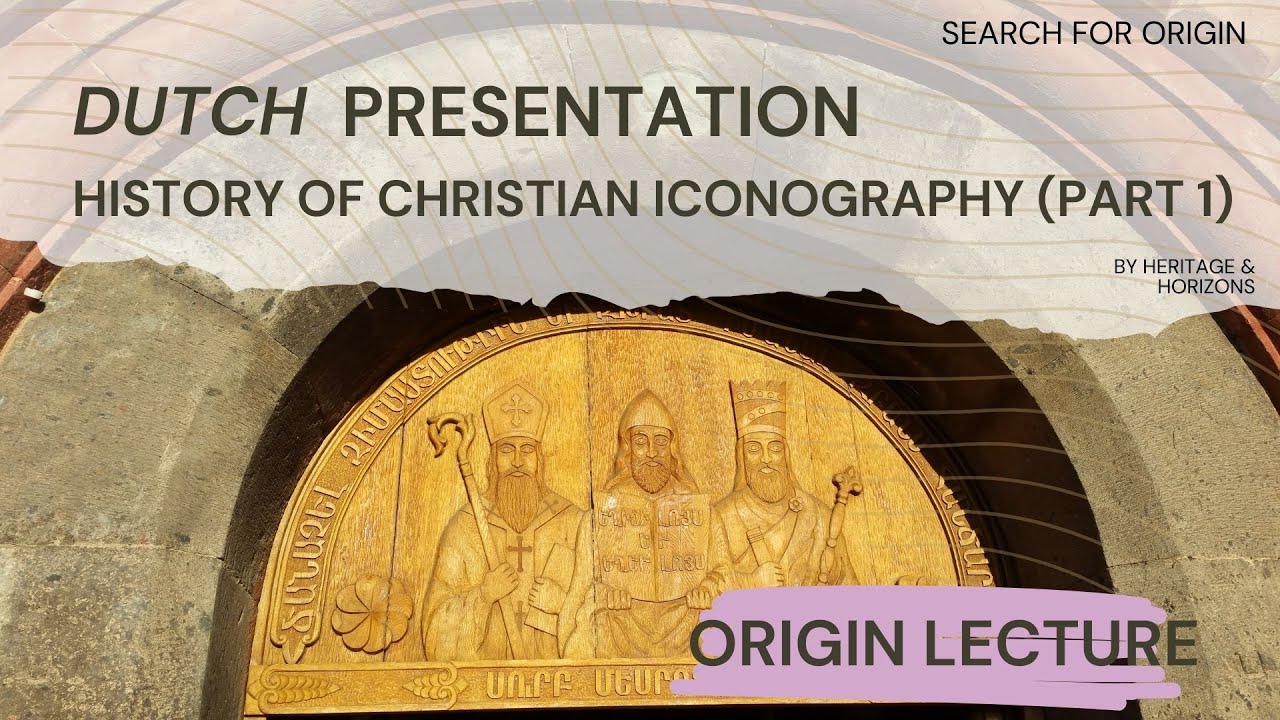
History Christian Iconography (Part 1)
Автор: Search for Origin
Загружено: 2025-03-07
Просмотров: 111
Описание:
Looking for a unique experience? I now offer personalized Museum and City Tours in the Netherlands and Germany, focusing on art, history, culture, and faith. As a multilingual guide (Dutch, English, and German), I’m here to bring the past to life and connect it to the present.
📩 Contact me at [email protected] to book a personal guide, inquire about my services, or learn more.
The History of Christian Iconography (Part 1: Origins to the 10th Century)
Christian iconography, the visual representation of Christian themes and figures, has evolved significantly from its origins in the early Church to the flourishing sacred art of the medieval period. This first part explores its development from the 1st to the 10th century, tracing how Christian imagery transformed from symbolic motifs in the catacombs to fully developed icons in the Byzantine tradition.
1. Early Christian Art (1st–3rd Century): Symbolism and Hidden Faith
In the first three centuries, Christianity was a persecuted faith within the Roman Empire. Early Christians avoided direct depictions of Christ and biblical figures, instead using symbols to convey their beliefs. Some key symbols included:
The Ichthys (fish), an acronym for “Jesus Christ, Son of God, Savior.”
The Chi-Rho (XP), one of the earliest Christograms.
The Good Shepherd, an image of Christ carrying a lamb, echoing pagan pastoral imagery but with Christian meaning.
The anchor, symbolizing hope in Christ.
These early representations were often found in catacombs, where Christians secretly gathered for worship and burial.
2. Transition to Narrative Art (3rd–4th Century): From Symbols to Figures
As Christianity gained legal status with Emperor Constantine’s Edict of Milan (313 AD), Christian art moved from hidden places to public spaces, particularly in basilicas and mosaics. This period saw:
The first portrayals of Christ, often as a youthful, beardless figure modeled after Greco-Roman gods like Apollo.
Biblical scenes appearing in frescoes and sarcophagi, such as the resurrection of Lazarus, Daniel in the lions’ den, and Jonah as a prefiguration of Christ’s resurrection.
The depiction of Christ as Pantokrator (Ruler of All), reflecting divine majesty.
The Council of Nicaea (325 AD) helped define Christian doctrine, which also influenced art, emphasizing Christ’s divinity.
3. Byzantine Iconography and the Golden Age of Christian Art (5th–8th Century)
With the fall of Rome (476 AD), the Byzantine Empire became the center of Christian artistic development. Byzantine art emphasized:
Icons (sacred images of Christ, Mary, and saints), painted in a distinctive, stylized manner with golden backgrounds, elongated figures, and symbolic gestures.
The Hagia Sophia’s mosaics, showcasing grandeur and theological depth.
The Theotokos (Mother of God) tradition, which became central in Marian devotion.
Icons were believed to be more than representations; they were windows into the divine. However, this also led to controversy.
4. The Iconoclastic Controversy (8th–9th Century)
From 726–843 AD, the Byzantine Empire was shaken by the Iconoclasm ("image-breaking") movement. Emperor Leo III and later rulers, influenced by concerns over idolatry and Islamic aniconism, banned religious images, leading to the destruction of countless icons. The Iconophiles (supporters of icons), led by theologians like John of Damascus, argued that since Christ became incarnate, He could be depicted.
The controversy ended in 843 AD with the Triumph of Orthodoxy, restoring the veneration of icons and solidifying their place in Christian worship.
5. The Western Perspective and the Carolingian Renaissance (8th–10th Century)
While the East grappled with Iconoclasm, the Frankish Empire under Charlemagne promoted a revival of classical artistic traditions. The Carolingian Renaissance (9th century) saw:
Manuscript illumination flourishing, such as the Gospels of Charlemagne and the Lindisfarne Gospels.
Renewed interest in naturalism combined with spiritual symbolism.
The rise of Romanesque art, leading into medieval Christian iconography.
By the 10th century, Christian iconography was well-established, influencing both Eastern Orthodox and Western medieval art for centuries to come.
Повторяем попытку...
Доступные форматы для скачивания:
Скачать видео
-
Информация по загрузке: