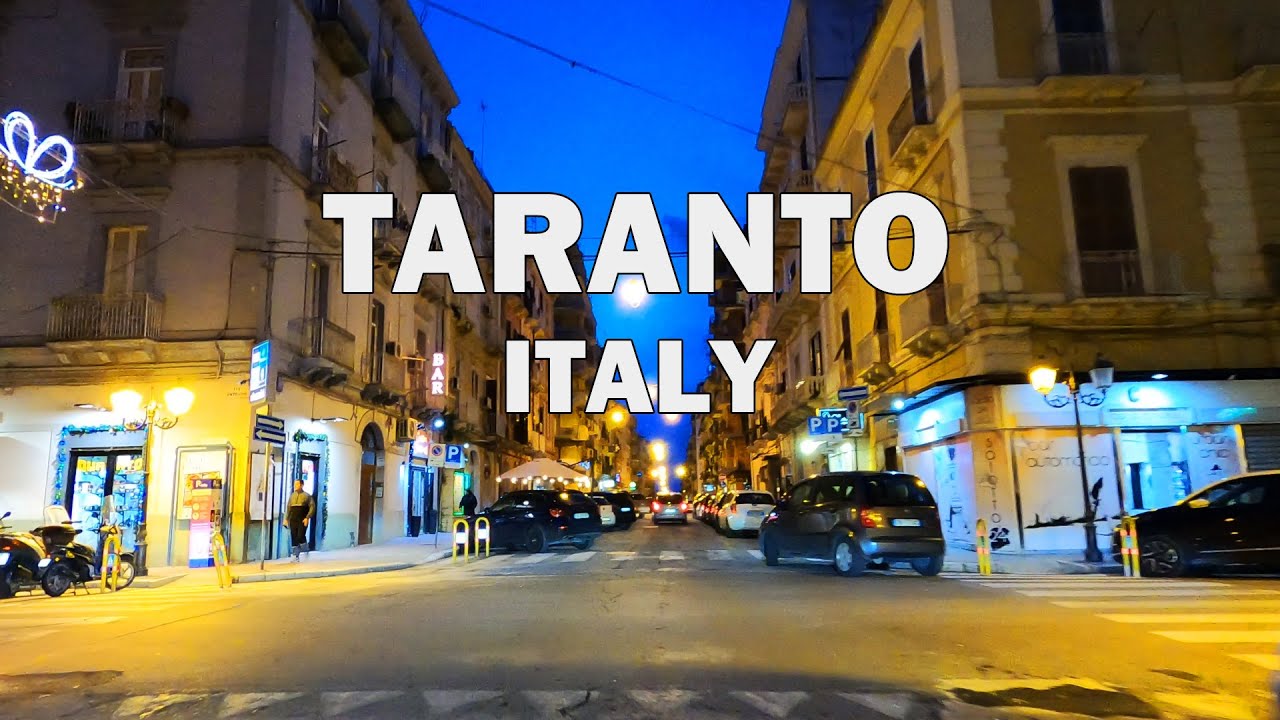
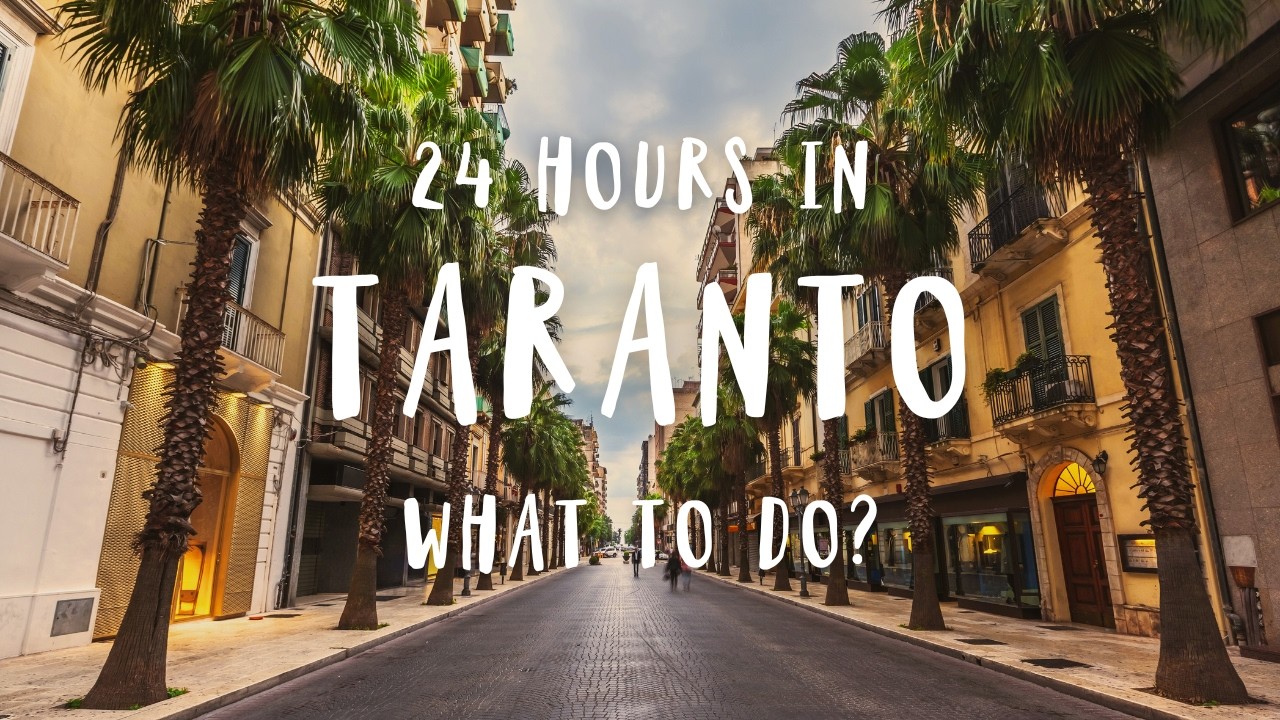
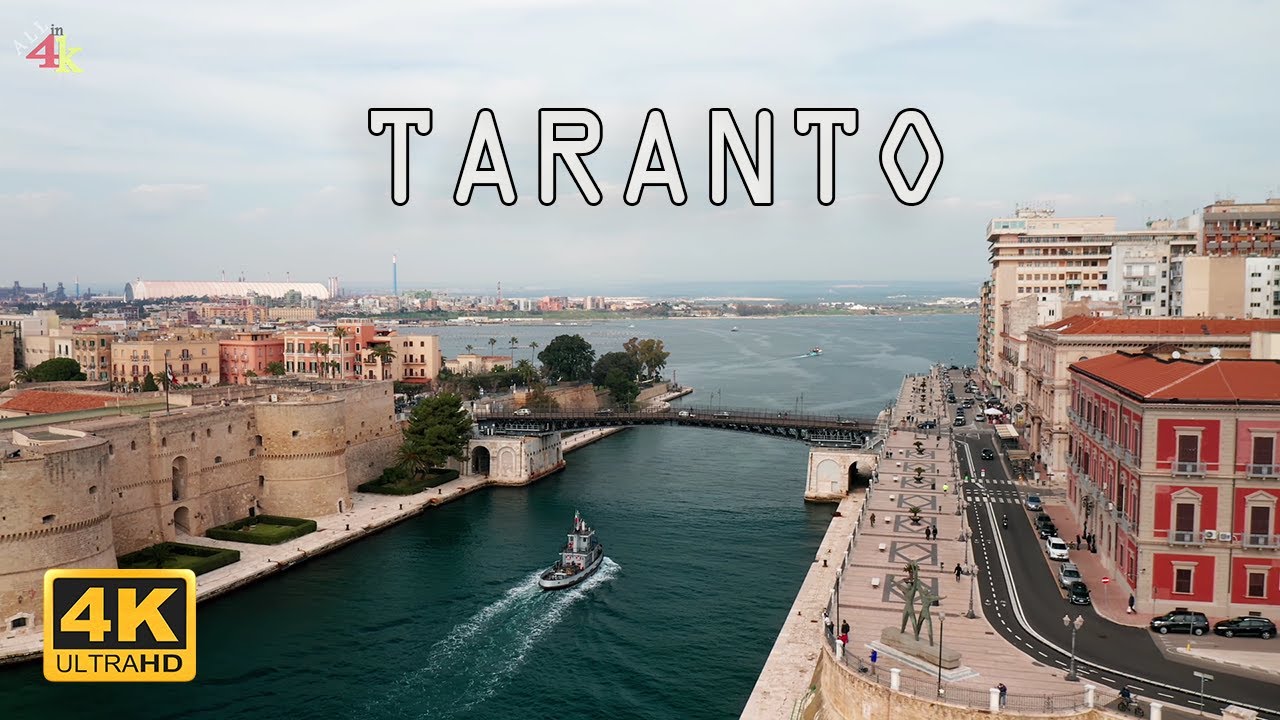
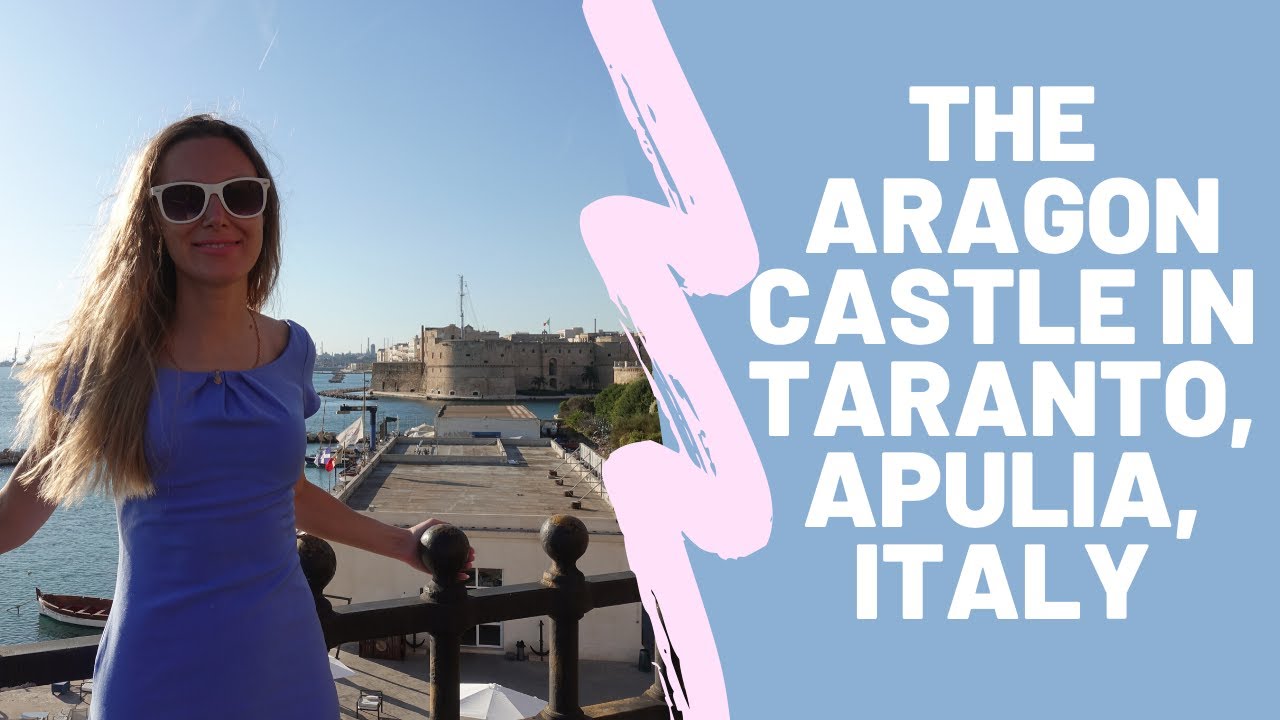
TARANTO, APULIA, ITALY. The Aragon Castle. ТАРАНТО, АПУЛИЯ, ИТАЛИЯ. Castello Aragonese.
Автор: Yulia Talbot
Загружено: 2020-04-24
Просмотров: 208
Описание:
Taranto is a coastal city in Apulia, Southern Italy. It is the capital of the Province of Taranto and is an important commercial port as well as the main Italian naval base.
Taranto was founded by the Spartans in the 8th century BC. During the period of Greek colonization on the coasts of Southern Italy, the city was among the most important in Magna Graecia and it became a cultural, economic and military power, which gave birth to philosophers, strategists, writers and athletes, such as Archytas, Aristoxenus, Livius Andronicus, Heracleides, Iccus, Cleinias, Leonidas, Lysis, and Sosibius. The seven-year rule of Archytas marked the apex of Taranto's development and the recognition of its hegemony over the other Greek colonies of southern Italy.
During the Norman period, it became the capital of the Principality of Taranto, which covered almost all of the heel of Apulia.
From the name of the city derives that of the species Lycosa tarantula, which originated the terms tarantella, tarantism and tarantula. Taranto is also known for the large population of dolphins and other cetaceans that historically live near the Cheradi Islands, located in front of the city.
It is the third-largest continental city in southern Italy and an important commercial and military port with well-developed steel and iron foundries, oil refineries, chemical works, naval shipyards, and food-processing factories.
Around 500 BC the city was one of the largest in the world with population estimates up to 300,000 people.
Taranto faces the Ionian Sea. It is 14.5 metres above sea level. It was built on a plain running north/north-west–southeast, and surrounded by the Murgia plateau from the north-west to the east. Its territory extends for 209.64 square kilometres (80.94 sq mi) and is mostly underwater. It is characterised by three natural peninsulas and a man-made island, formed by digging a ditch during the construction of Aragon Castle. The city is known as the "city of two seas" because it is washed by the Big Sea in the bay between Punta Rondinella to the northwest and Capo San Dante to the south, and by the vast reservoir of the Little Sea.
Big Sea and Little Sea
The view of the Little Sea from the Appian Way
The Big Sea is frequently known as the Big Sea bay as that is where ships harbour. It is separated from the Little Sea by a cape which closes the gulf, leading to the artificial island. This island formed the heart of the original city and it is connected to the mainland by the Ponte di Porta Napoli and the Ponte Girevole. The Big Sea is separated from the Ionian Sea by the Capo San Vito, the Isole Cheradi of St Peter and St Paul, and the three islands of San Nicolicchio, which are completely incorporated by the steel plant. The latter form a little archipelago which closes off the arc creating the natural Big Sea bay.
The Little Sea is considered to be a lagoon so it presents problems of water exchange. It is virtually divided into two by the Ponte Punta Penna Pizzone, which joins the Punta Penna to the Punta Pizzone. The first of these forms a rough triangle, whose corners are the opening to the east and the Porta Napoli channel linking it to the Big Sea in the west. The second half forms an ellipse whose major axis measures almost 5 kilometres (3 miles) from the south-west to the north-east. The Galeso river flows into the first half.
The two water bodies have slightly different winds and tides and their underwater springs have different salinities. These affect the currents on the surface and in the depths of the Big Sea and the two halves of the Little Sea. In the Big Sea and in the northern part of the Little Sea, there are some underwater springs called citri, which carry undrinkable freshwater together with salt water. This creates the ideal biological conditions for cultivating Mediterranean mussels, known locally as cozze.
The climate of the city, recorded by the weather station situated near the Grottaglie Military Airport, is typical of the Mediterranean with frequent Continental features.
The spring is usually mild and rainy, but it is not uncommon to have sudden cold spells come in from the east, which often cause snowfall. Average annual precipitation is fairly low (even for southern Italy), measuring just 16.7 inches per year.
The summer is very hot and humid, with temperatures reaching up to 40 °C (104 °F).
On 28 November 2012 a large F3 tornado hit the port of Taranto and damaged the Taranto Steel Mill where workers were protesting against the plant's pollution emissions; about 20 people were injured, and another man was reported missing. The tornado is one of nine to hit Italy since 1 October.
There are several Greek temple ruins - some from the 6th century BC
ИНСТАГРАМ: https://www.instagram.com/yuliatalbot...
ТВИТТЕР: / yuliatalbot
ФБ: / yuliatalb
Повторяем попытку...
Доступные форматы для скачивания:
Скачать видео
-
Информация по загрузке: