Activism, Not Science: Professor David Best
Автор: Recovery Voices
Загружено: 2025-02-08
Просмотров: 35
Описание:
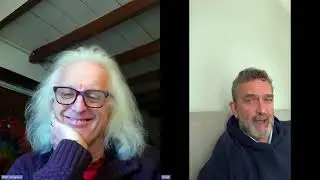
Wulf points out whilst there is still stuff we don’t know, we do know an awful lot more about recovery, and recovery groups and communities, then we did 20 years ago. David believes that this is a very important point. Twenty years ago the recovery evidence base was patchy and weak. Today, his main recovery capital measuring instrument, REC-CAP, has been used with 20,000 people. If you want state funding in Michigan, Maine or Virginia it is mandatory that you use this instrument. David has 14 publications focused on REC-CAP. In this instrument, strengths are used as an outcome indicator and as an evaluation mechanism.
David emphasises that the depth of recovery evidence is growing internationally. He was in Singapore for a week training prison staff about the principles of recovery and long-term recovery. The day he got there over 9,000 people participated in the Yellow Ribbon Prison Run, an initiative focused on giving inmates and ex-offenders a second change to turn their lives around and contribute to society.
However, whilst David points out that the evidence base is good, he believes we still remain in our little bubble. We need to think much more about the crossover to mental health and to criminal justice. We should maybe stop thinking so much about recovery as a movement or a phenomenon, but as part of a kind of strengths-based revolution in social sciences. Wulf agrees that there was a great deal of fervour about a recovery movement in 2008-9. Today, many people now recognise that it is about long-term, localised, hard graft. Year after year in the same place. It is centred and grounded in communities.
David believes that the reason why there are not many recovery researchers is that you can’t be a recovery academic in the same way you can be an addiction academic. In the recovery field, you must be a passionate champion, an activist. You have to build trusting relationships. He says he doesn’t need to tell Wulf this, as the latter has been doing it for years. David doesn’t have any pretence that he is some sort of independent, neutral observer, He hasn’t been this for years.
The inspirational figure for David is still William White. The latter has always had a slightly odd relationship with traditional academia. He’s always been a big part of the recovery movement. David believes that traditional academic metrics don’t really work in the field. The big question is how do we communicate out to the field what we do.
He describes a Recovery Pathways Horizon 2020 project in which he and his colleagues looked at recovery in the UK, Holland and Belgium. Along with David Patton, he created a MOOC (Massive Open Online Course) based on that study, a six-session video online training course. This course has had a greater impact than virtually any of his academic publications. People at various international conferences have told him that they loved the MOOC. David believes we need to be doing more of this sort of stuff, along with blogs and podcasts. Wulf points out that he is why he is doing this Recovery Voices project, rather than spending more time writing.
David Best is Professor of Addiction Recovery, and Director of the Centre for Addiction Recovery Research (CARR), at Leeds Trinity University. He is a founding member of the College of Lived Experience Recovery Organisations in the UK and of the Inclusive Recovery Cities movement. 9 February 2025.
Повторяем попытку...

Доступные форматы для скачивания:
Скачать видео
-
Информация по загрузке: