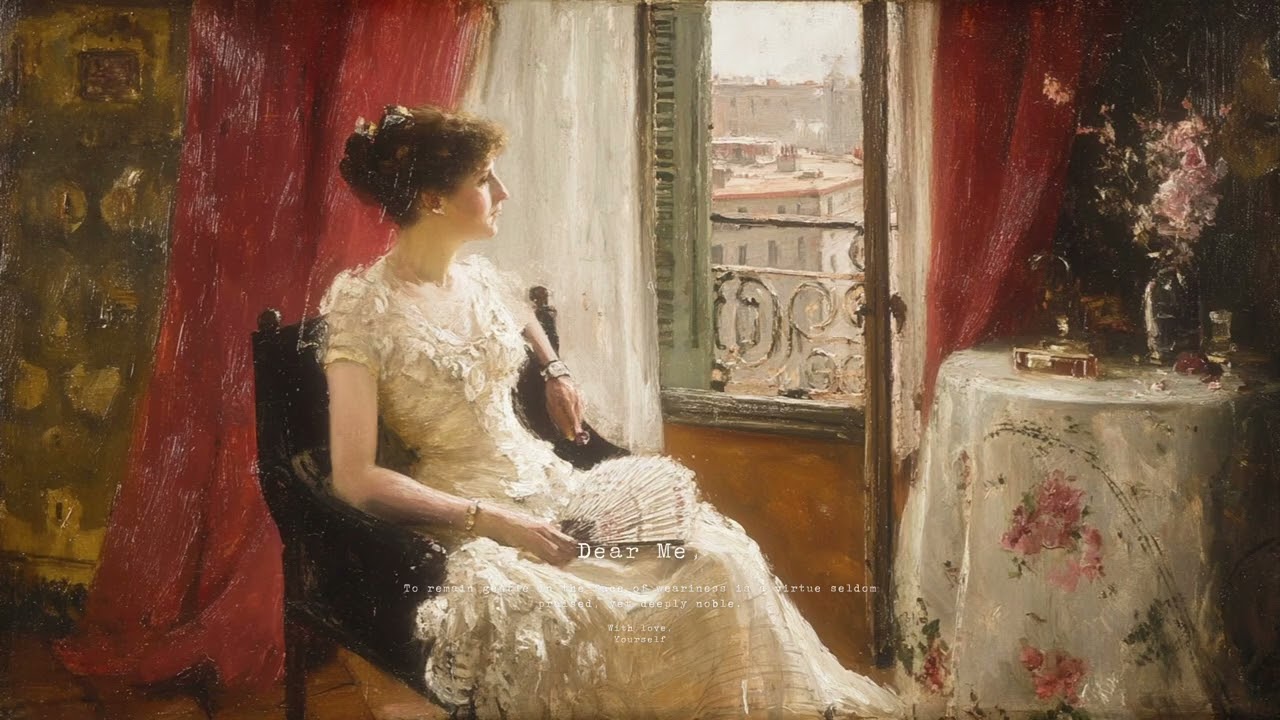
The Most Heartbreaking Lullaby for Your Soul: Vivaldi Stabat Mater, RV 621 | [MuseLAB]
Автор: Muse Lab Classics
Загружено: 2026-01-06
Просмотров: 2765
Описание:
Stabat Mater for alto, strings and continuo in F minor, RV 621
00:00:00 I. Stabat Mater
00:03:33 II. Cujus animam
00:05:10 III. O quam tristis
00:07:37 IV. Qui est homo
00:11:16 V. Qui non posset
00:12:58 VI. Pro peccatis
00:15:27 VII. Eja Mater
00:18:15 VIII. Fac ut ardeat
00:19:58 IX. Amen
Antonio Vivaldi is often remembered as the 'Red Priest' of Venice, a master of the sun-drenched concerto. Yet, beneath his vibrant secular energy lay a soul deeply attuned to the starkest hues of human sorrow. In 1712, in Brescia, he unveiled "Stabat Mater," RV 621. This was not a mere liturgical requirement, but the culmination of a journey that began with the "Introduzione" to the Miserere. If his Filiae maestae Jerusalem (RV 638) was the call for the witness to gather at the foot of the cross, the Stabat Mater is the raw, unvarnished encounter with the tragedy itself.
Vivaldi’s approach to Christ’s Passion is a stark departure from the established faith we often find in the works of J.S. Bach. While Bach describes the sepulchre with the calm certainty of divine edification—where every sorrow is a step toward salvation—Vivaldi ignores these historical preconditions. He leads us straight into the crucial point of a human tragedy: the end of all hopes and the void of human destiny. This is what scholars call Vivaldi’s "terrible humanity". It is a term that might shock the casual listener, but it refers to his overwhelming focus on the visceral, earthly agony of loss, stripping away the distant comfort of divinity to show a mother’s grief in its most primal form.
The opening movement, "Stabat Mater Dolorosa," begins with a heavy, pulsating rhythm in the strings that feels like the labored breath of the broken-hearted. Vivaldi uses a somber F minor tonality and slow, deliberate tempi to evoke the image of a mother physically paralyzed by loss. This is the "Frozen Time" we encountered in Sileant Zephiri; the wind has stopped, and now even the soul is immobilized. The melody lingers in the lower registers, echoing the weight of a body that can no longer support the soul's burden. On Calvary, Vivaldi reaches Christ not through the light of glory, but only by way of the shadows of belief.
As the music progresses into "Cujus animam gementem," Vivaldi’s genius for musical imagery takes a visceral turn. The lyrics speak of a soul pierced by a sword—the agonizing pain of a parent watching their child suffer. The string writing, though written in haste, becomes agitated with rhythmic punctuations that mimic a heart being torn asunder. This is the absurdity of a fate once considered divine, now revealed as the lonely despair of a human end. It resonates with a universal coldness that transcends the 18th century, touching anyone who has faced the void of an irreparable loss.
One of the most touching aspects is "Quis est homo," which asks: "Who would not weep, seeing the Mother of Christ in such torment?". Here, the "Witness's Perspective" is completed. We are no longer just the "Daughters of Jerusalem" looking on from afar; we become participants in the sorrow. The neutral yet evocative quality of the alto voice—especially in the timeless recording of Aafje Heynis—adds a layer of ethereal mystery. She does not dramatize the pain; she captures the literal breath of the score, turning every note into a lived experience of magnificent, heavy solitude.
The work concludes with an "Amen," a sophisticated transition from the heaviness of death to a glimmer of movement. While Bach's passion finds fulfillment in God’s loving advice, Vivaldi’s masterpiece remains a testament to the magnitude of human suffering. For MuseLAB’s audience, this "Stabat Mater" is the final destination of a journey that started with the "command of silence." As the final notes fade, we are left not with simple despair, but with a quiet, dignified peace that comes after confronting the "terrible humanity" of our own souls—the realization that the most profound beauty exists in our shared capacity to feel, to mourn, and to endure.
[Performance Information]
Aafje Heynis, alto
Angelo Ephrikian, cond.
I Solisti Di Milano
💖 Subscribe for more stories from history and the classics!
Subscribe here: / @muselabclaasics
🎶 Visit Muse·LAB
Where classical music breathes again – timeless melodies, told anew.
Channel link: / @muselabclaasics
💡 Copyright & Attribution Notice
This video uses Public Domain / CC0 materials from:
https://commons.wikimedia.org/,
https://archive.org/,
https://musopen.org/
Video narration and composition are original works of Muse·LAB.
#Vivaldi #StabatMater #RV621 #BaroqueMusic #SacredMusic #ClassicalMusic #Alto #Countertenor #MuseLAB #EasterMusic #ReligiousMusic #AntonioVivaldi #AafjeHeynis #FiliaeMaestaeJerusalem
Повторяем попытку...
![The Most Heartbreaking Lullaby for Your Soul: Vivaldi Stabat Mater, RV 621 | [MuseLAB]](https://imager.clipsaver.ru/W0TvExNbGYU/max.jpg)
Доступные форматы для скачивания:
Скачать видео
-
Информация по загрузке:
![The Human Face of Divine Sorrow: Pergolesi Stabat Mater | [MuseLAB]](https://imager.clipsaver.ru/68Usw-qvPn0/max.jpg)

![The Shadow of Calvary: Vivaldi Filiae maestae Jerusalem, RV 638 | [MuseLAB]](https://imager.clipsaver.ru/0sj824OYRoI/max.jpg)


![From Darkness to Radiant Joy: J.S. Bach Cantata BWV 147 (Fritz Werner) | [MuseLAB]](https://imager.clipsaver.ru/jJJ6rHAmKA0/max.jpg)




![The Great Awakening: From the Cross to the Wedding Feast (Bach Cantata BWV 140) | [MuseLAB]](https://imager.clipsaver.ru/Tg4ZToPuKjo/max.jpg)




![The Forbidden Voice of Heaven: Allegri Miserere (King's College/Willcocks) | [MuseLAB]](https://imager.clipsaver.ru/UmbvbSuJgWk/max.jpg)