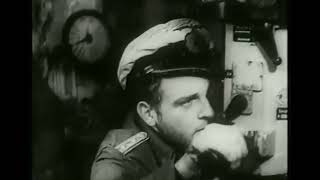
The 200-Knot Torpedo of the Soviet "Ghost Sub" Fleet – A 1961 Cold War Mystery
Автор: After WW2 Echoes
Загружено: 2025-12-30
Просмотров: 702
Описание:
In 1961, the laws of hydrodynamics said it was impossible. The Soviet Navy demanded a weapon that could travel underwater at 200 knots (230 mph)—four times faster than any torpedo in existence. This is the true story of the VA-111 Shkval ("Squall"), the secret weapon of the Soviet "Ghost Sub" fleet that turned physics into a weapon of war.
From the high-ceilinged conference rooms of the Soviet Admiralty to the secret testing grounds of Lake Issyk-Kul in Kyrgyzstan, we uncover the engineering nightmare of building a rocket that flies underwater. Discover how Professor Georgy Logvinovich defied the skeptics by wrapping a torpedo in a gas bubble—a process known as supercavitation—and how a team of engineers solved the impossible geometry of rocket propulsion to break the ocean's speed limit.
This documentary explores the classified history, the crushing failures, and the ultimate engineering triumph of the Shkval torpedo. We also delve into the tactical limitations that made it a "suicide weapon" for submarine captains and the international espionage scandal involving Edmond Pope that proved Russia still guards this technology as a state secret today.
In this video, we cover:
The physics of Supercavitation and the "Zero-Friction" theory.
The 1960s engineering race to overcome water drag.
The material science behind the ablative nose cone.
The tactical reality of a "deaf" rocket torpedo.
The legacy of the Shkval in modern naval warfare.
RECOMMENDED FOR VIEWERS WHO LIKE:
The Hunt for Red October
Cold War History Documentaries
Military Engineering & Technology
Naval Strategy and Tactics
⚠️ DISCLAIMER This video is for educational and documentary purposes only. The information presented is based on historical records, declassified documents, and public domain information regarding the VA-111 Shkval torpedo and the history of supercavitation research. All footage, images, and diagrams are used under the doctrine of Fair Use for the purpose of criticism, comment, news reporting, teaching, scholarship, and research.
Повторяем попытку...

Доступные форматы для скачивания:
Скачать видео
-
Информация по загрузке: