STP, RSTP, PVST, RPVST, and MSTP | Similarities and Differences between All STP Variations
Автор: ComputerNetworkingNotes
Загружено: 2024-05-18
Просмотров: 11564
Описание:
This video compares all STP variations and explains their similarities and differences in detail. This video is based on the following tutorial.
https://www.computernetworkingnotes.c...
Video description
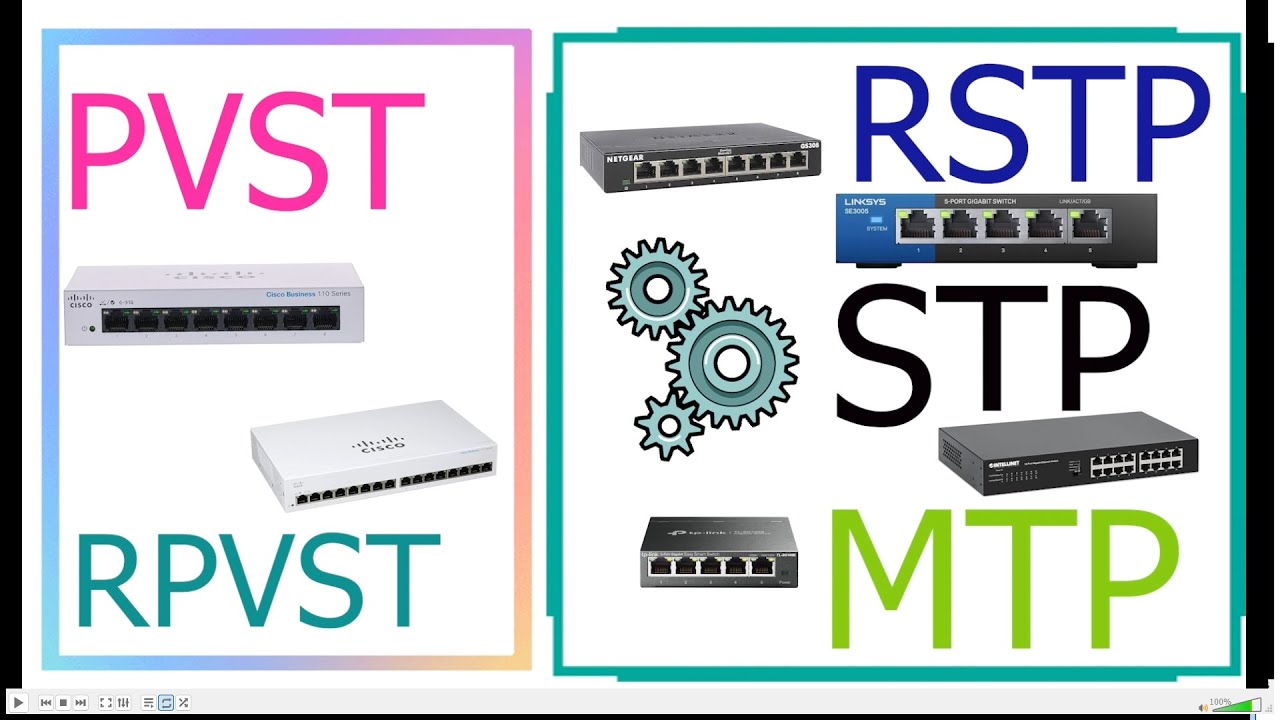
We have five STP variations: IEEE's STP, Cisco's PVST, IEEE's RSTP, Cisco's RPVST, and IEEE's MSTP. First, let us understand the similarities between these variations.
All of these create and use a virtual topology to find and remove switching loops in the network.
All of these elect a root bridge and use it as the focal point of the virtual topology.
All variations use the same rules and tiebreakers for the root bridge election.
Besides the root bridge, all remaining switches become non-root bridge switches in all variations.
All variations select only one root port to reach the root bridge.
They all use the same rules and tiebreakers to select the root port.
All variations select only one designated port for every local segment or end device.
They use the same rules and tiebreakers to select the designated port.
After selecting root and designated ports, all variations block the remaining ports to remove loops.
All variations run all ports through a few states. During these states, they learn the network topology, flush CAM table entries, select root and designated ports, and block the ports causing the loops.
These are the similarities between these variations. Now, let us understand the differences.
PVST and RPVST are Cisco proprietary protocols. These protocols run only on Cisco switches.
STP, RSTP, and MSTP are open standard protocols. These protocols run on all vendors' switches.
PVST, RPSVT, and MSTP run one instance per VLAN. STP and RSTP run one instance per switch.
STP and PVST reach convergence in fifty seconds. RSTP, RPVST, and MSTP reach convergence in ten seconds.
STP and PVST use four states: blocking, listening, learning, and forwarding to reach convergence.
RSTP, RPVST, and MSTP use three states: discarding, learning, and forwarding to reach convergence.
STP and PVST use the CAM table's aging feature to remove old entries. They use the listening state for this purpose.
RSTP, RPVST, and MSTP flush CAM table entries in the learning state.
PVST and RPVST use Port Fast and Ether Channel features to speed up convergence. Since these are Cisco-specific features, RSTP, RPVST, and MSTP do not use these.
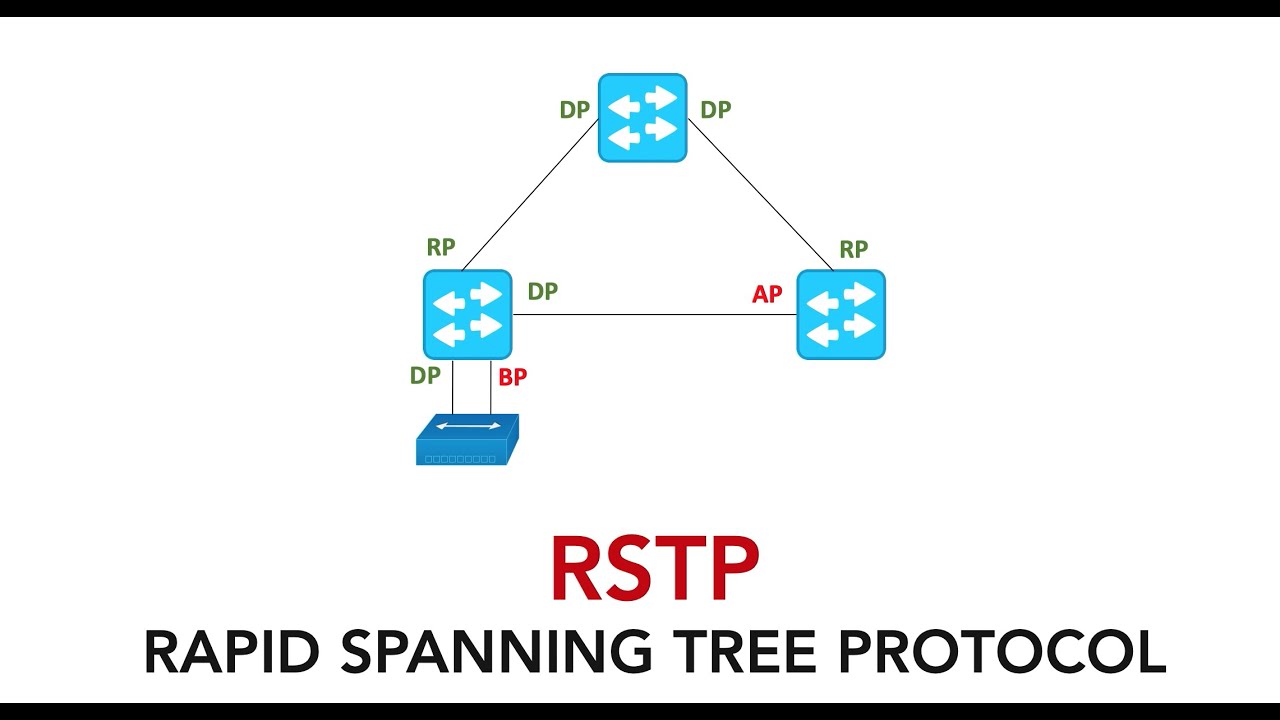
In addition to root and designated ports, RSTP, RPVST, and MSTP also use alternate and backup ports. The alternate port helps them reach the root bridge when the root port fails. Similarly, the backup port helps them reach the local segment when the designated port fails.
Convergence is slow in STP. Port Fast and Ether Channel help PVST to reach convergence a bit faster. Using alternate and backup ports, flushing CAM table entries, excluding the listening state, and reducing the time of remaining states make convergence fast in these variations.
This video is based on the following tutorial.
https://www.computernetworkingnotes.c...
Повторяем попытку...
Доступные форматы для скачивания:
Скачать видео
-
Информация по загрузке: