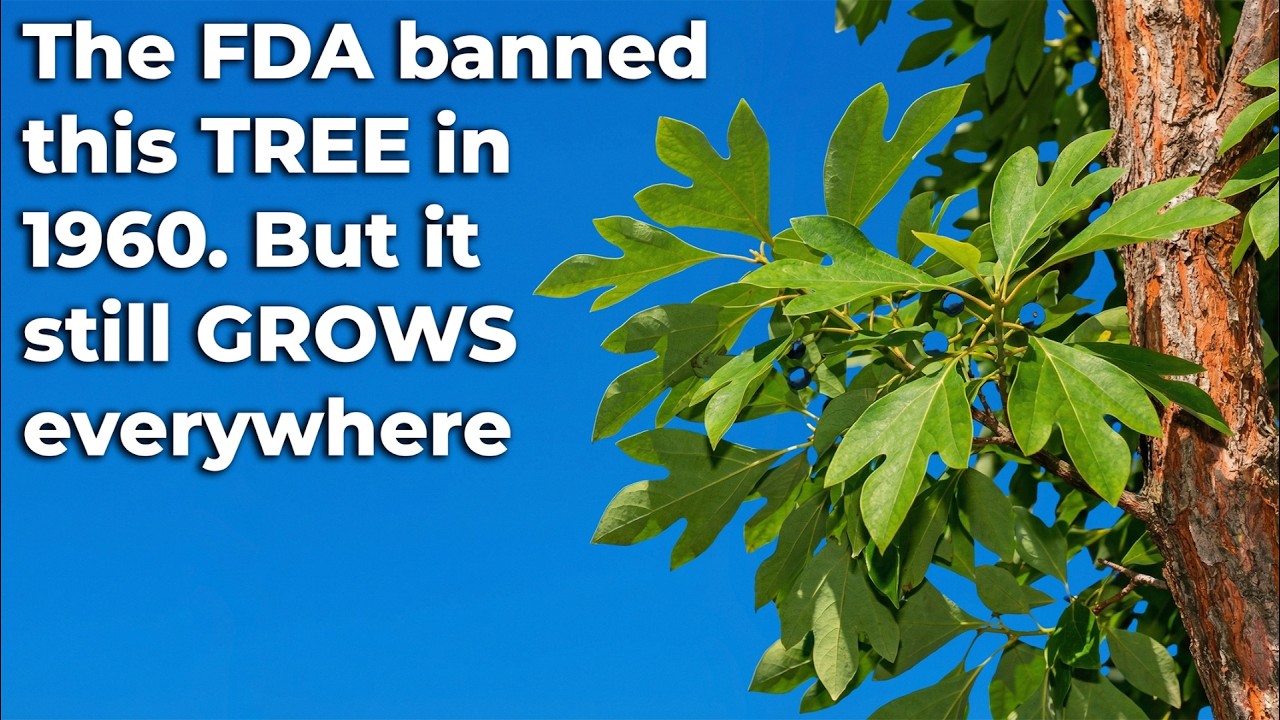
The FDA Banned This Flavor in 1960 — But the Tree Still Grows Wild Everywhere
Автор: Senior Gardener
Загружено: 2026-02-07
Просмотров: 254
Описание:
The FDA Banned This Flavor in 1960 — But the Tree Still Grows Wild Everywhere
Most people have no idea that the root beer they grew up with is a fake. In 1960, the FDA declared sassafras—the original flavoring that defined the drink—a carcinogen based on a single rat study. The doses were absurd (equivalent to 32 gallons daily for two years), but the ban was absolute. Overnight, centuries of traditional use were erased, an entire Appalachian economy collapsed, and Americans lost the flavor that connected them to the forest.
This video reveals the dramatic story of Sassafras albidum: how it became one of America's first major exports in the 1600s, how indigenous peoples used it for spring tonics, how it launched the root beer industry, and how a regulatory decision based on questionable science permanently changed the taste of a national beverage. The tree still grows wild across the eastern forests, still produces its aromatic bark, still offers the flavor that once defined American summers—but we've been taught to fear it.
#Sassafras #RootBeer #FDABan #LostFlavors #TraditionalPlants #ForagingHistory #AppalachianHeritage #WildEdibles #FoodSovereignty #PlantKnowledge #MedicinalPlants #BotanicalHistory
📚 SOURCES & FURTHER READING:
Carlson, A.W., & Jones, S.B. (1939). "The Sassafras Industry in the Ozarks." Economic Geography, 15(4), 397-405.
Dietz, B.M., et al. (2008). "Differential regulation of detoxification enzymes in hepatic and mammary tissue by hops (Humulus lupulus) in vitro and in vivo." Molecular Nutrition & Food Research, 52(Suppl 1), S47-S58.
FDA. (1960). "Safrole for Use in Food." Federal Register, 25, 12412.
Homburger, F., et al. (1961). "Toxic and possible carcinogenic effects of 4-allyl-1,2-methylenedioxybenzene (safrole) in rats on deficient diets." Medical and Experimental, 4, 1-11.
Miller, E.C., et al. (1983). "Structure-activity studies of the carcinogenicities in the mouse and rat of some naturally occurring and synthetic alkenylbenzene derivatives related to safrole and estragole." Cancer Research, 43(3), 1124-1134.
Moerman, D.E. (1998). Native American Ethnobotany. Timber Press.
Taylor, J.M., et al. (1967). "Toxicity of oil of sassafras and safrole." Toxicology and Applied Pharmacology, 10(2), 405.
USDA Plants Database. (2024). Sassafras albidum (Nutt.) Nees. Natural Resources Conservation Service.
⚠️ DISCLAIMER: Safrole is classified by the FDA as a potential carcinogen and is banned for commercial food use in the United States. This video is for educational and historical purposes only. Always consult with qualified professionals before making dietary changes or foraging wild plants.
Повторяем попытку...
Доступные форматы для скачивания:
Скачать видео
-
Информация по загрузке: