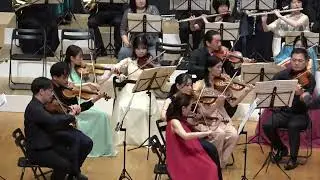
Beethoven - Violin Sonata No. 2, Op. 12, No. 2 (1798) {Szeryng/Haebler}
Автор: Bartje Bartmans
Загружено: 2026-02-04
Просмотров: 1596
Описание:
Ludwig van Beethoven (baptised 17 December 1770 – 26 March 1827) was a German composer and pianist. A crucial figure in the transition between the classical and romantic eras in classical music, he remains one of the most recognized and influential musicians of this period and is considered to be one of the greatest composers of all time.
Please support my channel:
https://ko-fi.com/bartjebartmans
Violin Sonata No. 2 in A major, Op. 12, No. 2 (1797-98)
Dedication: Antonio Salieri (1750–1825)
1. Allegro vivace (0:00)
2. Andante più tosto Allegretto ()
3. Allegro piacevole ()
Henryk Szeryng, violin and Ingrid Haebler, piano
Rec. 1978
Description by John Palmer
Cornerstones of the duo sonata repertory, Beethoven's sonatas for violin and piano are mostly the product of his early years. Eight of the ten sonatas were composed before 1803. Except for Opp. 24 and 30, No. 2, all of these are in the traditional three movements. Beethoven's first efforts in the genre, the Sonatas for Violin and Piano, Op. 12, are at once conventional and experimental.
Although Gustav Nottebohm, a pioneering scholar in the area of Beethoven sketch studies, suggested the second sonata of Op. 12 has its origins in 1795, recent scholarship suggests that all three sonatas date from 1797 - 1798. They were published as a set in 1799 by Artaria & Co. in Vienna. Beethoven dedicated the works to Antonio Salieri, composer and (from 1788) Kapellmeister at Court in Vienna, with whom Beethoven began studying dramatic and vocal composition possibly in late 1798.
Apparently, the sonatas of Op. 12 were not initially well received: contemporaries of Beethoven criticized the three pieces for their unusual modulations and "learned" style, with nothing "natural" to be found in them. The critic for the Allgemeine musikalische Zeitung was especially unkind, and in a review of June 1799 remarked that "diligent and strenuous labor" was required to get through "these strange sonatas," which contain "what we might call perversities." As ridiculous as such an assessment seems to modern listeners, it is important to note that there are features of the sonatas that would have seemed very odd to 1799 ears. In general, Beethoven's sonatas differ from the models of Haydn and Mozart in the increased importance of the violin part.
For further (very interesting) reading:
https://web.archive.org/web/201710300...
Повторяем попытку...

Доступные форматы для скачивания:
Скачать видео
-
Информация по загрузке: