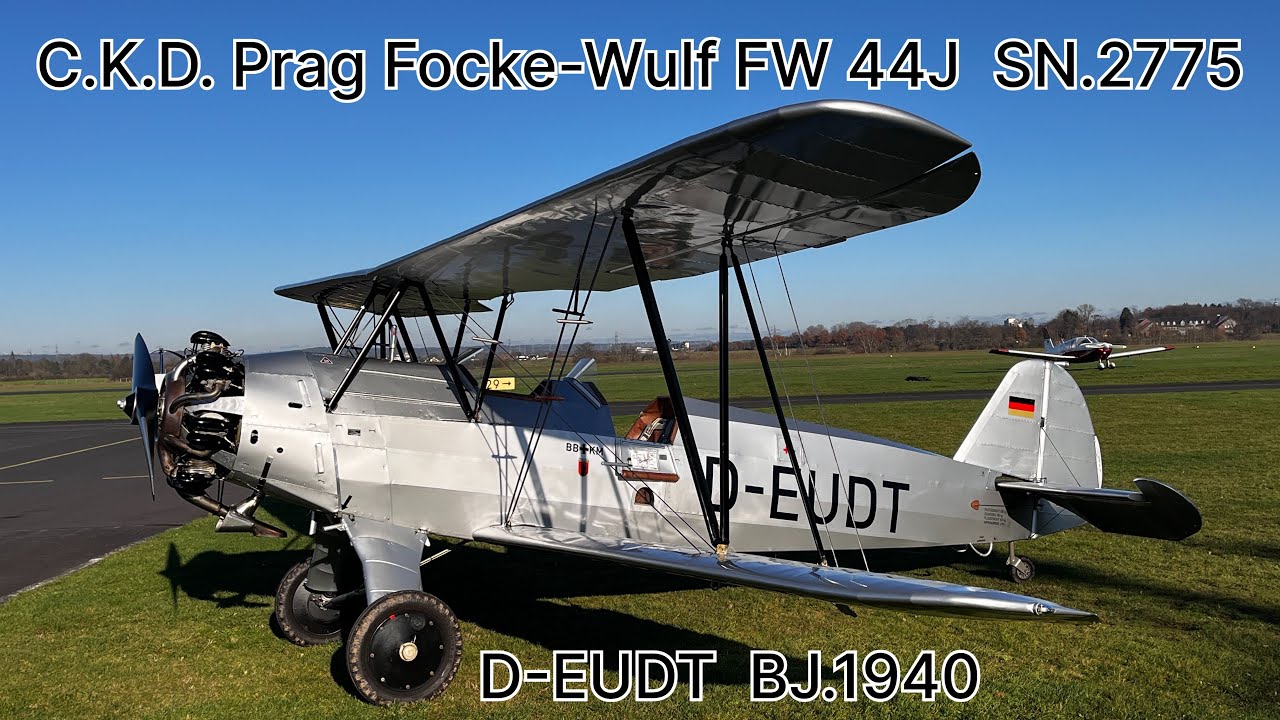
Focke Wulf FW-44J Stieglitz - Shuttleworth Military Pageant 2019
Автор: High Flight
Загружено: 2025-03-07
Просмотров: 937
Описание:
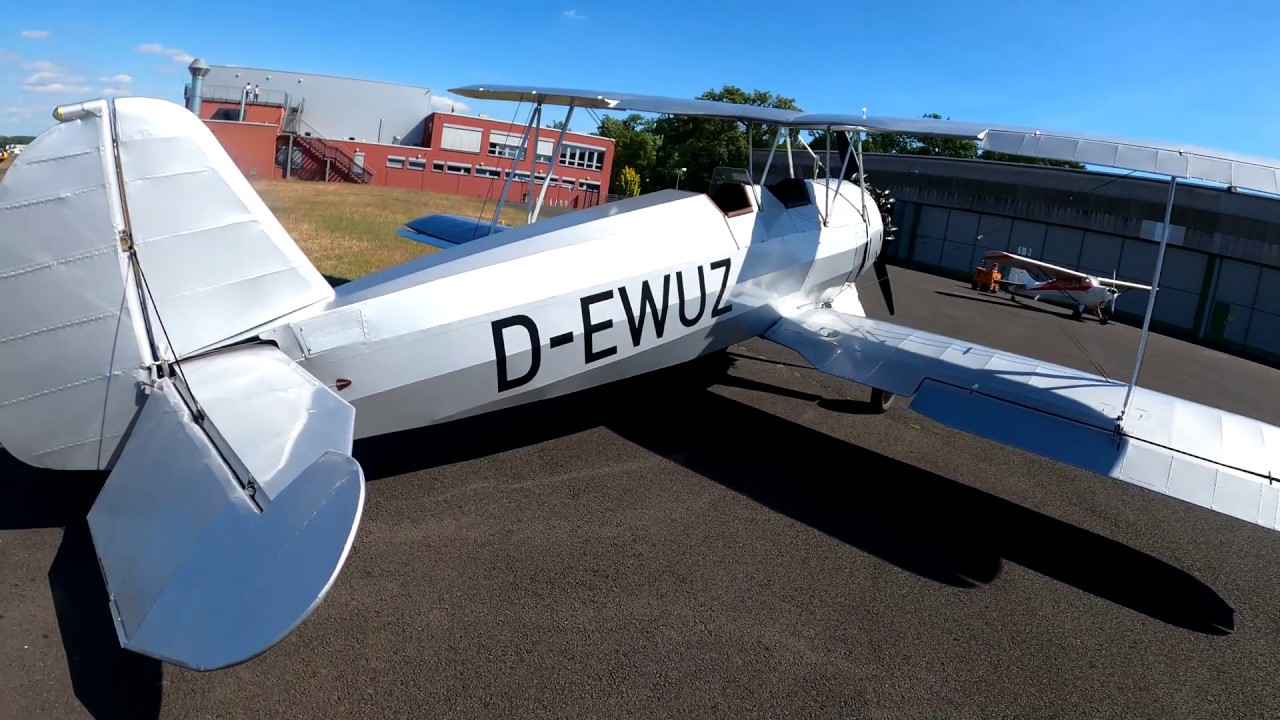
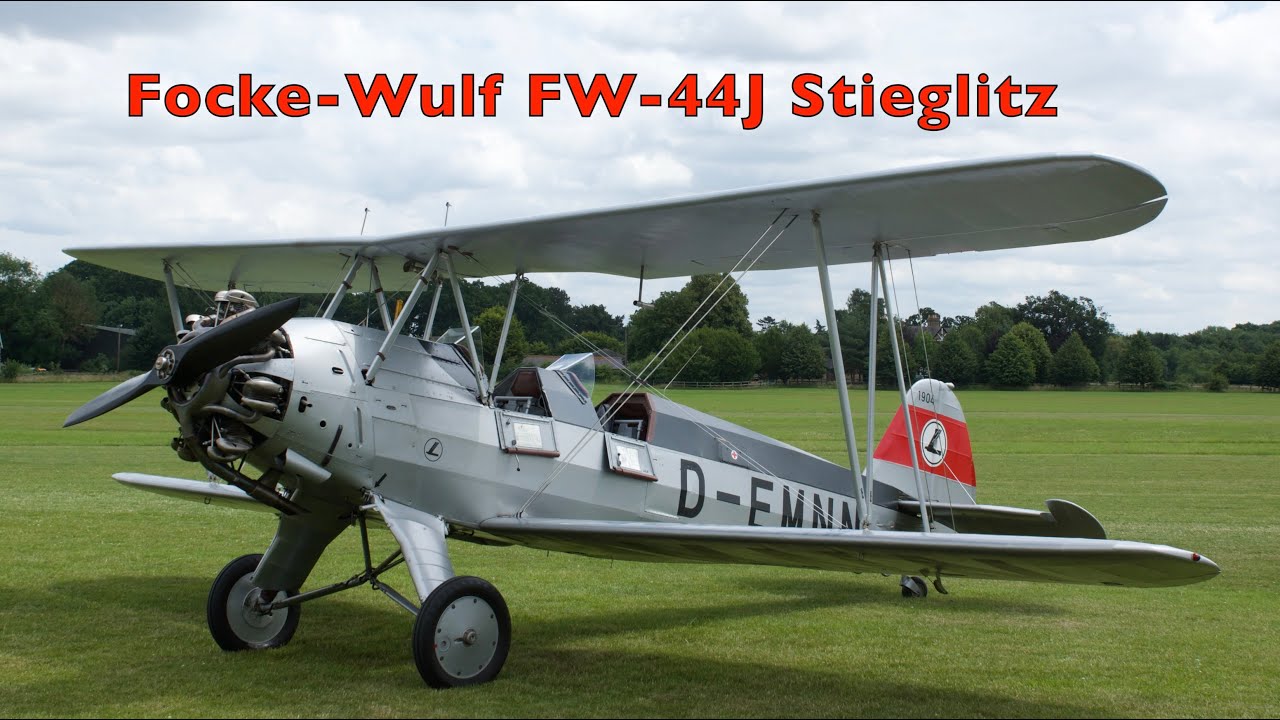
Lufthansa airlines captain Tobias Ruppel flying Richard Menage’s Focke-Wulf FW-44J Stieglitz, at Old Warden Airfield, during the Shuttleworth Military Pageant 2019.
This rare German Focke-Wulf FW-44J Stieglitz (Goldfinch) trainer, Werknummer 1904, was found in Sweden in 2011. It was one of the first batch of 12, made in Bremen in 1936 and bought for the Swedish Air Force (Flygvapnet). The type was designated by the Swedish as the SK-12.
It was delivered to the Flygvapnet on 29 January 1937 and served first with F 5 wing at Ljungbyhed, before moving to F 9 wing in 1944. It flew with the Swedish Air Force marked as Fv622. After disposal it went on to the Swedish civil register as SE-BRZ.
It was one of another 12 Stieglitz' for the Swedish Air Force from Germany, before 80 more were made under licence in Sweden from 1938 to 1944.
After 13 years as a trainer with the Air Force, in 1950 it was sold to Värmlands Flygklubb, flying registered as SE-BRZ until 1966. It was then donated to the Gillstads Bilmuseum in Lidköping. In 2006 the museum wound up and the aircraft went in and out of storage until 2012, when it was bought by the current owner. It was then restored to as original condition as possible. in Germany and the UK over the next five years.
It's one of about 50 surviving Focke-Wulf Fw 44 Stieglitz trainers, of which only 16 are airworthy, and one of only five built in Bremen. It's based at Bagby in North Yorkshire and is now on the UK civil register as G-EMNN.
Its colour scheme is one from the 1930s, copied from original Focke-Wulf drawings.
Designed and produced by the German aircraft manufacturer Focke-Wulf, it's design team was headed by Kurt Tank and it became the company's first major international sales success.
It was turned out by Focke-Wulf’s Bremen factory until March 1938 when production was moved to other German plants, namely AGO, Bücker and Siebel. After the invasion of Czechoslovakia in 1939, building of the Fw 44 was transferred to CKD in Prague until it ceased in 1943.
Intended for use as a pilot training and sports aircraft, the first prototype made its maiden flight in 1932. At first it was troublesome but remedial modifications and design tweaks soon made the Fw 44 a suitable aircraft for aerobatics. It soon got many orders from flight schools and flying clubs, both in Germany and abroad. Several famous pilots performed aerial displays using the type, notably Gerd Achgelis, Enrst Udet, and Emil Kopf.
More than 2,000 Stieglitz were built, of which the German Luftwaffe received over 1,600. It was also an export success, sold to many countries including Austria, Argentina, Brazil, Chile, Finland, Turkey and Yugoslavia. 20 served with Chiang Kai-shek’s Nationalist Chinese air arm, which
had their aircraft adapted for frontline combat during the Second Sino-Japanese War. Many were licence built in other countries, notably Argentina and Sweden. More than 300 were made outside Germany.
Multiple variants of the aircraft were developed, many for export customers. The FW 44J was the last version. It was powered by a seven-cylinder Siemens-Halske Sh 14a radial piston engine.
The systematic scrapping of Luftwaffe aircraft after World War 2 meant surviving Fw 44s were mostly outside Germany, mainly in Sweden, Finland and Argentina.
This Video and Audio content is
Copyright © StephenKeeler (HightFlight/SkyHighFlightTV) All Rights Reserved
Повторяем попытку...
Доступные форматы для скачивания:
Скачать видео
-
Информация по загрузке: