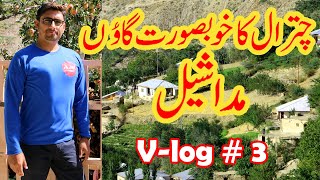
Chitral mai ghar kay samny chaman - Chitral Vlog by Sameer Khan
Автор: Sameer Khan Vlogger
Загружено: 2023-07-27
Просмотров: 187
Описание:
Chitral mai ghar kay samny chaman - Chitral Vlog by Sameer Khan
Kailash Vlog, Chitral Valley, Sameer Khan #sameer #viral #travelvlog #picnic #chitral #trending
#chitral
#chitral_vlog
#chitral_valley
#chitral_pakistan
#vlog
#chitra_valley_vlog
#chitral_vlog_2023
#travel_vlog
#chitral_travel_vlog
#pakistan_travel_vlog
#chitral_latest_travel_vlog
#chitral_city
#chitral_valley_pakistan
#chitral_vlogm
#chitral_road
#chitral_tour
#chitral_fort
#chitral_girls
#chitral_bazar
#chitral_valley_pakistan_tour
#chitrali_kalash_chitral
#chitral_beautiful_places
#chitral_airport
#chitral_valley_tourism
#road_trip_to_chitral
• Village ki Shadi ....! | first time visit ...
A brief video clip about Kalash Tribes living in Kalash Valleys including Bumborate, Birir and Runmboor. Chitral Pakistan.
The Kalasha or Kalash, are an Indo-Aryan indigenous people residing in the Chitral District of Khyber-Pakhtunkhwa province of Pakistan. The Kalash population in Pakistan numbers only in a few thousands, making them one of the smallest ethnic minorities in Pakistan.
They are considered unique among the people of Pakistan. They are also considered to be Pakistan's smallest ethnoreligious group, and traditionally practice a religion which some authors characterize as a form of animism. During the mid-20th century an attempt was made to force a few Kalasha villages in Pakistan to convert to Islam, but the people fought the conversion and, once official pressure was removed, the vast majority resumed the practice of their own religion. Nevertheless, some Kalasha have converted to Islam, despite some being shunned afterward by their community for having done so.
The term is used to refer to many distinct people including the Väi, the Čima-nišei, the Vântä, plus the Ashkun- and Tregami-speakers. The Kalash are considered to be an indigenous people of Asia, with their ancestors migrating to Chitral valley from another location possibly further south, which the Kalash call "Tsiyam" in their folk songs and epics. Some of the Kalash traditions consider the various Kalash people to have been migrants or refugees. They are also considered by some to have been descendants of Gandhari people.
The neighboring Nuristani people (including the Kalasha-ala) of the adjacent Nuristan (historically known as Kafiristan) province of Afghanistan once had the same culture and practised a faith very similar to that of the Kalash, differing in a few minor particulars.
The first historically recorded Islamic invasions of their lands were by the Ghaznavids in the 11th century while they themselves are first attested in 1339 during Timur's invasions. Nuristan had been forcibly converted to Islam in 1895–96, although some evidence has shown the people continued to practice their customs. The Kalash of Chitral have maintained their own separate cultural traditions.
Culture of Kalash People
Kalash mythology and folklore has been compared to that of ancient Greece, but they are much closer to the Hindu traditions in other parts of the Indian subcontinent. The Kalash have fascinated anthropologists due to their unique culture compared to the rest in that region.
Language of Kalash People
The Kalasha language, also known as Kalasha-mun, is an Indo-Aryan language whose closest relative is the neighboring Khowar language. Kalasha was formerly spoken over a larger area in south Chitral, but it is now mostly confined to the western side valleys having lost ground to Khowar.
Kalasha women usually wear long black robes, often embroidered with cowrie shells. For this reason, they are known in Chitral as "the Black Kafirs". Men have adopted the Pakistani shalwar kameez, while children wear small versions of adult clothing after the age of four. In contrast to the surrounding Pakistani culture, the Kalasha do not in general separate males and females or frown on contact between the sexes. However, menstruating girls and women are sent to live in the "bashaleni", the village menstrual building, during their periods, until they regain their "purity". They are also required to give birth in the bashaleni. There is also a ritual restoring "purity" to a woman after childbirth which must be performed before a woman can return to her husband. The husband is an active participant in this ritual. Girls are initiated into womanhood at an early age of four or five years
Повторяем попытку...

Доступные форматы для скачивания:
Скачать видео
-
Информация по загрузке: