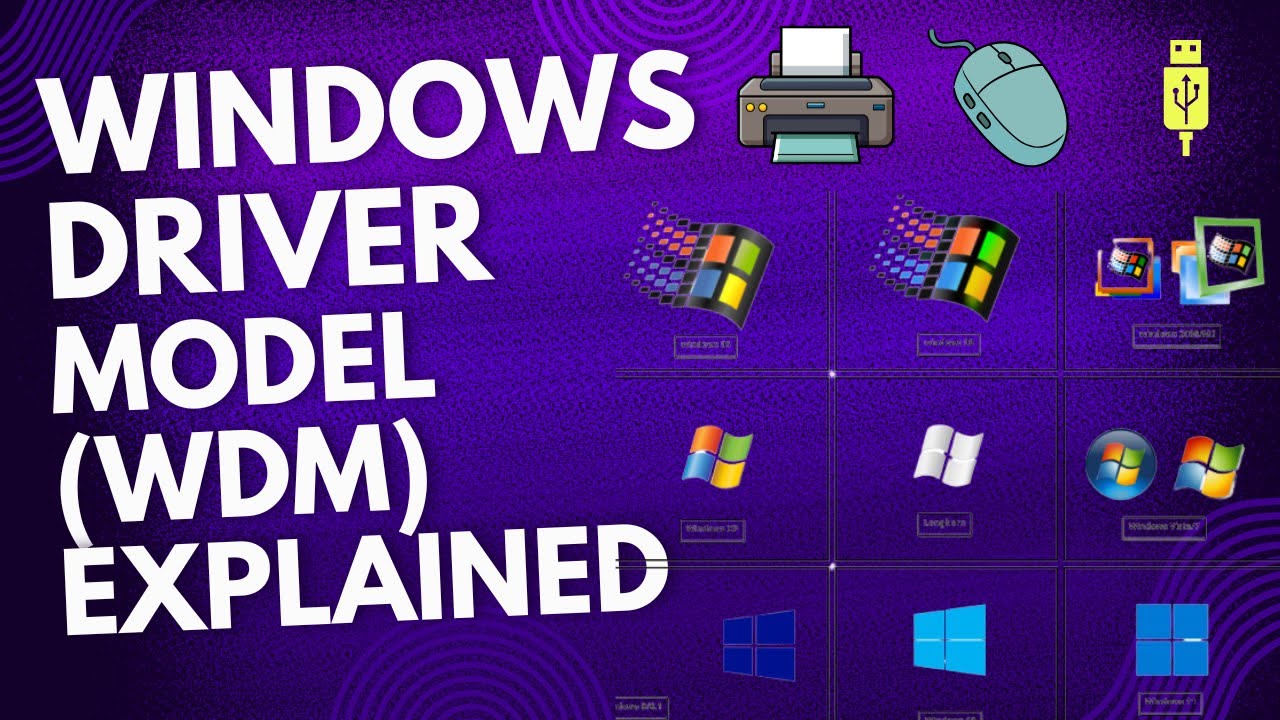
Windows Driver Model (WDM) Explained for Beginners with Examples in 3 Minutes
Автор: XTech 360
Загружено: 2025-04-23
Просмотров: 260
Описание:
Unlock the secrets of the Windows Driver Model (WDM) in this beginner-friendly YouTube video! If you’ve ever wondered how Windows communicates with your hardware devices like printers, USB drives, and network cards, this video provides a clear explanation of WDM using simple language, real-world examples, and easy-to-follow analogies.
The Windows Driver Model is essential for ensuring that your devices work smoothly across different versions of Windows, and understanding it can help you troubleshoot hardware issues, improve your tech skills, or prepare for IT certifications.
In this video, you’ll learn what WDM is, why it was developed, and how it acts as a “postal system” for your computer, standardizing communication between devices and the Windows operating system.
We’ll break down the three main types of WDM drivers—bus drivers, function drivers, and filter drivers—and show you how they work together in a layered architecture. Whether you’re a student, IT enthusiast, or just curious about how your PC works, this guide makes complex concepts accessible and engaging.
By the end, you’ll have a solid grasp of WDM, its benefits, and how it keeps your computer running smoothly.
The Windows Driver Model or WDM is a framework created by Microsoft to make it easier for hardware devices, such as printers, USB drives, and network cards, to work with Windows operating systems, starting from Windows 98 and Windows 2000.
It standardizes how device drivers are written and how they communicate with Windows, allowing the same driver to work across different versions of Windows without major changes.
To understand WDM, you can think of your computer as a city, with each device, like a printer, mouse, or disk, representing a house in that city.
The Windows Driver Model acts like the city’s postal system. Each house (device) needs to send and receive letters (data), and the postal system (WDM) sets the rules for how letters are addressed, sent, and delivered.
Different types of postal workers (drivers) handle different parts of the process, but they all follow the same rules so that mail gets to the right place.
WDM uses a layered architecture for device drivers, which means drivers are stacked on top of each other, and each layer has a specific job. There are three main types of WDM drivers.
The bus driver detects and manages devices connected to the system bus, much like a bus conductor checking tickets.
The function driver is the main driver that operates the device, similar to a taxi driver actually driving you to your destination.
The filter driver is optional and can modify or monitor data as it passes through, like a security guard checking parcels.
For example, with a USB mouse, the bus driver manages the USB port, the function driver handles mouse movements and clicks, and a filter driver might monitor mouse activity for accessibility features.
Drivers communicate with each other using I/O Request Packets or IRPs, which are like envelopes containing instructions or data.
When you move your mouse, the request or IRP goes from Windows, down through the filter (if any), to the function driver, and finally to the bus driver, which interacts with the hardware.
Each driver can process the IRP or pass it down the stack, just as a letter might go through several departments before reaching its destination.
Using WDM offers several advantages. It allows you to write one driver that works across many versions of Windows, and it ensures that all drivers follow the same rules, making Windows more stable and secure.
The layered approach of WDM also makes it easier to add features or fix bugs without having to rewrite everything from scratch.
In summary, WDM is like a standardized postal system for Windows device drivers. Drivers are stacked in layers—bus, function, and optional filter drivers—and they communicate using IRPs, passing requests down the stack.
WDM ensures that all the “postal workers” or drivers in Windows know how to deliver “mail” or data and commands between your computer and its devices, using clear rules and a layered system for reliability and compatibility.
#WindowsDriverModel #WDM #DeviceDrivers #WindowsDrivers #TechExplained #BeginnerTech #ComputerBasics #PCDrivers
Повторяем попытку...
Доступные форматы для скачивания:
Скачать видео
-
Информация по загрузке: