Incredible Benefits (And 1 Major Drawback) of Trampoline Workouts | Rebounding Pros & Cons
Автор: Trusty Spotter
Загружено: 2021-04-19
Просмотров: 19197
Описание:
Did you know rebounding is actually an amazing workout?
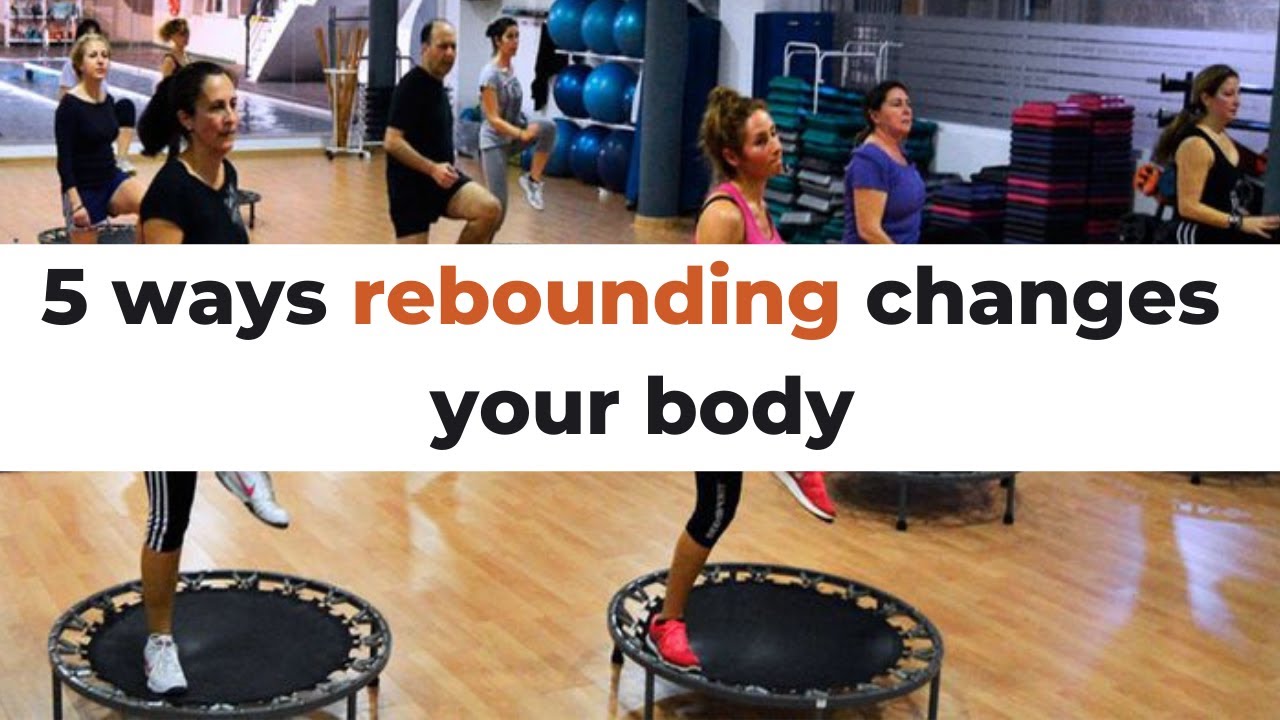
Rebounding, or trampolining for fitness, is quickly becoming a popular exercise option for people who are bored with more traditional workouts.
Let’s take a look at some of the pros and cons of rebounding, and whether you should try it… or whether you should leave your trampolining days in the past.
PRO - Tons of fun!
You’d be hard pressed to find a more fun and enjoyable workout than bouncing on a mini trampoline.
It was fun as a kid and it’s fun now, even though rebounding is really hard work.
This is actually a huge deal. The more you enjoy your workouts, the more likely you’ll be to stick with them long term. The longer you stick with it, the better results you’ll see.
If you’ve struggled to stick with a regular cardio or weightlifting routine in the past, trying something a little different might be just the thing you need.
PRO - Improves balance
Bouncing is a dynamic and unpredictable range of motion. Each time you land on the rebounder, you hit at a slightly different angle, forcing your body to quickly adjust and center itself.
For this reason, regular rebounding workouts do wonders for your sense of balance and overall coordination.
Studies have particularly shown amazing improvements in balance for seniors and motor function in children after regular trampolining sessions.
PRO - Increases endurance & scorches calories
If you’ve hopped on a trampoline recently, you probably realized pretty quickly that it was a lot harder than you remember it being as a kid.
Non-stop rebounding takes an extraordinary amount of endurance and leg strength.
If you’re looking to quickly improve your cardio conditioning, rebounding might be an even better choice than running and other forms of cardio.
One recent study actually showed that rebounding was almost twice as effective at boosting key cardio indicators compared to running.
Not only that, but rebounding burns calories at roughly the same rate as sprinting at top speed.
PRO - Low impact
It seems counterintuitive that a jumping and bouncing workout like rebounding could actually be easy on your joints, but that’s the beauty of the trampoline.
A good rebounder will absorb the majority of the shock and impact of your jumps, protecting your knees in the process.
In part because of its low impact nature, rebounding feels easier than it actually is, meaning you’ll enjoy the workouts more and be able to push yourself harder compared to some other forms of exercise.
PRO - Builds lower body strength
Rebounding is extremely challenging for your lower body, but it takes more than endurance to get good at it.
Regular trampoline workouts will build power and strength in your legs on par with traditional weight training.
One recent study showed rebounding participants experienced similar leg gains to another group focused on leg presses and lunges.
Did you know that astronauts even use trampolines to regain bone and muscle mass in their lower bodies after returning from space missions?
If it’s good enough for NASA, it’ll be good enough for you!
CON - Injury risk
Rebounding is considered low impact and safe for your joints, but there’s always an injury risk when jumping is involved.
In particular, watch out for ankle sprains from landing awkwardly on the side of your foot.
The good news is that most rebounders meant for fitness will include a stability bar, and you’ll rarely bounce high enough to hurt yourself.
CON - Can’t replace full body training
You’d be surprised how effective rebounding is at training your lower body, for both strength and endurance.
However, your upper body will get little to no work during most trampoline workouts.
For a proper full body workout, make sure to incorporate weight training, calisthenics, or the rowing machine to target your arms, shoulders, chest, and back.
It’s also important to note that beginners can see great muscle and strength gains in their legs from rebounding, but there is a limit. If it’s tree-trunk legs you’re after, you’ll need to eventually incorporate squats and other traditional weight lifting exercises.
--
Rebounding is a surprisingly well-rounded workout that too often gets overlooked.
What’s not to like? You’ll burn calories at a rapid rate, improve your endurance and conditioning more effectively than you would by running, and develop excellent lower body strength.
It’s a particularly great choice for seniors in the market for a low impact exercise to help with balance, but people of all ages and fitness levels will find rebounding a rewarding challenge.
Just watch out for injuries due to bad form, and don’t ignore those upper body muscles. Incorporate other forms of exercise on your off days for a well-rounded workout.
Повторяем попытку...

Доступные форматы для скачивания:
Скачать видео
-
Информация по загрузке:



![TOP 5 Best Rebounder Trampoline [ Buyer's Guide ]](https://imager.clipsaver.ru/7deBr_RhTuY/max.jpg)