Interstitial Compounds and Alloys formation | d Block| Lecture 14 | Line to Line NCERT | Gagan Sir
Автор: Dikki Institute
Загружено: 2022-08-01
Просмотров: 861
Описание:
Interstitial compounds
Transition metals form interstitial compounds with elements such as hydrogen, boron, carbon and nitrogen. The small atoms of these non-metallic elements (H, B, C, N, etc.) get trapped in vacant spaces of the lattices of the transition metal atoms
They are usually non stoichiometric and are neither typically ionic nor covalent, for example, TiC, Mn4N, Fe3H, VH0.56 and TiH1.7, etc.
The formulas quoted do not, of course, correspond to any normal oxidation state of the metal.
Because of the nature of their composition, these compounds are referred to as interstitial compounds.
The principal physical and chemical characteristics of these compounds are as follows:
(i) They have high melting points, higher than those of pure metals.
(ii) They are very hard, some borides approach diamond in hardness.
(iii) They retain metallic conductivity.
(iv) They are chemically inert.
Alloy Formation
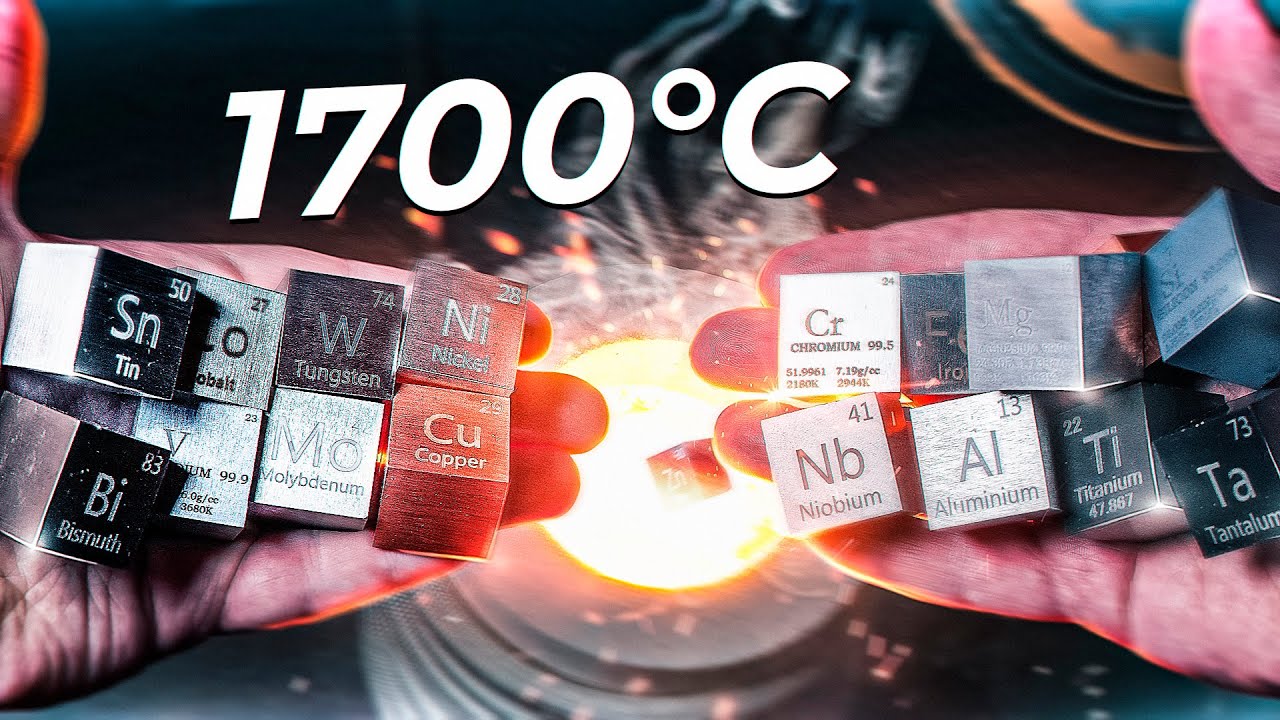
An alloy is a blend of metals prepared by mixing the components.
Alloys may be homogeneous solid solutions in which the atoms of one metal are distributed randomly among the atoms of the other.
Such alloys are formed by atoms with metallic radii that are within about 15 percent of each other.
Because of similar radii and other characteristics of transition metals, alloys are readily formed by these metals.
The alloys formed are hard and have often high melting points.
The best known are ferrous alloys: chromium, vanadium, tungsten, molybdenum and manganese are used for the production of a variety of steels and stainless steel.
Alloys of transition metals with non transition metals such as brass (copper-zinc) and bronze (copper-tin), are also of considerable industrial importance.
Повторяем попытку...
Доступные форматы для скачивания:
Скачать видео
-
Информация по загрузке: