Precision Lathe Sanding Attachment Polishing Metal Rod Surfaces
Автор: Work Tool Room
Загружено: 2026-01-23
Просмотров: 22
Описание:
Precision Lathe Sanding Attachment Polishing Metal Rod Surfaces
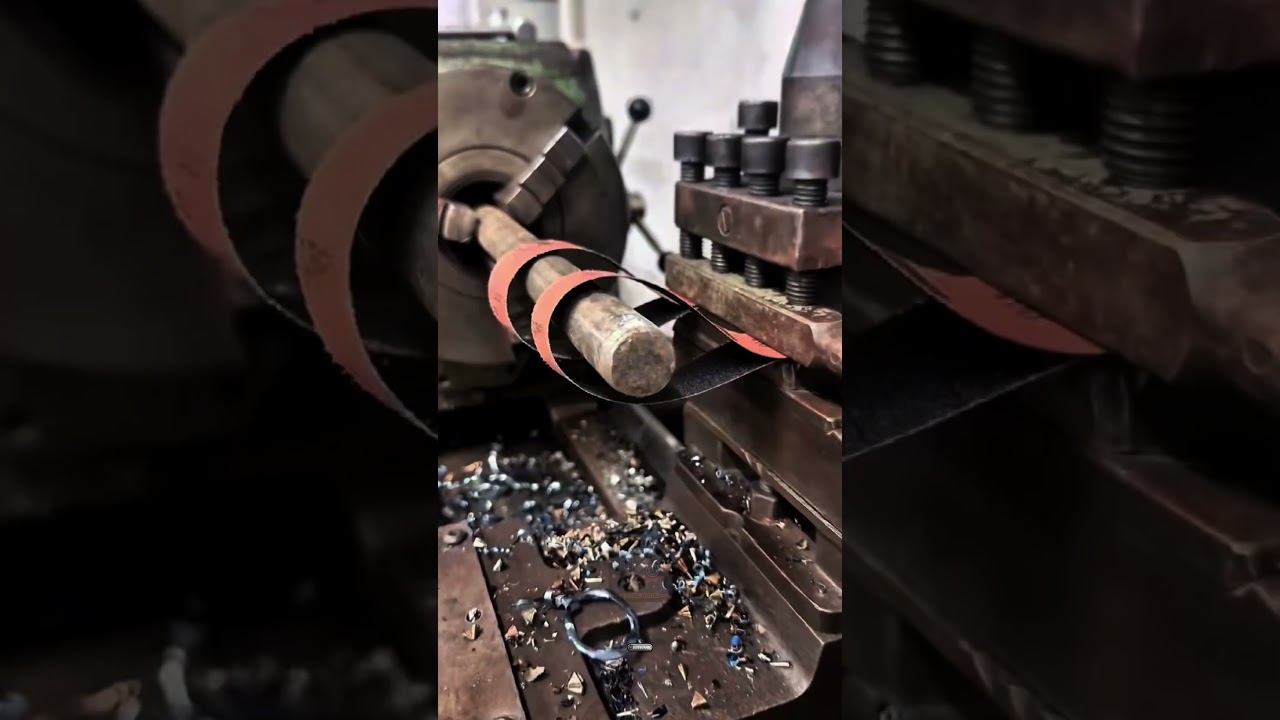
The technical specification of this industrial lathe sanding attachment involves a specialized tool-post mounted fixture designed to hold abrasive sanding belts under consistent tension. This device is engineered to provide a high-quality surface finish on cylindrical metal components such as hydraulic rods, axles, and precision shafts. The mechanism uses dual rotating loops of emery cloth or sandpaper, which are pressed against the workpiece as it rotates at high RPMs on a metal lathe. This setup is significantly safer than traditional manual sanding, where an operator might hold sandpaper by hand, risking entanglement in the chuck. The tool post mounting allows for steady longitudinal travel across the bed of the lathe, ensuring an even grit application and preventing flat spots or uneven diameters. By integrating this attachment into the machining workflow, shops can achieve mirror-like finishes or specific Ra roughness values required for tight-tolerance mechanical seals and industrial bearings.
5 Technical Functions of the Tool:
1. Tool Post Integration: Securely bolts into the standard lathe tool holder for maximum stability during rotation.
2. Spring-Loaded Tensioning: maintains a constant pressure between the abrasive belt and the metal rod to ensure uniform material removal.
3. Dual-Loop Abrasive System: Utilizes two separate sanding belts to cover more surface area and speed up the polishing cycle.
4. Adjustable Belt Tracking: Allows the operator to align the belts perfectly to prevent them from slipping off the rollers during high-speed operation.
5. Longitudinal Feed Compatibility: Works with the lathe's automatic carriage feed to move smoothly along the entire length of the workpiece.
5 Steps of the Working Process:
1. Machine Setup: The metal rod is secured between the lathe chuck and the tailstock center to ensure true rotation.
2. Attachment Mounting: The sanding fixture is installed on the tool post and the appropriate grit belts (e.g., 100 grit) are loaded.
3. Speed Calibration: The lathe is set to a specific RPM based on the metal type and the diameter of the rod being polished.
4. Engagement: The operator uses the lathe's cross-slide to bring the abrasive belts into contact with the spinning rod.
5. Finishing Pass: The carriage is moved horizontally across the rod, applying a consistent finish from end to end before switching to finer grits.
Using mechanical sanding attachments is a best-practice standard in modern machining for both safety and quality control. It ensures that the final product meets the high aesthetic and functional requirements of industrial clients while protecting the operator from high-speed mechanical hazards.
If you found this machining process helpful please like the video share your thoughts on shop safety in the comments and subscribe for more professional metalworking insights.
#work #skills #process #job #machining #lathe #metalworking #engineering #polishing #industrial #safety
Precision Lathe Sanding Attachment Polishing Metal Rod Surfaces. This lathe-mounted sanding tool provides a safe and uniform finish for rotating metal shafts. #work #skills #process #job #machining #lathe #metalworking #engineering #polishing #industrial #safety
Повторяем попытку...
Доступные форматы для скачивания:
Скачать видео
-
Информация по загрузке: