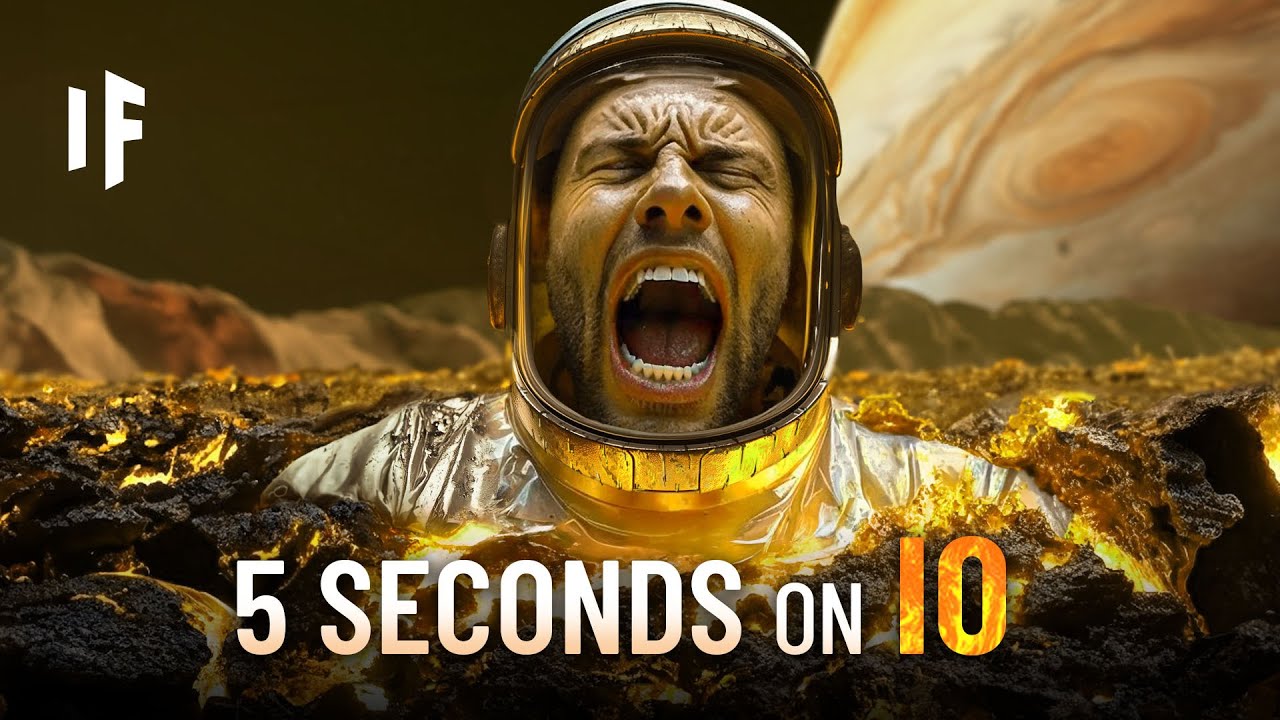
Io: Jupiter's Volcanic Moon!
Автор: Insane Curiosity
Загружено: 2020-09-06
Просмотров: 16339
Описание:
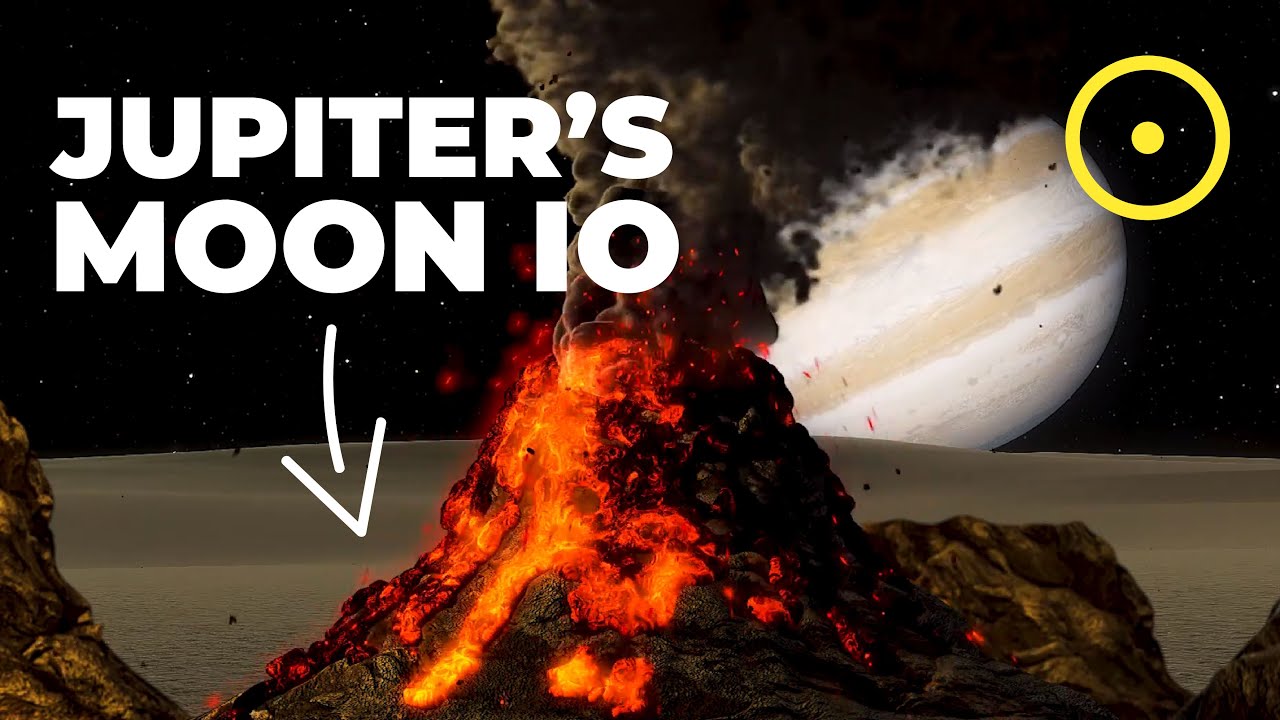
From the discovery of the moon, to what makes it so volcanic, and more! Join us as we explore Io: Jupiter's Volcanic Moon!
-------------------------------------------------------------------------------------------
Subscribe for more videos:https://www.youtube.com/c/InsaneCurio...
Business Enquiries: [email protected]
-------------------------------------------------------------------------------------------
8. The Discovery Of Io
In many ways, Io is one of the more popular moons of Jupiter. It's been referenced many a time as we'll note later. But how did we learn about this very special moon?
The first reported observation of Io was made by Galileo Galilei on 7 January 1610 using a 20x-power, refracting telescope at the University of Padua.
The discovery of Io and the other Galilean satellites of Jupiter was published in Galileo's Sidereus Nuncius in March 1610. In his Mundus Jovialis, published in 1614, Simon Marius claimed to have discovered Io and the other moons of Jupiter in 1609, one week before Galileo's discovery. Galileo doubted this claim and dismissed the work of Marius as plagiarism. Regardless, Marius's first recorded observation came from 29 December 1609 in the Julian calendar, which equates to January 8th, 1610 in the Gregorian calendar, which Galileo used. Given that Galileo published his work before Marius, Galileo is credited with the discovery.
But the end of the "discovery" did not end there. Because for basically 250 years various astronomers tried to learn more about Io. But because of its place in space all they could usually see was a ball of light. It would take a while for them to start to parse out the details of the moon.
Improved telescope technology in the late 19th and 20th centuries allowed astronomers to resolve (that is, see as distinct objects) large-scale surface features on Io. In the 1890s, Edward E. Barnard was the first to observe variations in Io's brightness between its equatorial and polar regions, correctly determining that this was due to differences in color and albedo between the two regions and not due to Io being egg-shaped, as proposed at the time by fellow astronomer William Pickering, or two separate objects, as initially proposed by Barnard. Later telescopic observations confirmed Io's distinct reddish-brown polar regions and yellow-white equatorial band.
Telescopic observations in the mid-20th century began to hint at Io's unusual nature. Spectroscopic observations suggested that Io's surface was devoid of water ice (a substance found to be plentiful on the other Galilean satellites).
So as you can see, this wasn't just a discovery of trying to find the moon, but to try and understand what it was and what it was like in regards to its very nature. Which would be further expanded upon in the future via attempts to explore the moon with probes and satellites.
7. The Exploration of Io Part 1
In the late 1960s, a concept known as the Planetary Grand Tour was developed in the United States by NASA and the Jet Propulsion Laboratory (JPL). It would allow a single spacecraft to travel past the asteroid belt and onto each of the outer planets, including Jupiter, if the mission was launched in 1976 or 1977. However, there was uncertainty over whether a spacecraft could survive passage through the asteroid belt, where micrometeoroids could cause it physical damage, or the intense Jovian magnetosphere, where charged particles could harm sensitive electronics.
-------------------------------------------------------------------------------------------
"If You happen to see any content that is yours, and we didn't give credit in the right manner please let us know at: [email protected] and we will correct it immediately"
"Some of our visual content is under a Attribution-ShareAlike license. (https://creativecommons.org/licenses/) in it’s different versions such as 1.0, 2.0, 3,0 and 4.0 – permitting comercial sharing with attribution given in each picture accordingly in the video."
Credits: Ron Miller
Credits: Nasa/Shutterstock/Storyblocks/Elon Musk/SpaceX/Esa
Credits: Flickr
Credits: JPL/ university of arizona/ DLR/goddard/scientific visualization studio/SwRi/MSSS/UCLA/USGS
wellcome images
burkhard mùche
horst frank -commonswiki
volcanopele at english wikipedia
rick guidice/Robbie Shade/ Lunar and Planetary Institute/Mailset
Video Chapters:
00:00 Introduction
00:17 Discovery of IO
03:33 Exploration
07:55 Exploration Part 2
10:46 Volcanics
12:27 Orbit and Rotation
13:45 Pop Culture
14:20 Atmosphere
15:42 Future Exploration
#insanecuriosity #jupitermoon #thesolarsystem
Повторяем попытку...

Доступные форматы для скачивания:
Скачать видео
-
Информация по загрузке:




![Челябинский метеорит мы пропустили. Пропустим и другие? [Veritasium]](https://imager.clipsaver.ru/nZRnAC_XJI4/max.jpg)