Fixing Volkswagen's Solex 34PICT-3/4 carburetor hesitation
Автор: The Source, Robert Hays
Загружено: 2025-02-06
Просмотров: 1916
Описание:
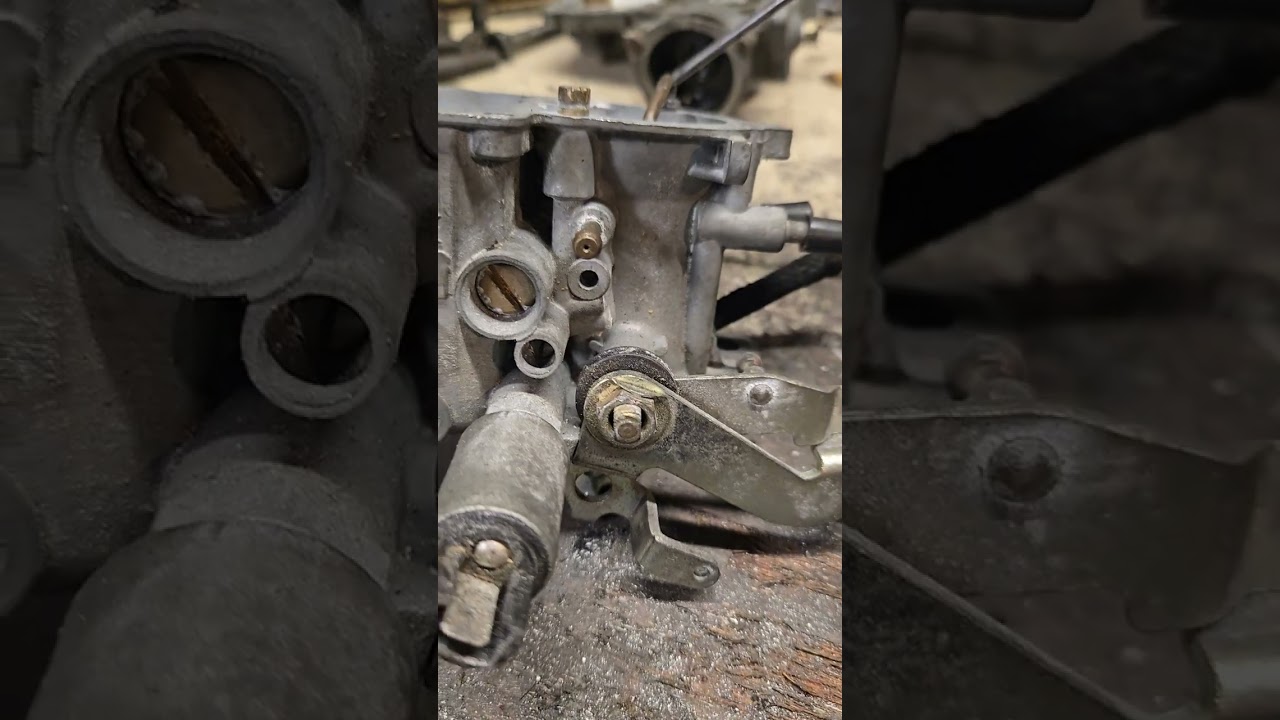
At idle, the pilot jet, just like a pilot light in a gas oven, keeps the engine lit, prepared to rev up when the gas pedal is pushed down. The moment the pedal is pushed down, the accelerator pump begins to squirt. If pedal movement stops with the throttle lever at only, say ... ~ 15/20 degrees open, the pump stops. In this condition, engine suction is too low to pull from the spray bar (main jet). So there's no fuel from the main or the accelerator pump. So it has to come from the pilot jet. If the engine loses RPM at ~ 15/20 degrees and tries to die with the throttle held in this position, that means there's not enough fuel from the pilot jet. Realize the initial response is solely due to fuel from the accelerator pump, and with pedal movement (lever movement) halted, the pump halts too. engine is dependent only on what's coming from the pilot jet. With a flat spot condition, the engine will continue to run then begin to falter as the fuel from the accelerator pump is spent while holding the throttle steady as described.
The pilot jet air bleed (basically an air correction jet exclusively for the pilot jet). Making it a little bigger (bug stock is about 1.35 - to 1.5. 1972 - 1974 bus carbs are 1.5. Type 3 is 2 millimeters). Drill to 2 millimeters and use a bigger pilot jet.
Buy a few 45 size jets and a set of reamers to enlarge the jet. A bit pretty close to 2 mm can be found in a typical hardware store for the air bleed. Remove the pilot jet while drilling air bleed because the drill bit will hit it. Turn the bit by hand - don't use a drill motor!! The final pilot jet size can be as high as .75 or .80.
Do final idle adjustment with engine hot. Adjust for highest idle. Proper pilot jet size is when you can adjust it lean (clockwise) until it dies, and it can be adjusted rich (counterclockwise) until the idle gets lumpy, uneven. Somewhere in between will the highest idle.
Before any of the above, ck compression, leak down, LISTEN for leaks. Gauges are unnecessary. If you can hear ANY leakge during a leakdown test, it needs fixing. There's no acceptable, OK amount of leakdown. Tailpipe sound - exhaust valve leakage. Carburetor sound - intake valve leakage.
Leakage common on new engines with "go through the motions" machining or with narrow valve to seat contact surfaces that are less than factory specs for better flow. When doing valve work, always check for leakage with fluid like solvent or gasoline.
Also, there must zero air leaks in the intake system. The best way seal end castings at the head on dual port and all type is to apply high temp silicone to the head side of gasket, then install gasket. Now put silicone on the end casting and install. Snug up the nuts, then tighten a few hours later. It'll never leak. Use stock gaskets. Paper gaskets don't last.
Air leaks in the intake system are the primary cause of many diagnostic headaches (they can be hard to find and their symptoms are often the same as other causes. And they're spooky, too.), and engine damage. Burned valves in fuel injected bay window buses, for instance, due to the many often neglected vacuum hosess.
Rationalization of air correction jet requirements re the bus needing them changed after years of being fine:
I think there's always cavitation at the main jet at high rpm so you get less fuel (lean condition) than without cavitation. But it's not an issue because everything works fine. So all is fine then the engine changed, smaller air is needed because of lean condition at high rpm because of more cavitation at high rpm so that's why this seems to conflict with the following*. But first - imagine totally plugging the air correction jet for the main. Not gonna work for pilot air bleed.
The following* ...
I think the bigger idle air bleed doesn't make for a leaner condition because the air is moving so slow vs prev, the system works like you'd think - no cavitation.
There's a device that's used to spray liquid fertilizer or bug spray that attaches to a garden hose. If the water is turned on to a trickle, little to no fertilizer comes out.
Solution is turning up the water.
Pilot fuel is the fertilizer.
Air bleed is the water hose.
Idle mixture? Just like riding a bicycle, the slower you go, the better you have to balance....
As far as my speaking of timing and the idle speed - if you put an in 009 distributor in a car that is supposed to have the timing at 5 degrees ATDC (has a distributor with a two hose vaccum unit) you'll then be setting the timing at 10 BTDC. But this increases the idle speed. When you attempt to turn the speed down, the speed screw will bottom before you get to your preferred speed if you're using a German carb. They're just not designed for the timing to be set at 10 degrees BTDC. But the Brazilian carbs have more range in the adjustment and will allow you to adjust the idle speed to where you want it with the timing at 10 degrees BTDC.
Повторяем попытку...
Доступные форматы для скачивания:
Скачать видео
-
Информация по загрузке:


