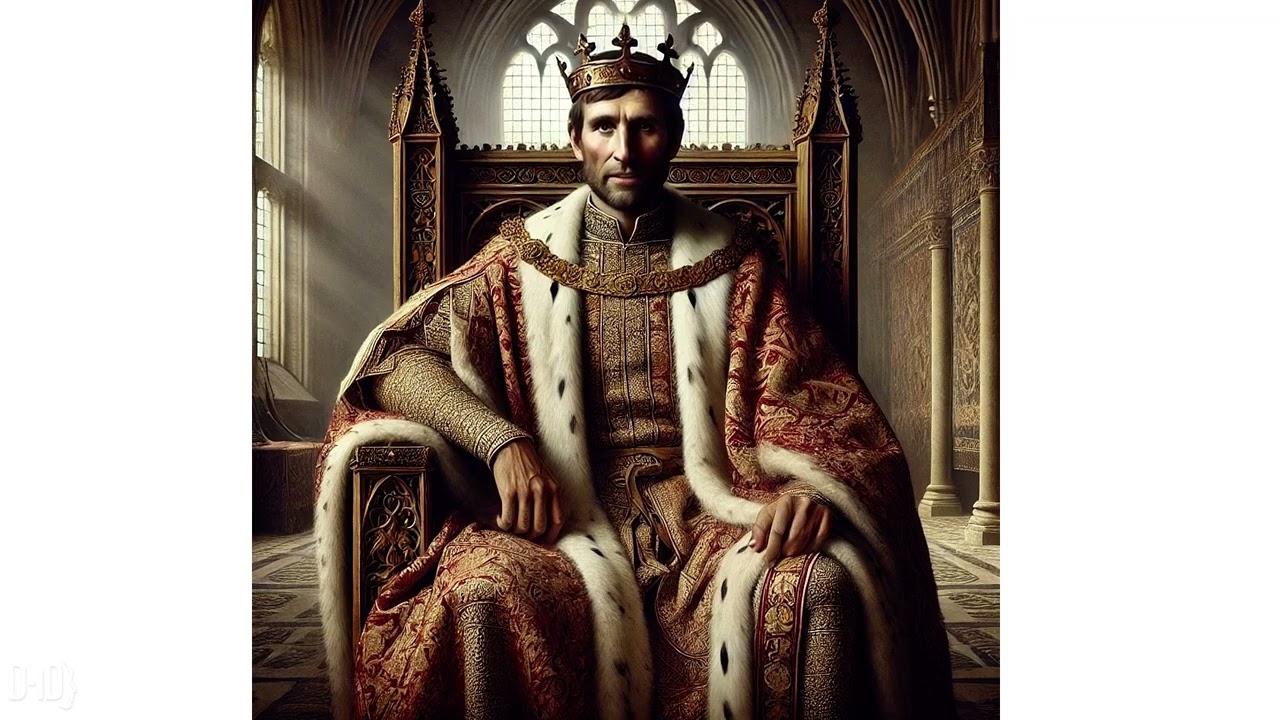
2) King of England: Edward the Elder, 899 to 924
Автор: Histoire du Monde
Загружено: 2024-12-13
Просмотров: 92
Описание:
Detailed Summary of the History of Edward the Elder (899-924)
Edward the Elder, son of Alfred the Great, ruled the kingdom of Wessex from 899 to 924. His reign was marked by a relentless pursuit of unity and defense against Viking invasions, as well as reforms aimed at strengthening the emerging kingdom of England. Below are the key events and achievements of his life and reign:
1. Heir to Alfred the Great
Edward became king in 899 following the death of his father, Alfred the Great, who had repelled the Vikings and laid the foundations of an organized and resilient kingdom. Edward inherited a stable but still-threatened realm, as Viking incursions and internal divisions persisted.
2. Consolidation of Wessex
Edward continued his father’s work by reinforcing the network of fortifications (burhs) that protected the population and repelled Viking attacks. He also implemented effective laws and administration, centralizing authority and establishing Wessex as a model of stability.
3. Struggles Against the Vikings
Edward’s reign was dominated by conflicts with the Vikings, particularly those controlling the Danelaw (areas under Danish rule, including Northumbria and East Anglia). In 909, he led a successful military campaign in northern Mercia, recovering the relics of Saint Oswald, which boosted the morale and Christian identity of the English.
In 910, Edward achieved a decisive victory over the Vikings at the Battle of Tettenhall, halting their incursions into Wessex and Mercia.
4. Alliance with Æthelflæd
His sister, Æthelflæd, Lady of the Mercians, was a crucial ally. Together, they coordinated military campaigns to reclaim territories from the Vikings. Æthelflæd was a respected leader, and her partnership with Edward strengthened the ties between Wessex and Mercia. Upon her death in 918, Edward assumed direct control of Mercia, uniting the two regions under a single crown.
5. Expansion of the Kingdom
Edward continued his work of unification by targeting the remaining Viking strongholds. Through marriages, alliances, and military campaigns, he extended his influence over East Anglia and the Midlands. Local rulers gradually accepted his sovereignty, bringing England closer to the vision of a unified kingdom.
6. Reforms and Development
Beyond warfare, Edward focused on strengthening the kingdom’s structures. He promoted trade, developed local markets, and made the enforcement of laws a cornerstone of his reign. He also championed the Christian faith as a unifying element, solidifying the cultural and religious identity of his people.
7. End of His Reign
In 924, after 25 years of rule, Edward passed away. He left behind a kingdom that was stronger and more unified than when he ascended the throne. His son, Æthelstan, inherited this consolidated realm and continued Edward’s legacy by becoming the first king to fully unite England.
Legacy
Edward the Elder is often overshadowed by the fame of his father, Alfred, and his son, Æthelstan, but his role was pivotal in the transition from fragmented Anglo-Saxon kingdoms to a unified England. His ability to combine warfare, diplomacy, and administrative reforms marks him as a builder king, dedicated to protecting and uniting his people.
His reign is now recognized as a key chapter in medieval English history, representing the shift from a divided land to an emerging unified kingdom.
Повторяем попытку...
Доступные форматы для скачивания:
Скачать видео
-
Информация по загрузке: