SENSE.nano 2020 Symposium Session 3: Sensing at the level of body systems
Автор: MIT.nano
Загружено: 2020-11-30
Просмотров: 192
Описание:
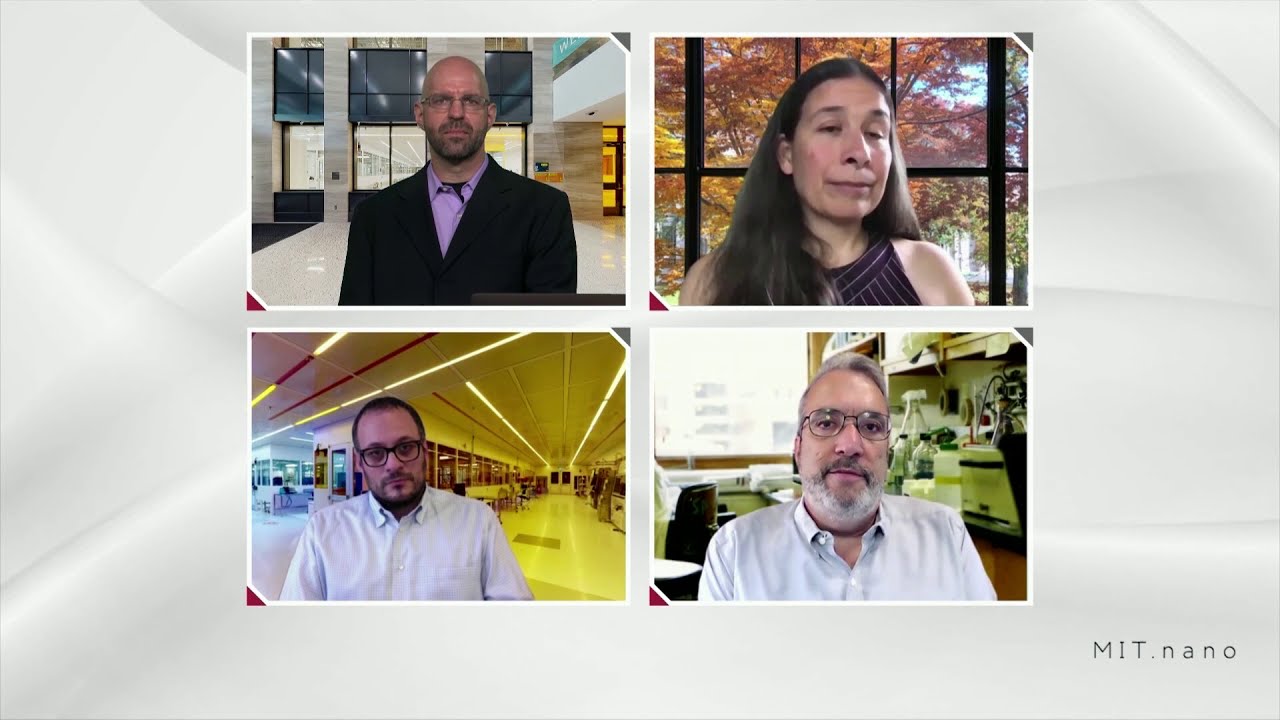
The third session of the 2020 SENSE.nano Symposium, focused on sensing at the level of body systems, featured four speakers followed by Q&A.
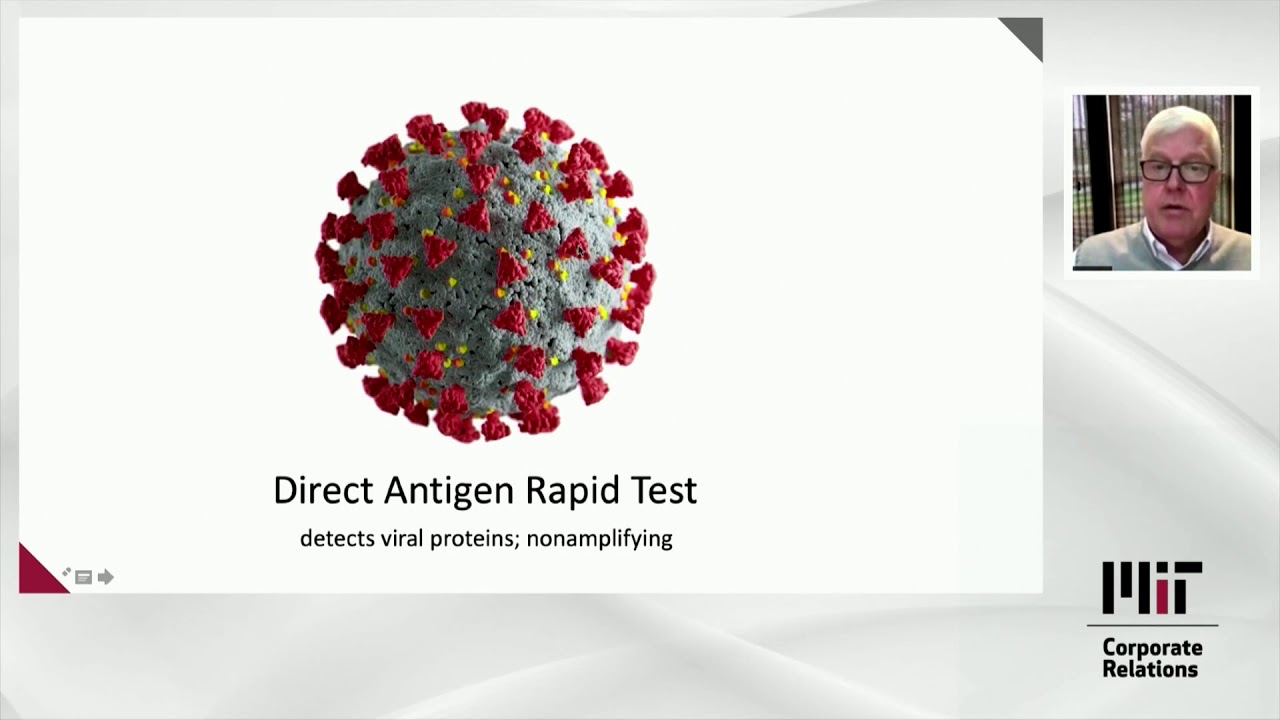
(2:13) "Rapid antigen diagnostics for emerging pathogens"—Lee Gehrke, Hermann von Helmholtz Prof. of Health Sciences & Technology, MIT Institute for Medical Engineering & Science.
A large number of animal species are hosts to viruses in geographic areas that have historically been separated from humans. With climate change, deforestation, & increased urbanization, what was once rare human contact with these pathogens is increasing, leading to spillover events that cause emerging virus infections. Rapid diagnostic tests are needed for population surveillance to identify circulating pathogens, as well as to serve health care workers in detecting and distinguishing pathogens for optimal patient care.
The goal of our work is to develop low cost tests that are simple to use, do not require power, & do not require special chemicals. In COVID-19, the absence of a vaccine means that active vigilance, accomplished by regular testing is required to prevent superspreader transmission. This regular testing requires an inexpensive test that can be used as a point-of-care diagnostic. We are pursuing technologies to reduce the cost of developing rapid antigen tests, permitting advance diagnostics development that precedes outbreaks & epidemics.
---------------------------------------
(16:14) "GI device development in a few movements"—Giovanni Traverso, Karl Van Tassel (1925) Career Development Prof., Mechanical Engineering
Medication non-adherence (non-compliance) represents a major barrier to effective clinical care. In developed nations, only 50% of patients take their medications as prescribed, manifesting in more than $100 billion in avoidable hospitalizations every year in the U.S. alone, and the numbers are far worse in the developing world. In his talk, Dr. Traverso presents a series of novel technologies being developed with the goal to enhance & facilitate medication administration; specifically, the development of new technologies for the delivery of macromolecules through the oral route.
---------------------------------------
(30:35) "Electronic textile conformable suit (E-TeCS)"—Canan Dagdeviren, LG Career Development Prof., Program in Media Arts & Sciences
The rapid advancement of electronic devices & fabrication technologies has further promoted the field of wearables & smart textiles. However, most of the current efforts in textile electronics focus on a single modality and cover a small area. We introduce a new platform of modular, conformable distributed sensor networks that can be embedded into digitally-knit textiles. This platform can be customized for various forms, sizes, and functions using standard, accessible, and high-throughput textile manufacturing and garment patterning techniques. We have developed a tailored, electronic textile conformable suit (E-TeCS) to perform large-scale, multi-modal physiological sensing in vivo.
---------------------------------------
(46:43) "MR relaxometer for improving clinical outcomes in hemodialysis"—Michael Cima, David H. Koch Prof. of Engineering, MIT Koch Institute for Integrative Cancer Research
We recently discovered in a human clinical trial that the MR signal originating from skeletal muscle is an absolute measure of excess volume in end-stage renal disease (ESRD) patients undergoing hemodialysis (HD). HD patients are prescribed a volume of fluid to be removed by ultrafiltration during their dialysis session based on an assumed “dry weight.” Current real-time assessment measures include hematocrit with the objective of keeping it constant. The vascular volume is maintained during dialysis using this technology. Hematocrit does not, however, provide a measure of how close the patient is to his/her dry weight.
Clinical signs & symptoms are used to identify hypovolemia due to excessive fluid withdrawal. These non-specific indicators often lag behind the onset of hypovolemia & their presentation is highly variable between patients. Excessive fluid removal during HD is associated with nausea, vomiting, cramping, & chest pain. We have constructed a sensor that will measure the tissue relaxivity of muscle without the need for an MRI. This bedside instrument is portable & compatible with the dialysis suite. Our goal is to improve management of ESRD patient during HD & ultimately improve outcomes.
---------------------------------------
The 2020 SENSE.nano Symposium was centered around the theme—"The Body at All Scales." From the level of cells, organs, & body systems to individuals & populations, this symposium highlighted the needs for new SENSE technologies, showcased research, & presented impacts.
SENSE.nano 2020 was sponsored by MIT.nano, the MIT Industrial Liaison Program (ILP), MIT Institute for Medical Engineering & Science (IMES), & the MIT Clinical Research Center (CRC).
Read more at sense.mit.edu.
Повторяем попытку...
Доступные форматы для скачивания:
Скачать видео
-
Информация по загрузке:







![MACSQuant® Tyto® Cell Sorter:Validating a fluorescence sorter for infectious diseases [WEBINAR]](https://imager.clipsaver.ru/yMEdFoy4jYs/max.jpg)
