Dielectric lens | Wikipedia audio article
Автор: wikipedia tts
Загружено: 2019-06-29
Просмотров: 73
Описание:
This is an audio version of the Wikipedia Article:
https://en.wikipedia.org/wiki/Lunebur...
00:01:16 1 Designs
00:01:25 1.1 Luneburg's solution
00:02:56 1.2 Maxwell's fish-eye lens
00:04:04 1.2.1 Publication and attribution
00:04:53 2 Applications
00:05:34 2.1 Radar reflector
00:06:13 2.2 Microwave antenna
00:08:26 3 Path of a ray within the lens
00:15:40 4 See also
Listening is a more natural way of learning, when compared to reading. Written language only began at around 3200 BC, but spoken language has existed long ago.
Learning by listening is a great way to:
increases imagination and understanding
improves your listening skills
improves your own spoken accent
learn while on the move
reduce eye strain
Now learn the vast amount of general knowledge available on Wikipedia through audio (audio article). You could even learn subconsciously by playing the audio while you are sleeping! If you are planning to listen a lot, you could try using a bone conduction headphone, or a standard speaker instead of an earphone.
Listen on Google Assistant through Extra Audio:
https://assistant.google.com/services...
Other Wikipedia audio articles at:
https://www.youtube.com/results?searc...
Upload your own Wikipedia articles through:
https://github.com/nodef/wikipedia-tts
Speaking Rate: 0.9237856709434995
Voice name: en-US-Wavenet-D
"I cannot teach anybody anything, I can only make them think."
Socrates
SUMMARY
=======
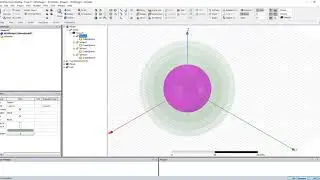
A Luneburg lens (originally Lüneburg lens, often incorrectly spelled Luneberg lens) is a spherically symmetric gradient-index lens. A typical Luneburg lens's refractive index n decreases radially from the center to the outer surface. They can be made for use with electromagnetic radiation from visible light to radio waves.
For certain index profiles, the lens will form perfect geometrical images of two given concentric spheres onto each other. There are an infinite number of refractive-index profiles that can produce this effect. The simplest such solution was proposed by Rudolf Luneburg in 1944. Luneburg's solution for the refractive index creates two conjugate foci outside of the lens. The solution takes a simple and explicit form if one focal point lies at infinity, and the other on the opposite surface of the lens. J. Brown and A. S. Gutman subsequently proposed solutions which generate one internal focal point and one external focal point. These solutions are not unique; the set of solutions are defined by a set of definite integrals which must be evaluated numerically.
Повторяем попытку...

Доступные форматы для скачивания:
Скачать видео
-
Информация по загрузке: