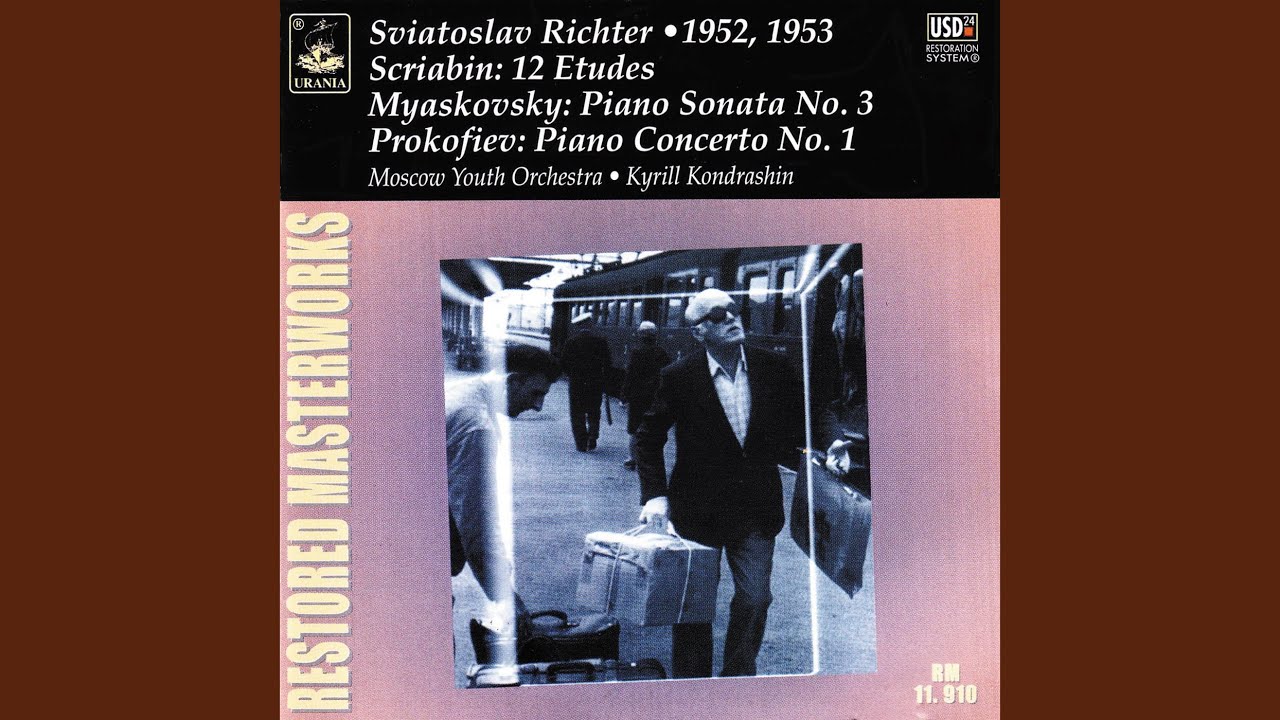
Symphony No.10 in F minor - Nikolai Myaskovsky
Автор: Sergio Cánovas
Загружено: 2018-03-10
Просмотров: 5549
Описание:
Vienna Radio Symphony Orchestra conducted by Gottfried Rabl.
I - Un poco sostenuto - Allegro tumultuoso - Poco meno vivo, ma patetico - Appassionato, ma andante sostenuto - A tempo - Allegro tumultuoso - Poco più pesante - Presto tempestoso - Più agitato - Allegro patetico e molto appassionato - Poco largamente - A tempo - Molto affetuoso e tranquillo - Allegro tumultuoso - Sostenuto, ma quasi in tempo - Precipitato: 0:00
Myaskovsky's Symphony No.10 was written between 1926-7, along with No.9. It was premiered in Moscow on April 29 of 1928, interpreted by a Persimfans in Moscow. A Persimfans was basically an orchestra without conductor, founded by Lev Tseitlin. It was an experiment that would disappear in the following decade with the Stalinist regime. Unfortunately it seems that the premiere was a disaster, mostly because of the complex nature the music made it very difficult to perform without a conductor.
The work is dedicated to conductor Saradjev, who premiered Myaskovsky's Symphonies No.2 and 8, as well as the symphonic poem "Silence". The Symphony is structured in an extremely concise single movement, more akin to a symphonic poem than a traditional four-movement symphony. It was inspired by the reading of Pushkin's poem "The Bronze Horseman", which poetically describes a catastrophic St. Petersburg flood caused by the Neva River. Myaskovsky did not leave any note, having written a letter to his friend Prokofiev saying that he has decided to remain silent about the meaning of the work. "When composing the work, I had in front of my inner eye, the drawings of Alexandre Benois, especially, perhaps you remember it, the one of Yevgeny fleeing from the Knight who persecutes him."
"The Bronze Horseman", written in 1833, is one of the great poems of Russian literature. The title refers to the famous equestrian monument representing Tsar Peter the Great, one of the most famous symbols of St. Petersburg. Erected by Catherine II in 1782, it is a work of the French sculptor Etienne Falconet, placed on a granite pedestal weighing 1600 tons in the shape of a wave, recalling his struggle for the Baltic Sea as a gateway from Russia to Europe. Peter the Great founded St. Petersburg on this occasion, but it cost the lives of innumerable people, who died because of the bad conditions that engendered diseases and floods during the works.
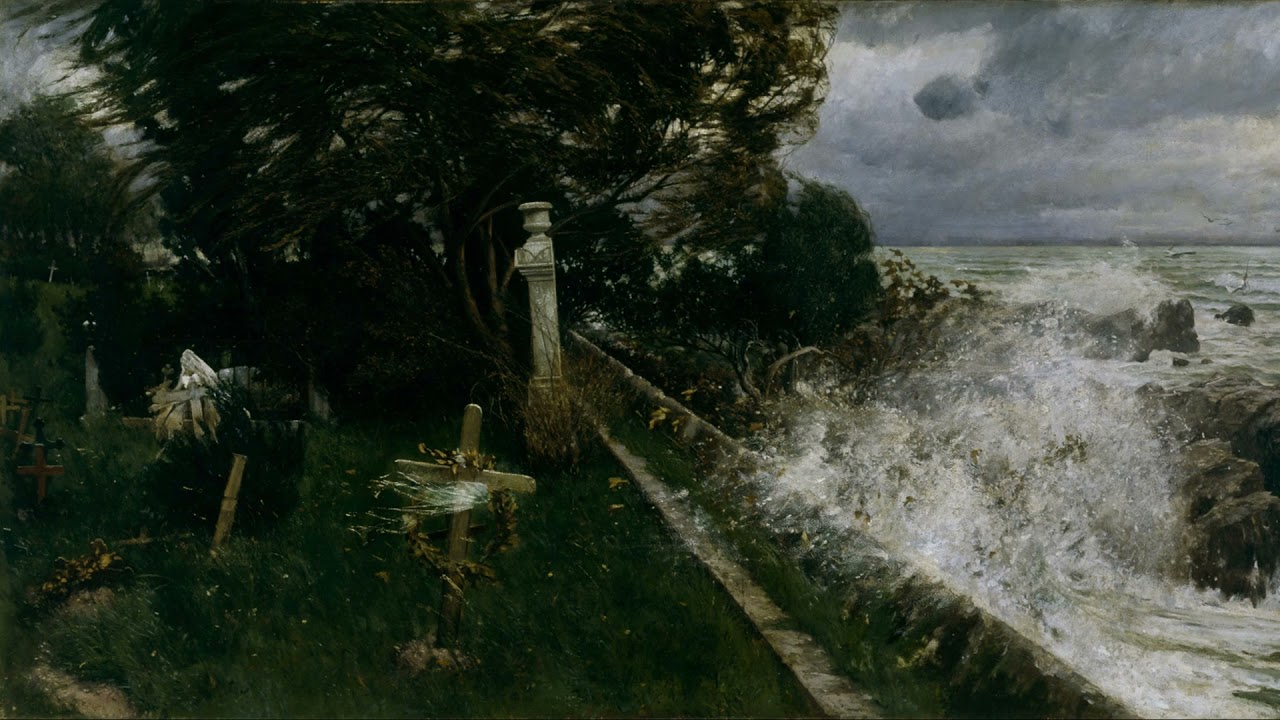
Pushkin uses as a criticism the flood that the city suffered in 1824. The young Yevgeny and his girlfriend were there. The boy manages to save himself but the island where his beloved was living was devastated by the water, his inhabitants perishing. The poor man, mad with bitterness, curses Tzar Peter for his suffering when he passes by the huge equestrian statue. Then the bronze statue frees itself from its pedestal and begins to chase him. The work is a social critic of the disproportionate expansionist aspirations of the Tsar; the statue faces a man of the people who fights for his life and his security.
The movement is structured in sonata form, built around three themes corresponding to Yevgeny, his girlfriend Parasha and the statue of Peter. It begins with a sombre and dissonant introduction. The statue theme is then presented with great chromaticism and strength, employing four trumpets and eight horns. After a diminuendo, a lyrical second theme appears gently, being Parasha's theme. Then the dramatic third theme of Yevgeny, closely related to the second one, is presented with great expression. More than a theatrical action, it is a clash of characters, a spiritual collision. Follows a tumultuous and ferocious development section, showcasing Myaskovsky's astringent and dissonant modernist style. It culminates with a wild fugue using ten of the twelve pitches of the chromatic scale. The recapitulation brings back the main themes. A final confrontation between the statue and Yevgeny takes place, leading us to an enigmatic coda.
Picture: A photograph of the Bronze Horseman monument of Saint Petersburg.
Source: https://bit.ly/3OGUAHu
To check the score: https://bit.ly/3KY29sf
Повторяем попытку...

Доступные форматы для скачивания:
Скачать видео
-
Информация по загрузке:





![Nikolai Myaskovsky - Eccentricities for Piano, Op. 25 (1917-22) [Score-Video]](https://imager.clipsaver.ru/nQtApitts44/max.jpg)