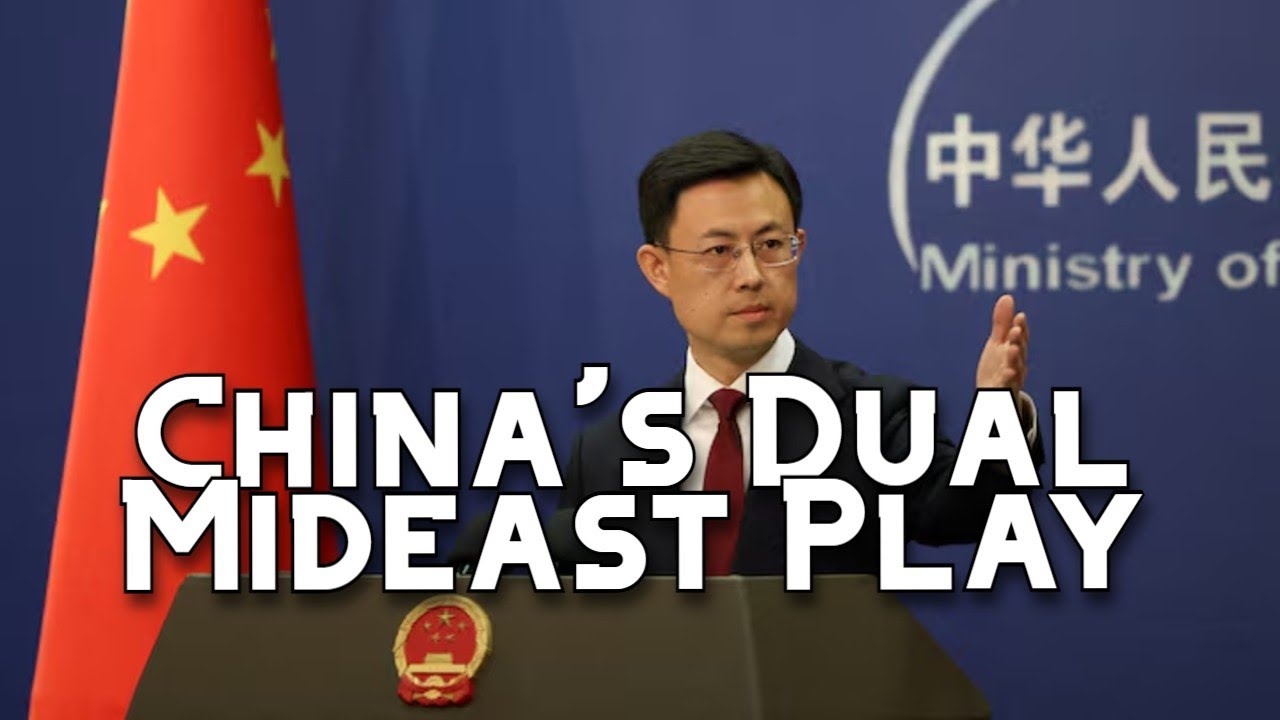
China's Middle East Strategy Evacuations, Diplomacy, and Geopolitics
Автор: BESTCast News - Breaking Essential Stories Today
Загружено: 2025-06-20
Просмотров: 3
Описание:
*Beijing's Mideast Tightrope: Balancing Power Amidst Conflict*
BESTCast News: *China navigates a complex Middle East landscape. Beijing's strategic approach meticulously balances vast economic interests, including critical energy supplies, trade routes, and infrastructure investments, with its evolving security posture.* China, projected to import nearly 80% of its oil by 2040, secures roughly half its crude from the Middle East and North Africa (MENA) region, with major supplies from Saudi Arabia, the UAE, Iraq, Oman, and Kuwait, and liquefied natural gas (LNG) from Qatar. Its Belt and Road Initiative is a cornerstone, linking key partners like Iran and investing in strategic ports like Haifa and Ashdod, essential for trade and potential intelligence or supply chain disruption. Beijing also champions the renminbi and alternative financial systems to bolster economic resilience against sanctions.
On the security front, China maintains a non-interventionist foreign policy, preferring diplomacy and economic ties over direct military action, particularly as its primary focus remains Taiwan reunification. Yet, defense cooperation is expanding, with arms sales to 16 MENA countries, an 80% increase between 2013 and 2023, encompassing missile and uncrewed aerial vehicle (UAV) technology. China engages in military exercises with nations like Saudi Arabia and the UAE, and its Djibouti base marks its sole official overseas military presence. It also seeks a "peace broker" role, notably facilitating the Saudi-Iran rapprochement and Palestinian faction talks.
The recent Israel-Iran conflict in June 2025 severely tested this balancing act. China evacuated over 1,600 citizens from Iran and hundreds from Israel, advising land routes through neighboring countries due to border congestion. Diplomatically, Beijing condemned Israel's initial airstrikes as a "blatant violation of international law," implicitly acknowledging Iran's retaliatory strikes as "self-defense," a stance resonating with the Global South. While avoiding overt military involvement, rumors persist of clandestine support, suggesting a strategy to tie up U.S. resources in the region, diverting attention from the Indo-Pacific.
However, this delicate balance faces mounting challenges. China's perceived neutrality is strained by its criticisms of Western actions, and its credibility as a mediator is questioned, particularly by Israel. MENA states increasingly anticipate greater security guarantees from China, creating a dilemma for Beijing that prioritizes Taiwan. The risk of sanctions from open military support to Iran also poses a threat to China's economic development. China's strategy aims to be a multifaceted economic and diplomatic partner, fostering a new world order, while carefully limiting direct security involvement to safeguard its core domestic objectives.
Повторяем попытку...
Доступные форматы для скачивания:
Скачать видео
-
Информация по загрузке:


![С какой скоростью движется Земля во Вселенной? [Космос 2024]](https://image.4k-video.ru/id-video/J-J0ls4y0Gs)