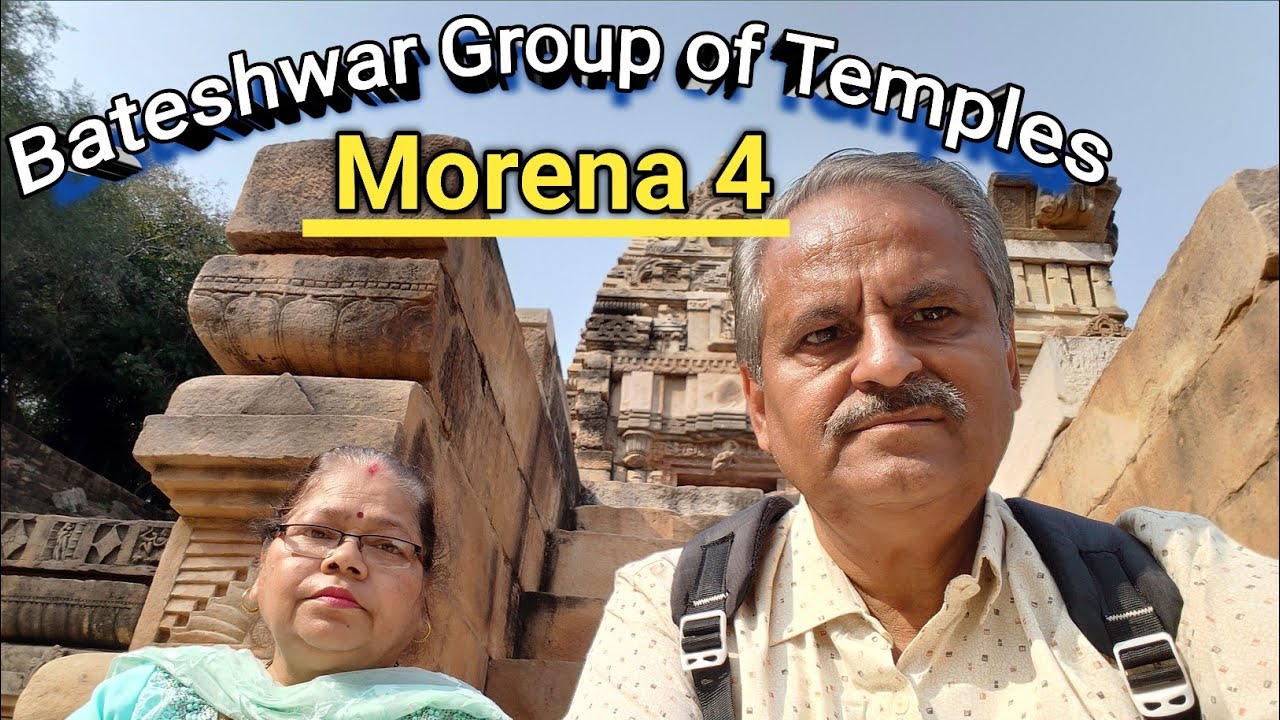
Explore Bateshwar | 200 Small Sandstone Hindu Temples | Early Medieval Period Located in Morena MP
Автор: Your Travel Journey
Загружено: 2026-03-02
Просмотров: 27
Описание:
Explore Bateshwar | 200 Small Sandstone Hindu Temples | Early Medieval Period Located in Morena MP
#explore #bateshwardham #small #sandstone #hindu #temples #earlylearning #early #medieval #periods #located #morena #mp
Bateshwar is a large complex of around 200 small sandstone Hindu temples from the early medieval period, located in Morena district of Madhya Pradesh, India. Most of the shrines are dedicated to Shiva, Vishnu, and Shakti and represent an important example of early North Indian (Nagara) temple architecture.Location and settingSituated in the Chambal river valley ravines near Padavali village, about 35 km north of Gwalior and 30 km from Morena town in Madhya Pradesh.The temples spread across roughly 25 acres on the north‑western slope of a hill, within a scenic but once dacoit‑infested landscape.History and buildersThe complex was built between roughly the 8th and 10th century CE, during the rule of the Gurjara‑Pratihara dynasty, an early Rajput power in North India.The site is likely named after the largest Shiva shrine there, Bhuteshvar/Bhuteshwar, and was once a major religious and artistic centre with rich Shaiva, Vaishnava and Shakta imagery.Architecture and deitiesThere are about 200 temples in closely packed clusters, mostly small shrines in early Nagara style, many in the pancharatha form with five vertical offsets on each side.Sculptural themes include images of Shiva, Vishnu’s Dashavatara, Saptamatrikas, Navagraha panels and other decorative friezes typical of early North Indian stone temple art.Decline and damageThe temples were largely ruined after the 13th century; scholars differ on whether an earthquake or later invasions were primarily responsible, but significant structural collapse is evident.Though declared a protected monument by the Archaeological Survey of India (ASI) in 1924, the remote, lawless setting meant the complex remained in rubble for much of the 20th century.Modern restoration and visitFrom about 2004–2005, ASI’s Bhopal Circle under archaeologist K.K. Muhammed led a major conservation effort, painstakingly reassembling dozens of shrines from scattered blocks, with informal cooperation from local dacoits and later support to curb illegal mining.Today, many temples have been restored and the site is accessible as a heritage attraction near Gwalior; visitors typically combine it with nearby Padavali fort and other Chambal valley sights
Повторяем попытку...
Доступные форматы для скачивания:
Скачать видео
-
Информация по загрузке: