Corythosaurus Explained... 🦖🎭🔊🎶
Автор: All About Geology
Загружено: 2024-08-03
Просмотров: 1163
Описание:
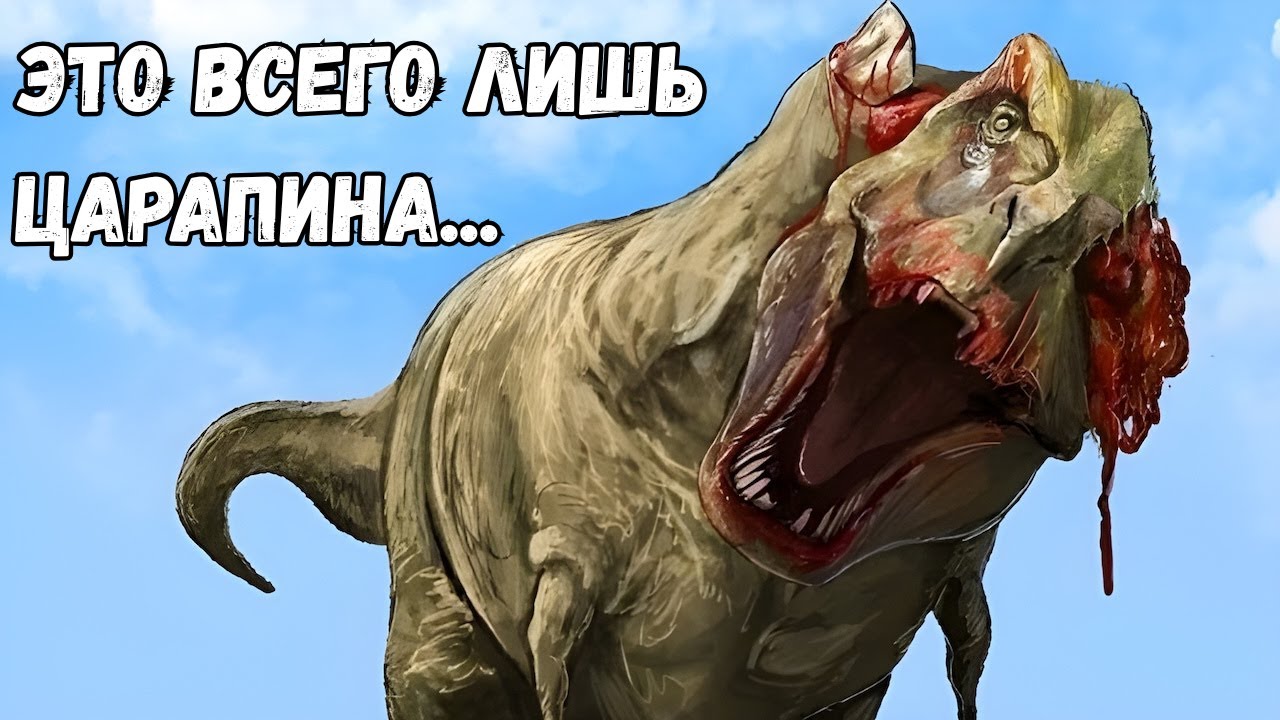
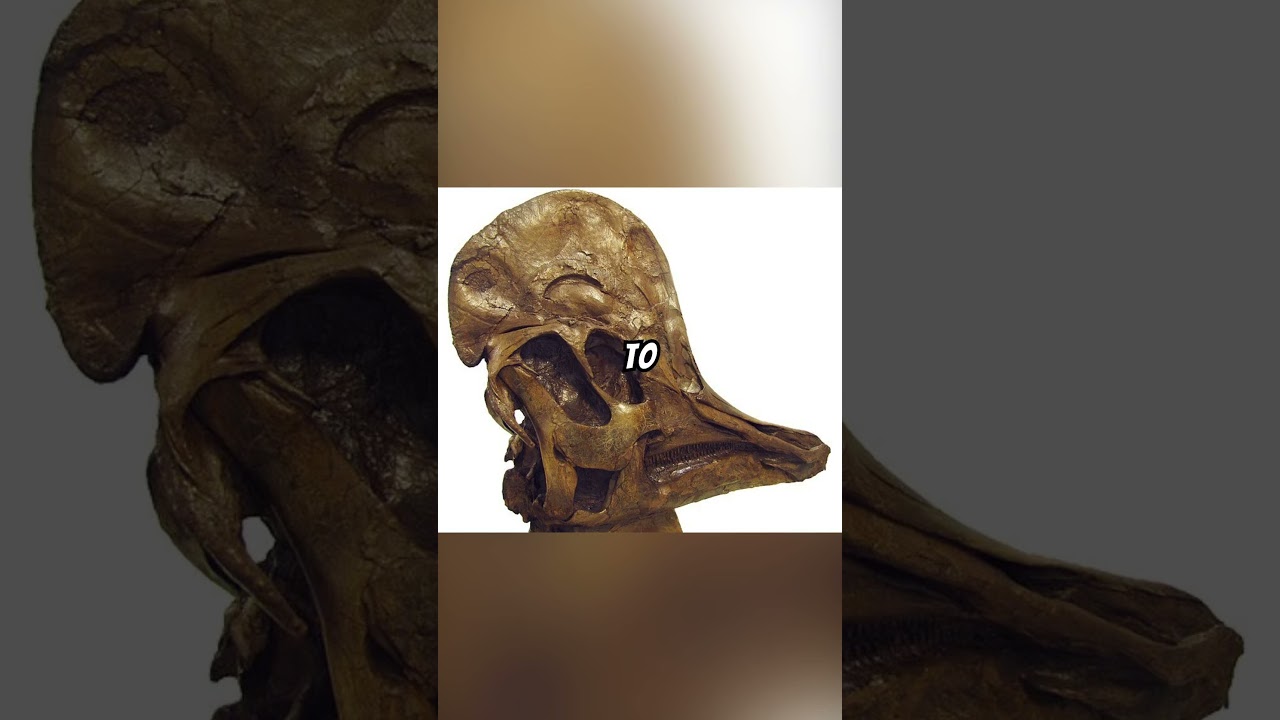
Corythosaurus (/kəˌrɪθəˈsɔːrəs/;[1] lit. 'helmeted lizard') is a genus of hadrosaurid "duck-billed" dinosaur from the Late Cretaceous period, about 77–75.7 million years ago, in what is now western North America. Its name is derived from the Greek word κόρυς, meaning "helmet", named and described in 1914 by Barnum Brown. Corythosaurus is now thought to be a lambeosaurine, thus related to Lambeosaurus, Nipponosaurus, Velafrons, Hypacrosaurus, and Olorotitan. Corythosaurus has an estimated length of 7.7–9 metres (25–30 ft) and has a skull, including the crest, that is 70.8 centimetres (27.9 in; 2.32 ft) tall.The first specimen, AMNH 5240, was discovered in 1911 by Barnum Brown in Red Deer River of Alberta and secured by him in the Fall of 1912.As well as an almost complete skeleton, the find was notable because impressions of much of the creature's skin had also survived.The specimen came from the Belly River Group of the province.The left or underside of the skeleton was preserved in carbonaceous clay, making it difficult to expose the skin to the elements.The skeleton was articulated and only missing about the last 0.61 metres (2.0 ft) of the tail and front legs.Both scapulae and coracoids are preserved in position, but the rest of the front legs are gone (except for phalanges and pieces of the humeri, ulnae, and radii). Apparently, the remaining front legs were weathered or eroded away.Impressions of the integument were preserved covering over a large part of the skeleton’s outlining and shows the form of the body.Another specimen, AMNH 5338, was found in 1914 by Brown and Peter Kaisen. Both specimens are now housed in the American Museum of Natural History in their original death poses.The type species, Corythosaurus casuarius, was named by Barnum Brown in 1914, based on the first specimen collected by him in 1912. AMNH 5240 is thus the holotype. In 1916, the original author, Brown, published a more detailed description that was also based on AMNH 5338, which is therefore the plesiotype. Corythosaurus is among many lambeosaurines that possess crests and it was the crest that lends Corythosaurus its name. The generic name Corythosaurus is derived from the Greek κόρυθος,(korythos), "Corinthian helmet", and means "helmeted lizard".The specific name, casuarius, refers to the cassowary, a bird with a similar skull crest. The full binomial of Corythosaurus casuarius thus means "Cassowary-like reptile, with a Corinthian helmet crest".There were formerly up to seven species described, including C. casuarius, C. bicristatus (Parks 1935), C. brevicristatus (Parks 1935), C. excavatus (Gilmore 1923), C. frontalis (Parks 1935), and C. intermedius (Parks 1923). In 1975, Peter Dodson studied the differences between the skulls and crests of different species of lambeosaurine dinosaurs. He found that the differences in size and shape may have actually been related to the sex and age of the animal. Only one species is currently recognized for certain, C. casuarius,[10] although C. intermedius has been recognized as valid in some studies. It is based on specimen ROM 776, a skull found by Levi Sternberg in 1920, was named by William Parks in 1923. Originally, he named it Stephanosaurus intermedius earlier that year.The specific name of C. intermedius is derived from its apparent intermediate position according to Parks.C. intermedius lived at a slightly later time in the Campanian than C. casuarius and the two species are not identical, which supported the separation of them in a 2009 study.The invalid species, C. excavatus (specimen UALVP 13), was based on only a skull found in 1920 and wouldn't be reunited with the rest of its remains until 2012.Benson et al. (2012) estimated that Corythosaurus has an average length of 9 metres (30 ft).In 1962, Edwin H. Colbert used models of specific dinosaurs, including Corythosaurus, to estimate their weight. The Corythosaurus model used was modelled by Vincent Fusco, after a mounted skeleton, and supervised by Barnum Brown. After testing, it was concluded that the average weight of Corythosaurus was 3.82 tonnes (3.76 long tons; 4.21 short tons).The total length of Corythosaurus specimen AMNH 5240 was found to be 8.1 m (27 ft) long, with a weight close to 3.1 tonnes (3.0510 long tons; 3.4172 short tons).[19] In 2016, Gregory S. Paul estimated that C. casuarius reached 8 metres (26 ft) long and 2.8 metric tons (3.1 short tons) in weight and that C. intermedius reached 7.7 metres (25 ft) in length and 2.5 metric tons (2.8 short tons) in weight.A "morphologically adult-sized specimen" of C. casuarius measured approximately 9 metres (30 ft) long.
Proportionally, the skull is much shorter and smaller than that of Edmontosaurus (formerly Trachodon), Kritosaurus, or Saurolophus. But, when including its crest, its superficial area is almost as large
Повторяем попытку...
Доступные форматы для скачивания:
Скачать видео
-
Информация по загрузке: