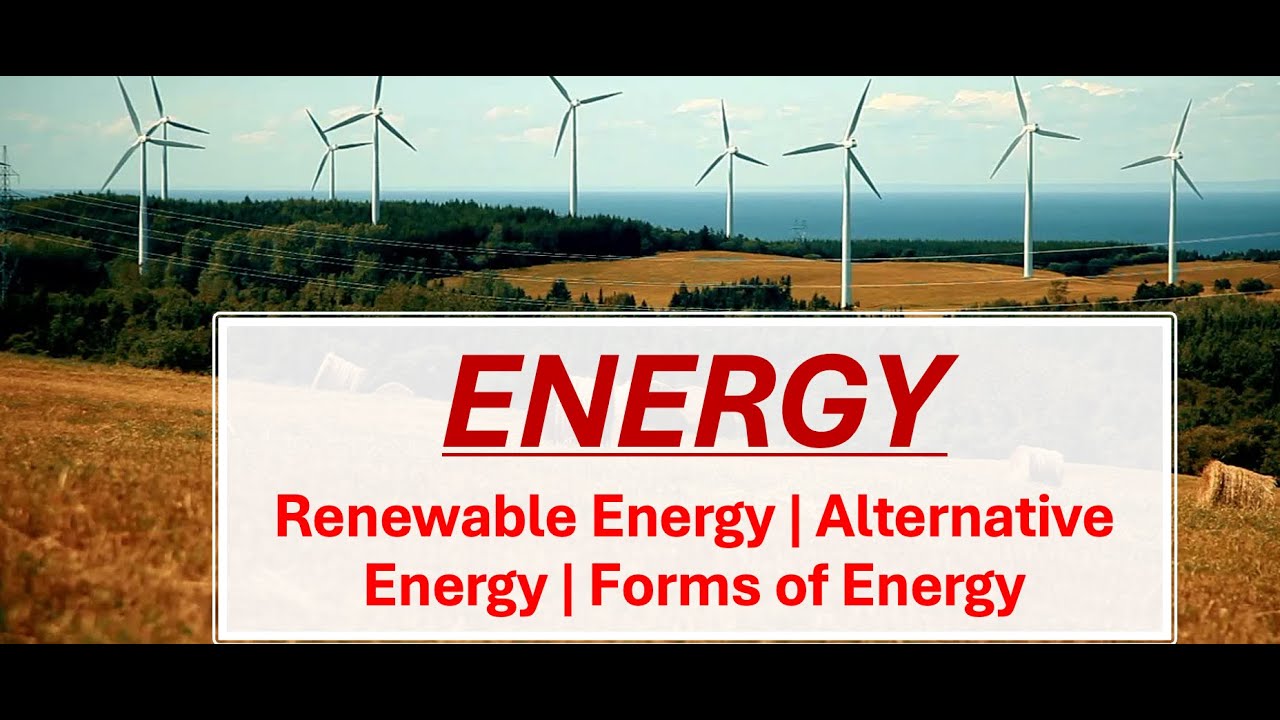
Energy | kinetic energy | Potential energy | renewable energy | Non renewable energy | forms
Автор: Study River Institute of Competitive Exams
Загружено: 2025-02-20
Просмотров: 218
Описание:
The discussion focuses on the importance of energy in everyday life, defining it as the ability to perform work. It classifies energy into kinetic and potential forms, highlighting renewable and non-renewable resources. Examples include solar, wind, and hydro energy, while fossil fuels represent non-renewable sources, emphasizing the need for energy conservation and efficiency.
Energy is defined as the ability to do work, which is crucial in various systems and individuals. It manifests in different forms that influence our daily lives significantly.
Renewable energy sources are sustainable and can be utilized without depletion, such as solar, wind, and hydro power. Understanding these forms is crucial for energy management and environmental conservation.
Wood is a renewable energy source, as it can be regrown through planting new trees after harvesting. This contrasts with non-renewable sources, which deplete after consumption and cannot be replenished.
Understanding the difference between renewable and non-renewable energy sources is crucial. Renewable sources can be replenished while non-renewable sources deplete over time, affecting sustainability.
Minimizing unnecessary energy usage can lead to significant energy conservation in daily life. Utilizing energy-efficient technologies further enhances this conservation, making it a vital practice for sustainability.
#energy #typesofenergy #formsofenergy
#CSSEXAMS, #CSSpreparation, #ppscjobs, #general Knowledge
𝘾𝙤𝙣𝙩𝙖𝙘𝙩 𝙐𝙨
Email us on 𝗴𝘂𝗿𝘂𝗲𝗱𝘀@𝗴𝗺𝗮𝗶𝗹.𝗰𝗼𝗺
𝗙𝗮𝗰𝗲𝗯𝗼𝗼𝗸 𝗣𝗮𝗴𝗲: / studyriverofficial
𝗙𝗮𝗰𝗲𝗯𝗼𝗼𝗸 𝗚𝗿𝗼𝘂𝗽: / cssclub.com.pk
Повторяем попытку...
Доступные форматы для скачивания:
Скачать видео
-
Информация по загрузке:


