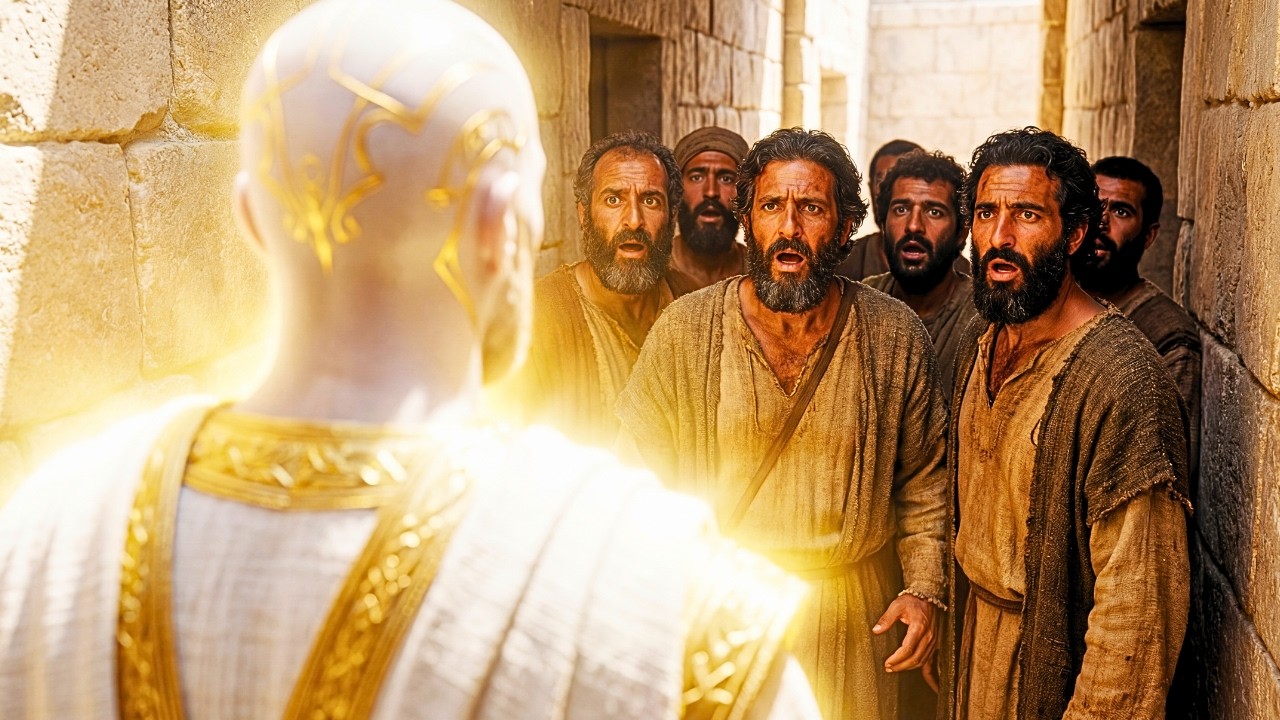
Did Jesus Rise from the Dead?
Автор: JesusOnline
Загружено: 2025-09-23
Просмотров: 4887759
Описание:
Download the free book “Who Is the Real Jesus?”: https://y-jesus.com/evidence/
TRANSCRIPT
Could Jesus' resurrection merely be a 2,000-year-old legend, or is it grounded in verifiable historical evidence?
Former skeptic, English journalist Frank Morison thought there was no evidence supporting Jesus’ resurrection, and began research for a book that would prove it to be a myth.
Morison reviewed the facts patiently and impartially to see where they would lead him. He first wanted to know if Jesus actually died on the cross.
1. Was Jesus Dead?
Morison wondered if Jesus could have survived the cross. He researched both Jewish and Roman contemporary history and discovered the following facts supporting Jesus’ death:
All accounts affirm he died.
Pilate verified he died.
Among the eyewitnesses, no one disputed his death.
Contemporary and secular and historians, Lucian, Josephus, and Tacitus all cite his death as factual.
As a result, Morison became convinced that Jesus was truly dead, a fact universally accepted as true by trusted scholars and historians.
2. Was Jesus’ body stolen?
Morison wondered if the disciples faked the resurrection story by stealing Jesus’ body, and then claiming he was alive. Tom Anderson, former president of the California Trial Lawyers Association, summarizes the failure of this argument:
“With an event so well publicized, don’t you think that it’s reasonable that one historian, one eyewitness, one antagonist would record for all time that he had seen Christ’s body? ... The silence of history is deafening when it comes to the testimony against the resurrection.”
So, with no body of evidence, and with a known tomb clearly empty, Morison accepted that Jesus’ body had somehow disappeared from the tomb.
3. Were the Disciples Hallucinating?
Morison wondered if the disciples might have been so emotionally distraught after Jesus’ death that they hallucinated and just imagined his resurrection.
Hallucination is not even a remote possibility, according to psychologist Thomas J. Thorburn. “It is absolutely inconceivable that ... five hundred persons, of average soundness of mind ... should experience all kinds of sensuous impressions – visual, auditory, tactual – and that all these ... experiences should rest entirely upon ... hallucination.”
The hallucination theory, then, appears to be another dead end. What else could explain away the resurrection?
4. Is it just a Legend?
Historian A. N. Sherwin-White dismisses the legend theory by explaining that the resurrection news spread too quickly for it to have been a legend. Christian hymns and creeds were recited in early churches within two to three years of Jesus’ crucifixion, far too soon for a legend to have developed.
Morison’s original assumption that the resurrection account was mythical or legendary wasn’t supported by the facts.
5. Did the resurrection really happen?
Troubled by the lack of evidence against Jesus’ resurrection, Morison began asking himself, “did it really happen?” Instead of looking for evidence against Jesus’ resurrection, he wondered how strong the case was for its actual occurrence. Several facts stood out.
Women First
Morison reasoned that if Jesus’ resurrection was invented, conspirators would have portrayed men as the first to see Jesus alive since women were considered inferior in the 1st century. The fact that women were the first eyewitnesses of the risen Jesus added credibility to the New Testament accounts.
Multiple Eyewitnesses
Morison was also troubled by the fact that Jesus appeared alive over ten different times, including to 500 followers on just one occasion.
Morison realized that these early sightings of a risen Jesus by so many of his followers would have been virtually impossible to fake.
Consistent to the End
As Morison continued his investigation, he began to examine the motives of Jesus’ followers. He wondered what would cause these eleven former cowards to suddenly risk their lives to proclaim that Jesus had risen. He concluded that the radical change in their behavior was solid proof that Jesus had indeed risen.
After evaluating all the evidence for Jesus’ resurrection, Morison changed the theme and title of his book to, Who Moved the Stone, documenting the evidence that changed him from a skeptic to a believer.
Morison is not alone. Numerous other skeptics who examined the evidence for Jesus’ resurrection, also became convinced and accepted it as the most astounding fact in all of human history.
Oxford professor and former skeptic C. S. Lewis, who had once doubted Jesus’ very existence, was also persuaded by the evidence for Jesus’ resurrection. He writes,
“Something perfectly new in the history of the Universe had happened. Christ had defeated death.”
And Jesus not only defeated death for himself, but his resurrection makes it possible for us to live eternally with him.
Learn More at: https://y-jesus.com/evidence/
Повторяем попытку...

Доступные форматы для скачивания:
Скачать видео
-
Информация по загрузке: