10min BOOK
Автор: Deep Dive by NotebookLM
Загружено: 2025-07-28
Просмотров: 10
Описание:
FAQs:
1. What is the core philosophy of "Work Less, Make More"?
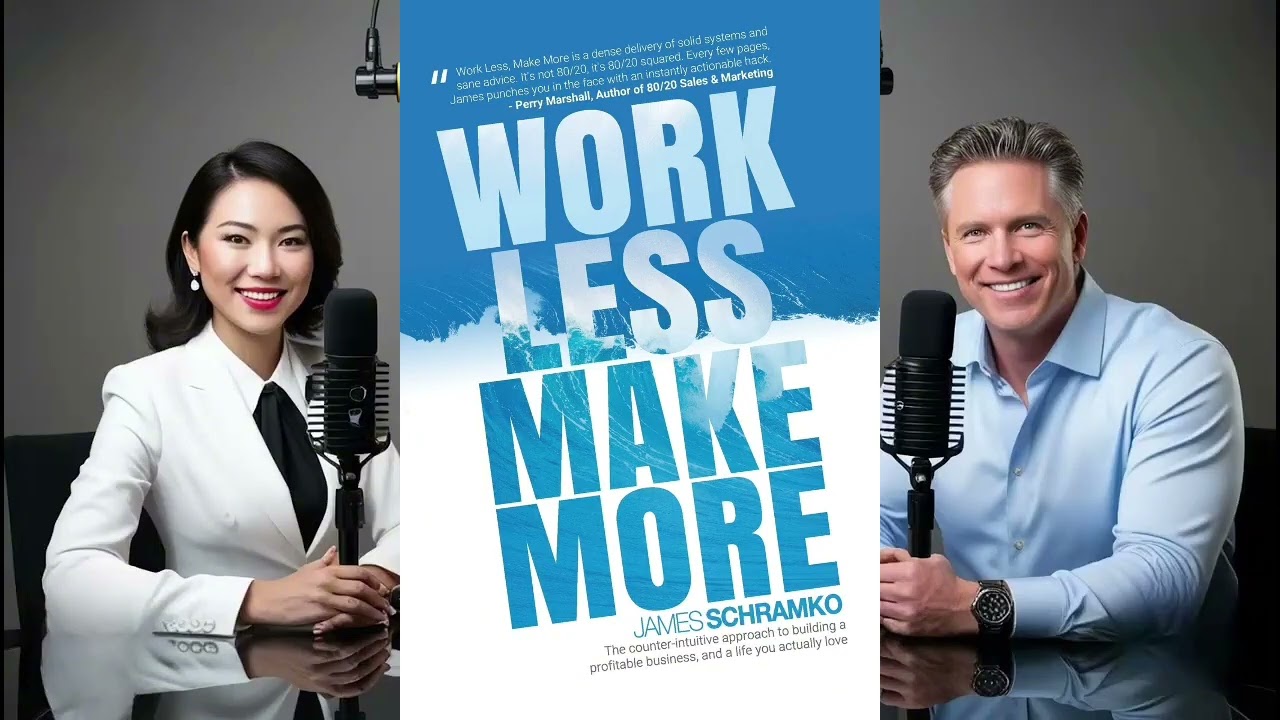
The central philosophy of "Work Less, Make More" is a counter-intuitive approach to building a profitable business and a fulfilling life. Instead of promoting the prevalent "hustle" culture of long hours and constant work, the book advocates for optimizing effectiveness over mere productivity, aiming to significantly increase one's "Effective Hourly Rate" (EHR). The author, James Schramko, demonstrates through personal experience and client case studies that it's possible to achieve substantial financial success and personal freedom by working fewer hours, focusing on high-impact activities, building efficient systems, and leveraging a strong team, ultimately allowing individuals to "leave less life on the table."
2. How is "Effective Hourly Rate (EHR)" calculated, and why is it the most important metric?
The Effective Hourly Rate (EHR) is calculated by taking your monthly profit (revenue minus costs) and dividing it by the number of hours you worked in that month. For example, if your monthly profit is $5,000 and you worked 250 hours, your EHR is $20/hour.
EHR is presented as "the metric that matters" because it directly measures the efficiency and profitability of your time. Unlike gross income or revenue, EHR considers both the money earned and the time invested. A low EHR suggests you're working hard for relatively little return, indicating inefficiencies or low-value activities. The book's entire premise revolves around increasing this metric, as it directly correlates with greater profit, reduced working hours, and increased personal freedom. By focusing on improving EHR, individuals are encouraged to identify and eliminate low-impact tasks and focus on activities that yield the highest return for their time.
3. What are some key personal effectiveness strategies to increase your EHR?
To increase personal effectiveness and boost your EHR, the book outlines several key strategies:
Self-Responsibility: Acknowledging that your future outcomes are a direct result of your actions and choices.
Time Tracking: Actively monitoring how you spend your hours to identify wasted time on low-value activities (e.g., excessive social media, constant email triage).
Inbox Management: Taking control of email by turning off alerts, unsubscribing from unnecessary newsletters, and utilizing help desk software for customer support, preventing the inbox from becoming an endless to-do list dictated by others.
Setting "Bumpers": Establishing clear boundaries and committing to 12-week goals, deferring distractions and new opportunities until the current objectives are met.
Using "No" as a Filter: Being selective about commitments and opportunities, saying "no" to things that don't align with high-impact goals or deplete energy.
Time Blocking: Scheduling dedicated periods for "deep work" (high-impact tasks) and personal activities, guarding this time fiercely to ensure focused effort and personal well-being.
Focus on One Thing: Prioritizing a single, high-impact task each week to achieve significant progress over time, embracing single-tasking for greater effectiveness.
Prioritizing Health (Sleep, Eat, Move): Recognizing that physical well-being is crucial for mental clarity and energy. This involves getting sufficient sleep, maintaining a healthy diet, and engaging in daily physical activity (like surfing for the author).
Purging: Decluttering physical and digital spaces, and even relationships, to remove anything that drains energy or doesn't contribute to happiness and business progress.
Creating Routines: Establishing consistent routines for daily activities to reduce mental clutter and free up energy for more effective work and relaxation.
These steps collectively aim to shift focus from mere busyness to strategic, high-value work, leading to a higher EHR and a more balanced life.
Повторяем попытку...
Доступные форматы для скачивания:
Скачать видео
-
Информация по загрузке:



![Как эффективно общаться с людьми. Дейл Карнеги. [Аудиокнига]](https://image.4k-video.ru/id-video/u8RVJecahu4)


![Завтра? Как победить прокрастинацию и начать жить. Майкл Уилсон [Аудиокнига]](https://image.4k-video.ru/id-video/oNUkLNfz5O0)

