Children's Vision Care/Time to Provide Treatment/Vision Screening in ASM Addis's District
Автор: California Children's Vision Now Coalition
Загружено: 2025-11-24
Просмотров: 13
Описание:
Quick recap
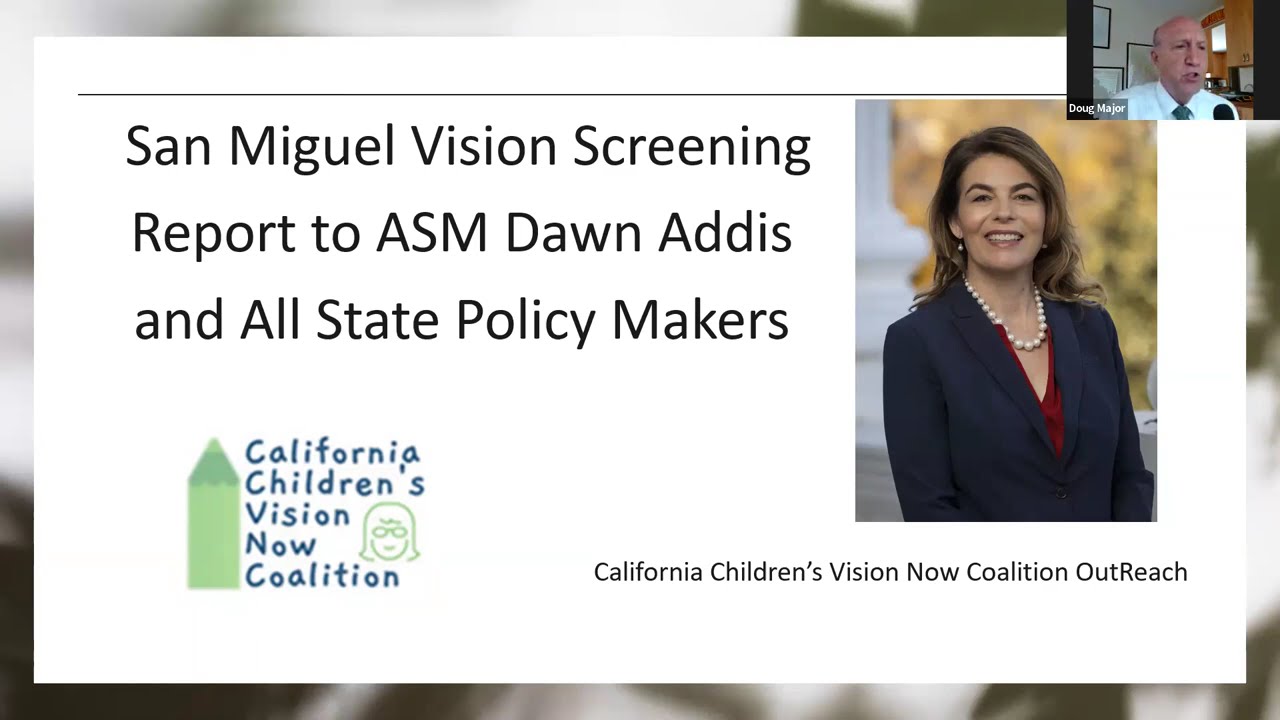
Dr. Doug Major presented findings from a vision screening at Layton Larson School that revealed significant vision issues among students, particularly astigmatism. He highlighted the critical link between vision health and learning outcomes. He discussed the challenges in accessing vision care for children, including systemic issues with follow-up treatment and the lack of comprehensive data and metrics to address the problem. Dr. Major emphasized the need for updated children's vision care policies and legislation, presenting data on the economic benefits of investing in vision care while urging attendees to advocate for equitable access to vision services.
Next steps
Dr. Doug Major / California Children’s Vision Coalition: Follow-up with the school board
Assemblymember Dawn Addis: Consider being the children’s care champion and sponsoring the Children's Vision Care Public Health Metrics Act bill
Summary
California Children's Vision Screening Results
Dr. Doug Major presented findings from a vision screening conducted at Lillian Larson School in San Luis Obispo County, representing the California Children’s Vision Coalition. The screening, which targeted TK through 8th-grade students, used the medical Modified Clinical Test, a gold standard for accuracy. The presentation highlighted the critical link between vision and learning and emphasized the need for targeted legislative action to address gaps in children's vision care, particularly for students of color.
California Children's Vision Access Challenges
Dr. Doug Major introduced the California Children's Vision Now Coalition, which represents children's vision health and includes major schools and researchers. He described a mobile vision screening program provided by local Lions Clubs, which has been offering no-cost screenings for over 60 years. The screenings revealed that nearly 50% of TK (transitional kindergarten) students had astigmatism, a condition that can affect children throughout their lives. However, many children identified with vision disorders do not have access to follow-up care due to systemic issues, including limited access to treatment.
Untreated Vision Problems in Students
Dr. Doug Major discussed the impact of untreated vision problems on students, noting that up to 50% of 8th graders in a particular school had untreated vision issues, which can lead to poorer literacy, special education referrals, lower test scores, and increased dropout rates. He highlighted that uncorrected astigmatism, particularly among students of Latino and Indian backgrounds, can reduce reading speed by up to half. However, Dr. Doug Major emphasized that with corrections, students' reading fluency can improve to comparable grade levels, indicating that the issue is largely fixable.
Children's Vision Care Policy Updates
Dr. Doug Major discussed the need to update children's vision care policies due to a lack of data and metrics, which contributes to the state's poor ranking in children's vision care access. He pointed out that vision care is often overlooked compared to dental care, and the Department of Health Care Services lacks the necessary data to address this issue. Dr. Major also mentioned that vision care funding falls outside the traditional healthcare budget, affecting its prioritization and coordination with other departments.
VisionCare Implementation and Challenges
Dr. Doug Major discussed the challenges in addressing VisionCare, highlighting its invisibility to staff until July 2025, despite efforts since 2020 to include it on agendas. He explained the ongoing blame game between healthcare plans and the Department of Health Care Services, with both parties pointing fingers at each other for responsibility.
Vision Care's Economic and Educational Impact
Dr. Doug Major presented data showing that every dollar invested in vision care — including glasses — yields roughly $36 in societal benefits, while the lack of vision care for children results in billions of dollars in direct and indirect costs annually. He highlighted that children, particularly preschoolers and Hispanic students, often enter kindergarten with undiagnosed vision issues that can significantly impact their learning. Dr. Major emphasized the importance of vision care for education and urged the audience to advocate for updated legislation to provide equitable care, leveraging their roles as leaders in the Budget Committee.
Healthcare Access Inequality for Children
Dr. Doug Major discussed systemic inequalities in healthcare access, noting that this issue is not limited to rural areas. He referenced studies showing untreated vision problems even in well-resourced counties, underscoring the widespread nature of the problem. Dr. Major encouraged support for a bill aimed at improving children’s healthcare and encouraged everyone to become “children’s care champions.”
Повторяем попытку...
Доступные форматы для скачивания:
Скачать видео
-
Информация по загрузке: