Manchester, City of Manchester, England, United Kingdom, Europe
Автор: Pietro Pecco
Загружено: 2013-08-18
Просмотров: 12409
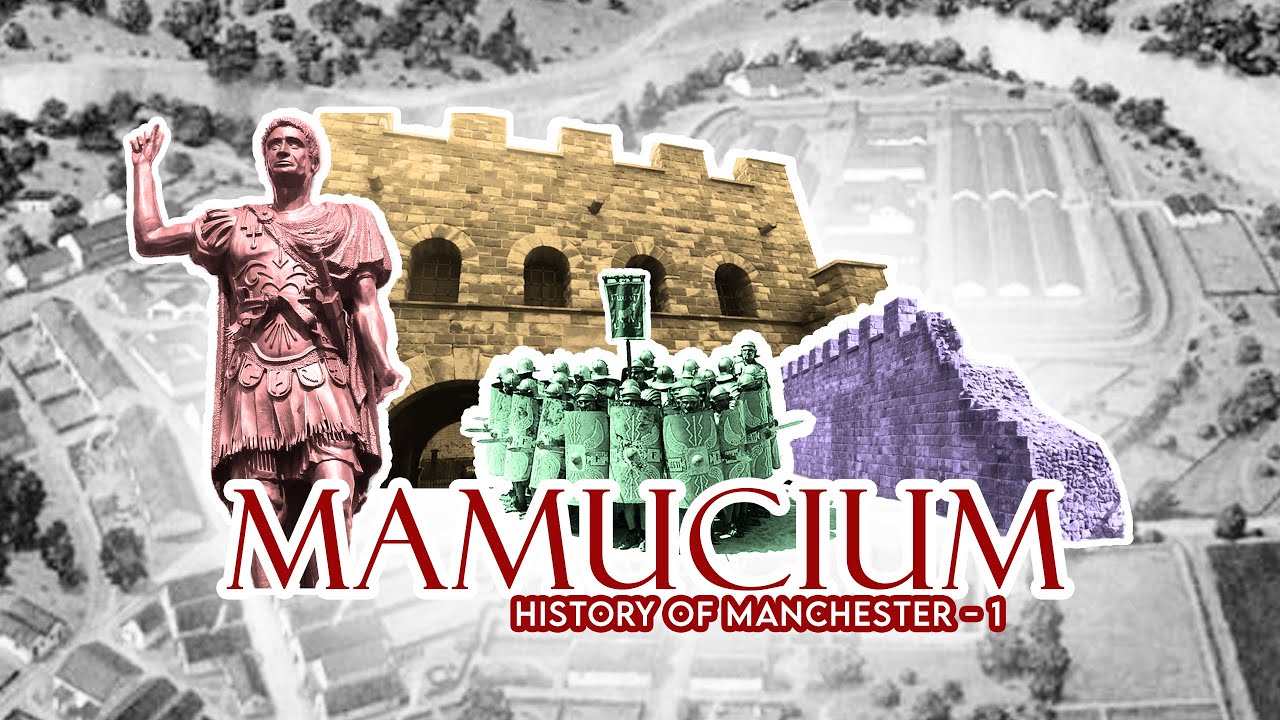
Описание: Manchester is a city and metropolitan borough in Greater Manchester, England, with an estimated population of 512,000. Manchester lies within the Greater Manchester Urban Area, the United Kingdom's second largest urban area, which has a population of 2,553,379. The local authority is Manchester City Council and is at the centre of the Greater Manchester metropolitan county and is situated in the south-central part of North West England, fringed by the Cheshire Plain to the south and the Pennines to the north and east. Inhabitants of Manchester are referred to as Mancunians English. The recorded history of Manchester began with the civilian settlement associated with the Roman fort of Mamucium, which was established in c. 79 AD on a sandstone bluff near the confluence of the rivers Medlock and Irwell. Historically, Manchester was in Lancashire, although areas of Cheshire, south of the River Mersey were incorporated into the city during the 20th century. Throughout the Middle Ages Manchester remained a manorial township but began to expand "at an astonishing rate" around the turn of the 19th century. Manchester's unplanned urbanisation was brought on by a boom in textile manufacture during the Industrial Revolution, and resulted in it becoming the world's first industrialised city. The building of the Bridgewater Canal in 1761 built to transport coal triggered an early-19th-century factory building boom which transformed Manchester from a township into a major mill town and borough that was granted city status in 1853. In 1877, the Neo Gothic Manchester Town Hall was built and in 1894 the 36 mile Manchester Ship Canal opened; which at the time was the longest river navigation canal in the world, which in turn created the Port of Manchester linking the city to sea. Manchester's fortunes decreased in the subsequent years after WW2 due to deindustrialization however investment in the last two decades spurred by the 1996 Manchester bombing- which was the largest bomb ever detonated in peacetime Britain- spearheaded extensive regeneration of Manchester. Today Manchester is ranked as a beta world city by the Globalization and World Cities Research Network; the city is notable for its architecture, culture, music scene, media links, scientific and engineering output, social impact and sporting connections. Sports clubs which bear the city name include Premier League football teams, Manchester City and Manchester United. Manchester was the site of the world's first railway station, and the place where scientists first split the atom and developed the first stored-programme computer. Manchester is served by two universities, including the largest single-site university in the UK, and has the country's third largest urban economy. As of 2011 Manchester is the fastest growing major city in the UK and the third-most visited city in the UK by foreign visitors, after London and Edinburgh, and the most visited in England outside London. Manchester's history is concerned with textile manufacture during the Industrial Revolution. The great majority of cotton spinning took place in the towns of south Lancashire and north Cheshire, and Manchester was for a time the most productive centre of cotton processing, and later the world's largest marketplace for cotton goods. Manchester was dubbed "Cottonopolis" and "Warehouse City" during the Victorian era. In Australia, New Zealand and South Africa, the term "manchester" is still used for household linen: sheets, pillow cases, towels, etc. The industrial revolution brought about huge change in Manchester and was key to the increase in Manchester's population. Manchester began expanding "at an astonishing rate" around the turn of the 19th century as people flocked to the city for work from Scotland, Wales, Ireland and other areas of England as part of a process of unplanned urbanisation brought on by the Industrial Revolution. It developed a wide range of industries, so that by 1835 "Manchester was without challenge the first and greatest industrial city in the world". Engineering firms initially made machines for the cotton trade, but diversified into general manufacture. Similarly, the chemical industry started by producing bleaches and dyes, but expanded into other areas. Commerce was supported by financial service industries such as banking and insurance. Trade, and feeding the growing population, required a large transport and distribution infrastructure: the canal system was extended, and Manchester became one end of the world's first intercity passenger railway the Liverpool and Manchester Railway. Competition between the various forms of transport kept costs down. In 1878 the GPO (the forerunner of British Telecom) provided its first telephones to a firm in Manchester.
Повторяем попытку...

Доступные форматы для скачивания:
Скачать видео
-
Информация по загрузке:


![Проект «Поговорим о Йоркшире» (Видео 1 из 4): История Йоркшира и его языка [Йоркширское общество]](https://imager.clipsaver.ru/LWHLZ0tQjRo/max.jpg)