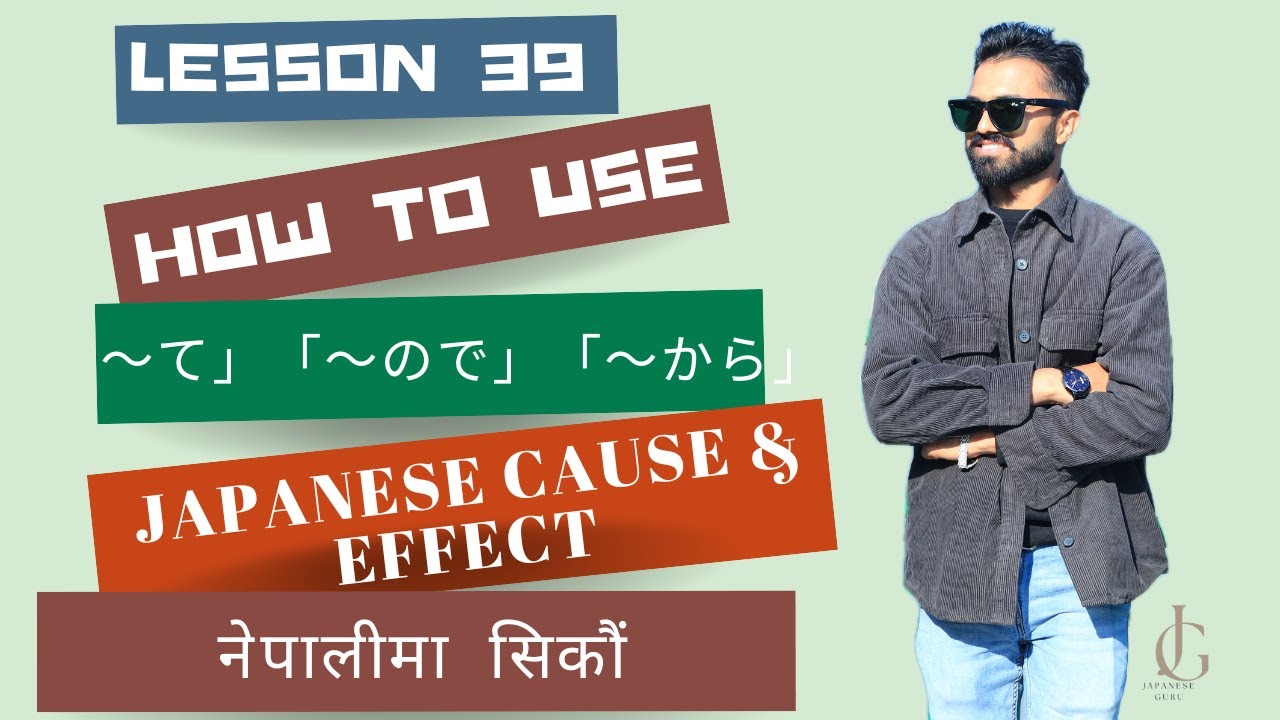
Minna no Nihongo Lesson 39||“~て, ~ので, ~から को फरक के हो? | Learn Japanese Grammar Easily!”
Автор: Japanese Guru
Загружено: 2025-03-19
Просмотров: 3035
Описание:
How to Use 「~て」「~ので」「~から」 | Japanese Cause & Effect Grammar | Minna no Nihongo
Hello, everyone! Welcome to “Japanese Guru”!
In today’s video, we’ll learn how to express cause and effect in Japanese. Specifically, we’ll explore the differences between 「~て」「~ので」「~から」 and when to use each one.
This grammar point will strengthen your understanding of Japanese, so make sure to watch until the end!
1. ~て, ~なくて: Expressing Cause Without Intention
This sentence pattern is used when the first part presents a cause, and the second part presents its consequence.
However, it is only used for emotions, states, or natural events. It cannot be used with expressions of intention, requests, or commands.
✅ Expressing Feelings:
• ニュースを聞いて、びっくりしました。
(I was surprised to hear the news.)
• 家族に会えなくて、寂しいです。
(I’m sad because I can’t meet my family.)
✅ Potential Verbs & States:
• 土曜日は都合が悪くて、行けません。
(Saturday is inconvenient for me, so I can’t go.)
• 話が複雑で、よくわかりませんでした。
(The story was complicated, so I couldn’t understand it well.)
❌ Cannot be used for volitional expressions (commands, requests, invitations):
✖ 危なくて、機械に触らないでください。 (Wrong)
⭕ 危ないですから、機械に触らないでください。 (Correct: Since it’s dangerous, please don’t touch the machine.)
2. Using ので: Soft & Objective Reasoning
Unlike から, which is more direct and subjective, ので expresses cause in a softer, more objective way.
It’s often used when making excuses, polite requests, or asking for permission.
✅ Softening a Request:
• 日本語がわからないので、英語で話していただけませんか?
(I don’t understand Japanese, so could you speak in English?)
✅ Making an Excuse:
• 用事があるので、お先に失礼します。
(I have something to do, so may I leave early?)
❌ Cannot be used with commands or prohibitions:
✖ 危ないので、機械に触るな。 (Wrong)
⭕ 危ないから、機械に触るな。 (Correct: Don’t touch the machine because it’s dangerous.)
3. Using から: Direct & Strong Reasoning
から is used when the speaker wants to clearly emphasize the cause of something. It is more direct than ので and is commonly used in everyday speech.
✅ Expressing Personal Reasons:
• 明日会議がありますから、今日準備しなければなりません。
(There’s a meeting tomorrow, so I have to prepare today.)
✅ Commands & Requests:
• 危ないですから、気をつけてください。
(It’s dangerous, so please be careful.)
❌ Cannot be used when expressing emotions, states, or uncontrollable events:
✖ 事故があったから、バスが遅れました。 (Wrong)
⭕ 事故があって、バスが遅れました。 (Correct: The bus was delayed because there was an accident.)
Conclusion:
Now you know how to use 「~て」「~ので」「~から」 to express cause and effect in Japanese!
Key Takeaways:
✔ 「~て」 is used for emotions, states, and uncontrollable events (but not for commands or requests).
✔ 「~ので」 is softer and polite, used for excuses and polite requests.
✔ 「~から」 is direct and strong, used for personal reasoning and commands.
If you found this lesson helpful, don’t forget to like, share, and subscribe to “Japanese Guru” for more Japanese lessons!
Повторяем попытку...
Доступные форматы для скачивания:
Скачать видео
-
Информация по загрузке:


