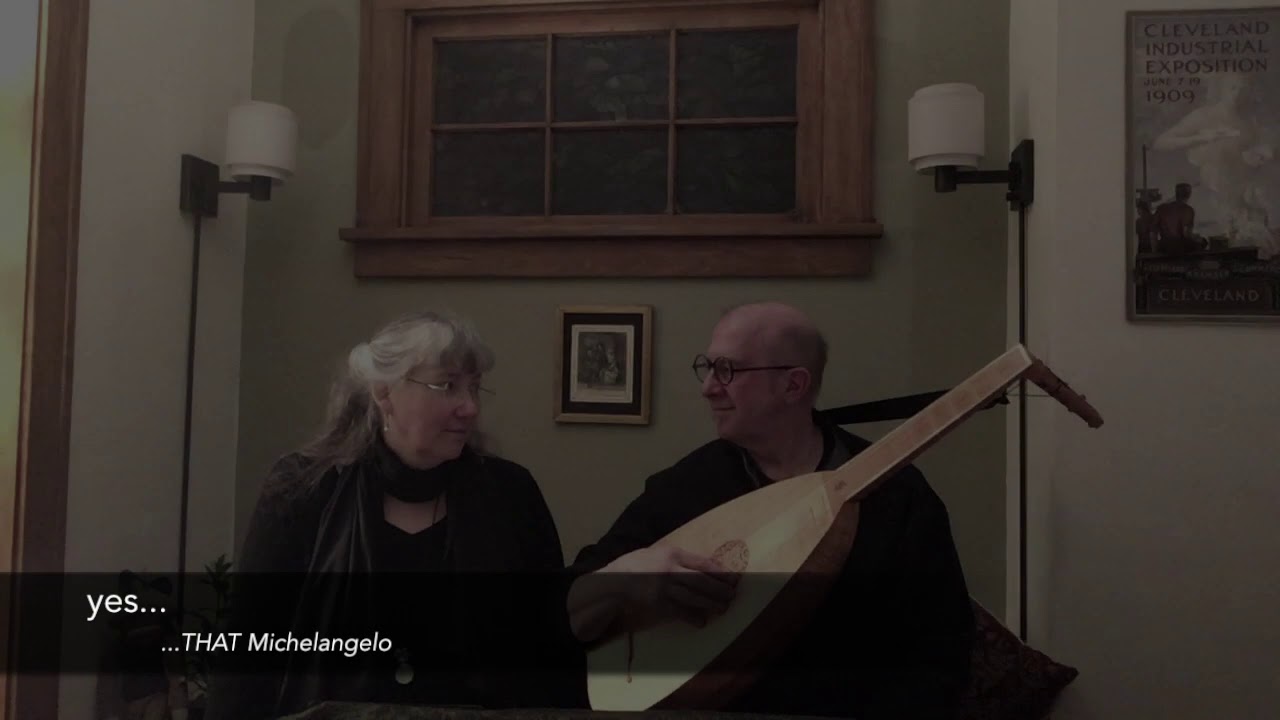
duo Mignarda: Two by Tromboncino
Автор: Mignarda
Загружено: 2020-03-21
Просмотров: 867
Описание:
Two by Bartolomeo Tromboncino (c. 1470-1535)
Bartolomeo Tromboncino was a singer, lutenist and a prolific composer of popular songs from circa 1500. Tromboncino served at the court of Isabella d’Este until his unauthorized departure in 1505, at which time he entered the service of Lucrezia Borgia in Ferrara.
"Vergine bella, che di sol vestita", poetry by Francesco Petrarca (1304 – 1374)
followed by
“Come harò donque ardire”, poetry by Michelangelo Buonarroti (1475-1564)
Among Tromboncino's relatively small output of laude, or devotional songs, this setting of the passionate poetry of Francesco Petrarca (1304 – 1374) employs a gentle but consistent pulse in contrast to the more complex earlier setting by Guillaume DuFay (c.1397 – 1474), also available as a single by Mignarda.
Vergine bella, che di sol vestita,
coronata di stelle, al sommo Sole
piacesti sí, che 'n te Sua luce ascose,
amor mi spinge a dir di te parole:
ma non so 'ncominciar senza tu' aita,
et di Colui ch'amando in te si pose.
Invoco lei che ben sempre rispose,
chi la chiamò con fede:
Vergine, s'a mercede miseria extrema de l'humane cose
già mai ti volse, al mio prego t'inchina,
soccorri a la mia guerra,
bench'i' sia terra,
et tu del ciel regina.
Vergine pura, d'ogni parte intera,
del tuo parto gentil figliuola et madre,
ch'allumi questa vita, et l'altra adorni,
per te il tuo figlio, et quel del sommo Padre,
o fenestra del cielo lucente altera,
venne a salvarne in su li extremi giorni;
et fra tutti terreni altri soggiorni
sola tu fosti electa,
Vergine benedetta,
che 'l pianto d'Eva in allegrezza torni.
Fammi, ché puoi, de la Sua gratia degno,
senza fine o beata, già coronata nel superno regno.
Virgin fair, arrayed in the sun, crowned with stars,
You who found such favor with the highest Sun that He hid his light in you,
Love drives me to speak of you.
But I cannot even begin without your aid
and the aid of Him who established Himself in you.
I invoke her who has always answered those
Who called upon her with faith.
Lady, if extreme misery in things of earth
ever turned you to pity,
Bend down to to my prayer, help me in my struggle
Though I be clay,
and you the Queen of heaven!
Virgin pure, perfect in every part;
Noble daughter and mother of your gentle Child,
You who lighten this life and adorn the other:
Your son, Son of the Father,
Through you (o shining window of heaven)
Came to redeem us at the final day!
God selected you alone
among all who dwell on the earth.
Blessed virgin,
who turns the tears of Eve to rejoicing:
O make me worthy His grace,
You, eternally blessed, crowned in heaven above.
**********
“Come harò donque ardire”
Bartolomeo Tromboncino, poetry by Michelangelo Buonarroti
The famous artist, Michelangelo, wrote the poem, "Come harò donque ardire" sometime between 1510 and 1520, after completion of the magnificent ceiling of the Sistine Chapel. Tromboncino’s setting of Come harò donque ardire was published in 1520 by Andrea Antico in a sparse arrangement for voice and lute.
Mignarda's performance adds characteristic movement to the lute accompaniment that is typical of Tromboncino's style. The performance adheres to a quiet, flexible but regular sense of pulse which, as reinforced by contemporary description, is vital to effective performance of music from this era.
Come harò donque ardire
senza voi mai, mio ben, tenermi’n vita,
s’io non posso, al partir, chiedermi aita ?
Quei singulti, quei pianti e quei sospiri
che ‘1 miser cor a voi acompagniorno,
madonna, duramente dimostrorno
la mia propinqua morte e’ mei martyri.
Ma se ver è che, per absentia, mai
Mia fidel servitù cada in oblio,
II cor come presago di mei guai,
per adimpir el vostro van desio,
vi fa lexequie del sepulchro mio.
How, then, can I ever dare to keep hold on life
without you, my beloved,
if at our parting, I cannot find help within myself?
Those sobs, those cries, those sighs
companions of my miserable heart -
I hardly show to you, my lady,
the torments of my approaching death.
But if it is true that once I am gone
my faithful servitude may be forgotten,
my heart, anticipating my woe
at the loss of your desire,
makes preparations for my entombment.
Повторяем попытку...
Доступные форматы для скачивания:
Скачать видео
-
Информация по загрузке:







![Tariq Harb performs Bach's Toccata and Fugue, BWV 565 [with TABS]](https://imager.clipsaver.ru/og2b-LwTk6Q/max.jpg)