Hungarian folk song - Átalmennék a Dunán
Автор: Kulturia
Загружено: 2026-01-15
Просмотров: 332
Описание:
The Hungarians, who call themselves Magyars, have a distinctive history in Europe that combines deep Asian roots with a long process of adaptation in the Carpathian Basin.
Asian origins
The Magyars originate from Inner Eurasia. Linguistic, archaeological, and genetic evidence links them to Uralic-speaking peoples who lived east of the Ural Mountains. Their language, Hungarian, belongs to the Finno-Ugric branch, making it fundamentally different from the Indo-European languages spoken by most of their neighbors.
Before settling in Europe, the Magyars lived for centuries on the Eurasian steppe. Their way of life was semi-nomadic, centered on horse breeding, mounted warfare, and clan-based social organization. They interacted closely with Turkic peoples, which left strong cultural and linguistic influences visible in early Hungarian society, personal names, and military traditions.
Arrival in Europe
Around the late 9th century, the Magyars migrated westward and entered the Carpathian Basin, an area that became their permanent homeland. This event, known as the Hungarian Conquest, laid the foundation of the Hungarian state. Despite settling in Europe, the Magyars retained a strong sense of identity tied to their eastern origins.
Statehood and adaptation
Under King Stephen I in the early 11th century, Hungary became a Christian kingdom and integrated into medieval Europe. This marked a major cultural shift: Western Christianity, Latin literacy, and feudal institutions were adopted. However, older steppe traditions did not disappear. They were absorbed into a unique Hungarian synthesis of East and West.
Culture and identity
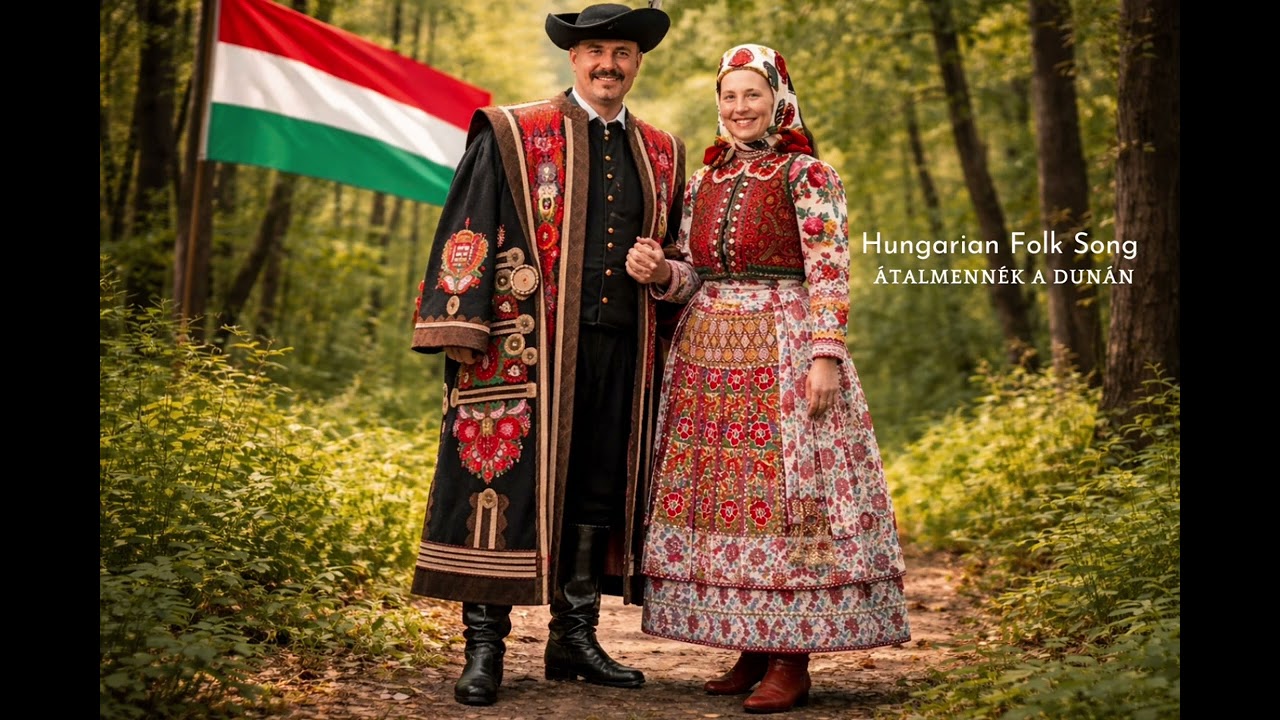
Hungarian culture reflects this dual heritage. Folk traditions—such as embroidery, music, dance, and costume—often show steppe symbolism, geometric patterns, and a strong connection to nature and rural life. The horse remains a powerful national symbol, echoing the nomadic past.
Hungarian folk music and poetry emphasize melancholy, endurance, and attachment to the land, while national mythology preserves memories of eastern ancestors and heroic migrations. Even today, many Hungarians view their Asian background not as a contradiction to being European, but as a defining feature of their identity.
Modern perspective
Modern Hungary is a fully European nation-state, yet awareness of Asian origins continues to shape historical consciousness, scholarship, and cultural expression. This combination of Asian roots and European history makes Hungarian identity unique on the continent: culturally European, linguistically isolated, and historically shaped by the Eurasian steppe.
In short, Hungarian history is the story of a people who came from Asia, settled in Europe, and preserved a distinct identity by blending both worlds rather than abandoning either.
Повторяем попытку...
Доступные форматы для скачивания:
Скачать видео
-
Информация по загрузке: