Overhead & Underground — Line Clearance and Dig Safety
Автор: middleclass bubba
Загружено: 2026-02-21
Просмотров: 29
Описание:
“Overhead & Underground — Line Clearance and Dig Safety”
When people think about electrical hazards, they usually think about wires they can see.
But some of the deadliest electrical hazards on a jobsite are the ones over your head… and the ones under your feet.
Overhead and underground utilities don’t look dangerous—until something touches them.
And when that happens, there’s no reset button.
A Real Jobsite Story
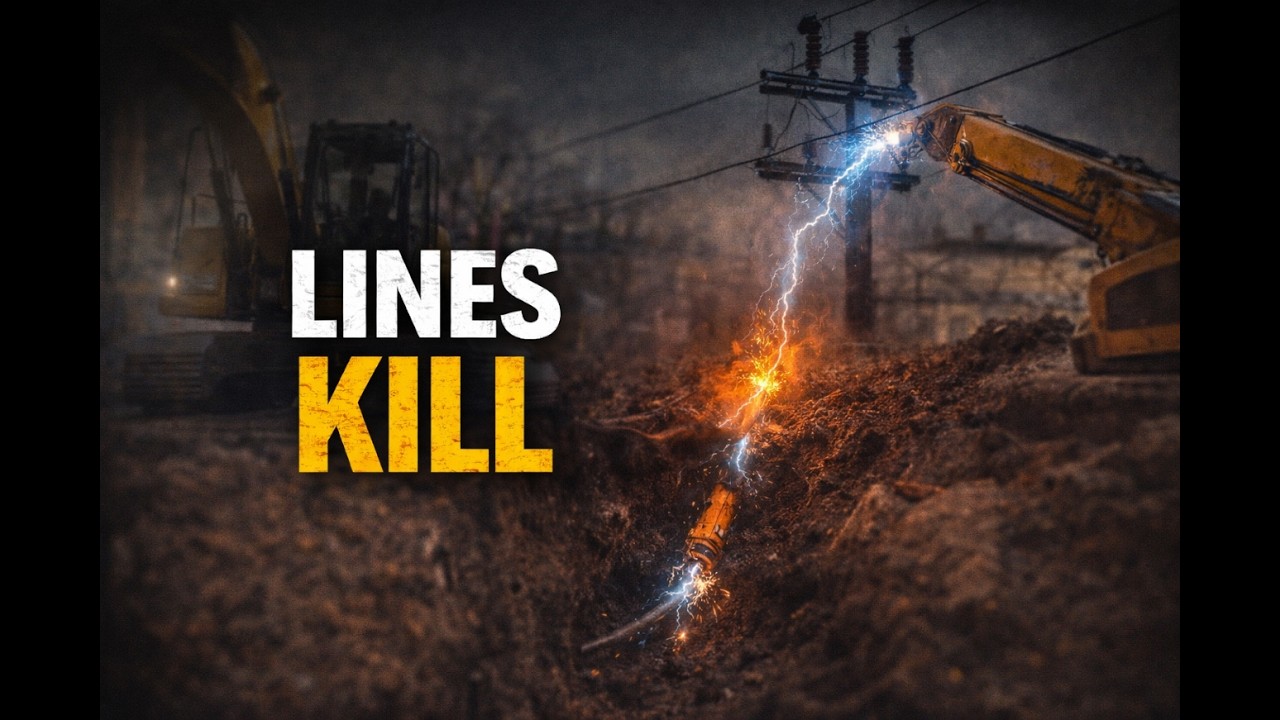
A piece of equipment was moving material near overhead power lines.
The operator thought he had enough clearance.
He didn’t.
The boom contacted the line.
The electricity traveled through the machine, into the ground, and through a nearby worker.
One moment of misjudged distance.
One fatal result.
In another job, a crew started digging without confirming utility locations.
They struck an underground electrical line.
The explosion and arc flash sent two workers to the hospital with severe burns.
Two different jobs.
Same root cause: assumptions instead of verification.
Why These Hazards Are So Dangerous
Electricity doesn’t need permission.
It doesn’t need warnings.
And it doesn’t care how experienced you are.
Overhead lines can:
• Arc through air
• Energize equipment
• Travel through outriggers and ground contact
• Kill without direct contact
Underground lines can:
• Be hit by hand tools or machines
• Cause explosions or arc flashes
• Energize the ground around you
• Turn a routine dig into a life-threatening emergency
You don’t have to touch the line.
You just have to be close enough.
Common Mistakes That Get People Hurt
• Working too close to overhead lines
• Misjudging boom or load swing distance
• Failing to mark or locate underground utilities
• Assuming “they’re not there”
• Relying on memory instead of maps
• Skipping the call before you dig
Distance and location are not guesses.
They are life-or-death measurements.
How to Stay Safe Around Overhead & Underground Lines
1. Maintain Safe Clearance
Stay at least 10 feet away from overhead power lines—more for higher voltages or long equipment.
2. Plan the Work Before You Move Equipment
Identify lines, set limits, use spotters, and mark danger zones.
3. Call Before You Dig
Utility locates are not paperwork—they’re protection.
4. Respect Markings and Exposed Lines
Hand-dig when required and expose utilities carefully.
5. Assume All Lines Are Energized
Until proven otherwise, treat every line as live.
Dangerous Assumptions
• “We’ve dug here before.”
• “It should be deep enough.”
• “That line is probably dead.”
• “We’ve got plenty of room.”
• “Nothing happened last time.”
Electricity doesn’t remember “last time.”
Supervisor Note
Supervisors must:
• Ensure overhead hazards are identified and controlled
• Enforce minimum approach distances
• Require utility locates before excavation
• Use spotters when equipment works near lines
• Stop work when clearances aren’t safe
If the hazard isn’t controlled, the work isn’t ready.
Closing
Overhead or underground—electricity doesn’t care where it is.
It only cares about finding a path.
So measure your distance.
Verify before you dig.
And never assume a line is safe.
Because when you get too close…
electricity doesn’t give second chances.
Повторяем попытку...
Доступные форматы для скачивания:
Скачать видео
-
Информация по загрузке: