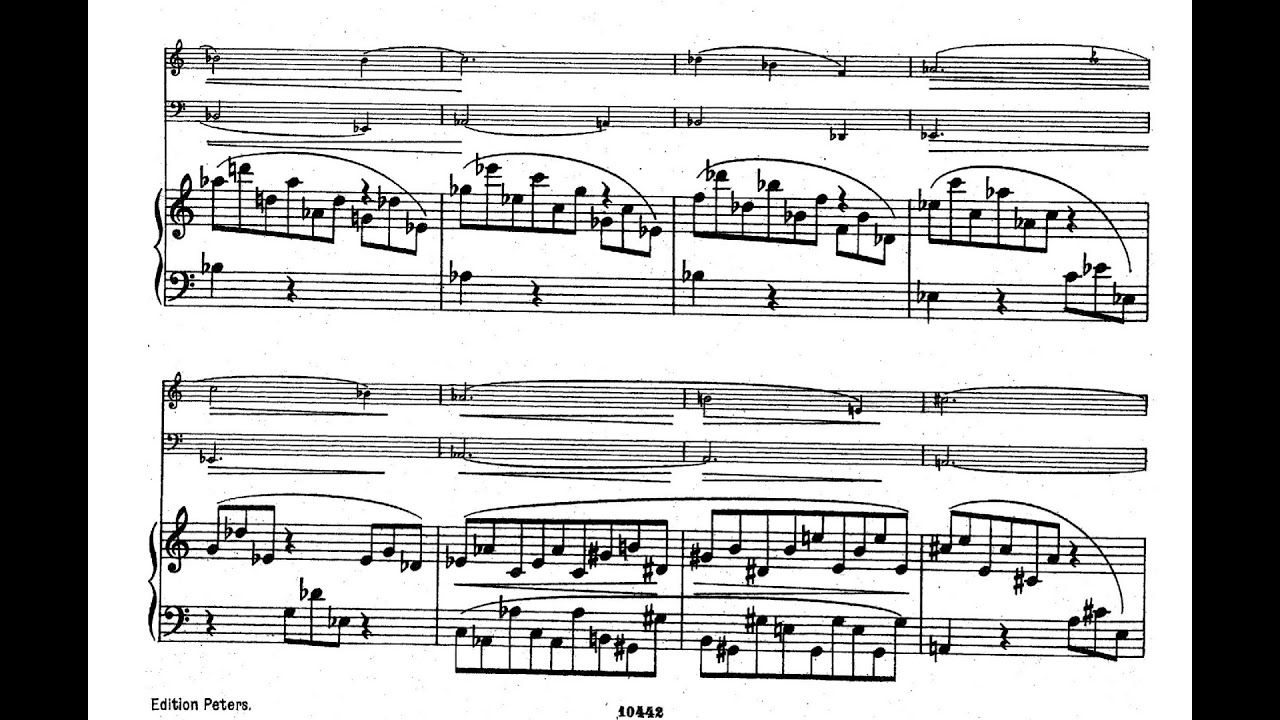
Robert Schumann - Piano Concerto, Op. 54 (1841-45) {Peter Katin}
Автор: Bartje Bartmans
Загружено: 2022-07-29
Просмотров: 6829
Описание:
Robert Schumann (8 June 1810 – 29 July 1856) was a German composer and influential music critic. He is widely regarded as one of the greatest composers of the Romantic era. Schumann left the study of law, intending to pursue a career as a virtuoso pianist. He had been assured by his teacher Friedrich Wieck that he could become the finest pianist in Europe, but a hand injury ended this dream. Schumann then focused his musical energies on composing.
Please support my channel:
https://ko-fi.com/bartjebartmans
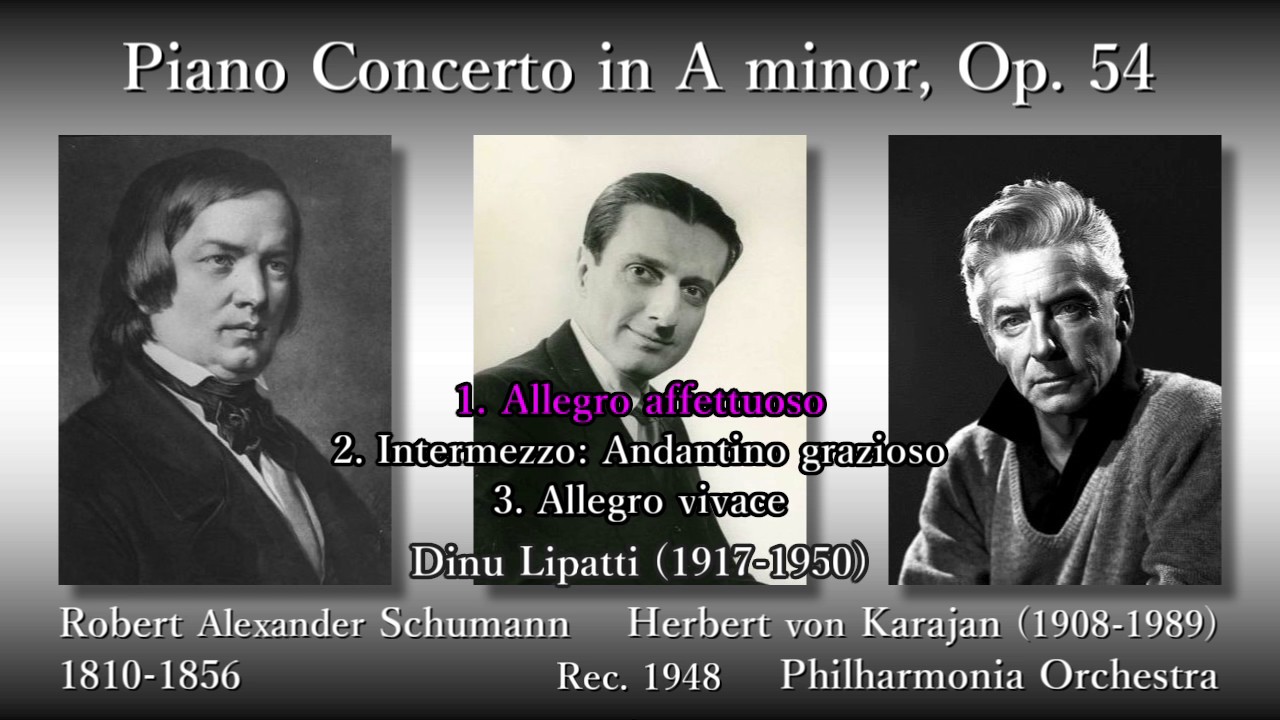
Piano Concerto in A minor, Op. 54 (1841-45)
Dedication: Ferdinand Hiller (1811-1885)
I. Allegro affettuoso (0:00)
II. Intermezzo (14:44)
III. Allegro vivace (20:04)
Peter Katin, piano and London Symphony Orchestra conducted by Eugene Goossens
rec. May 26-28, 1959
Everest 9060
Schumann had worked on several piano concertos earlier. He began one in E-flat major in 1828, from 1829–31 he worked on one in F major, and in 1839, he wrote one movement of a concerto in D minor. None of these works were completed.
Already on 10 January 1833, Schumann first expressed the idea of writing a Piano Concerto in A minor. In a letter to his future father-in-law, Friedrich Wieck, he wrote: "I think the piano concerto must be in C major or in A minor."[1] From 17–20 May 1841, Schumann wrote a fantasy for piano and orchestra, his Phantasie in A minor. Schumann tried unsuccessfully to sell this one-movement piece to publishers. In August 1841 and January 1843 Schumann revised the piece, but was unsuccessful. His wife Clara, an accomplished pianist, then urged him to expand it into a full piano concerto. In 1845 he added the Intermezzo and Allegro vivace to complete the work. It remained the only piano concerto that Schumann finished.
The premiere of the first movement (Phantasie) took place on 13 August 1841 at the Gewandhaus in Leipzig with Clara Schumann as the soloist. The complete three-movement version was premiered in Dresden on 4 December 1845, again with Clara Schumann, and the dedicatee Ferdinand Hiller as the conductor. Less than a month later, on 1 January 1846, the concerto was performed in Leipzig, conducted by Felix Mendelssohn.
After this concerto, Schumann wrote two other pieces for piano and orchestra: the Introduction and Allegro Appassionato in G major, Op. 92,
• Schumann - Introduction and Allegro, Op.92...
and the Introduction and Allegro Concertante in D minor, Op. 134.
Despite its three movements, the work has retained the character of a fantasy. The basic idea expressed in the work is that of yearning and happiness between two loving people. Schumann musically transforms his fight for Clara in this work. The main theme of the first movement is similar to the melody of the Florestan aria from Ludwig van Beethoven's opera Fidelio. Congruent with Beethoven, Schumann saw this theme as an expression of the intimate connection between loyalty and the struggle for freedom. In this way the concerto is, like many of his other compositions, based on Schumann's life long concern to fight against philistinism with musical means.
Повторяем попытку...

Доступные форматы для скачивания:
Скачать видео
-
Информация по загрузке:








![Yuja Wang: Schumann Piano Concerto in A minor Op. 54 [HD]](https://imager.clipsaver.ru/fWDrJT0s1s8/max.jpg)