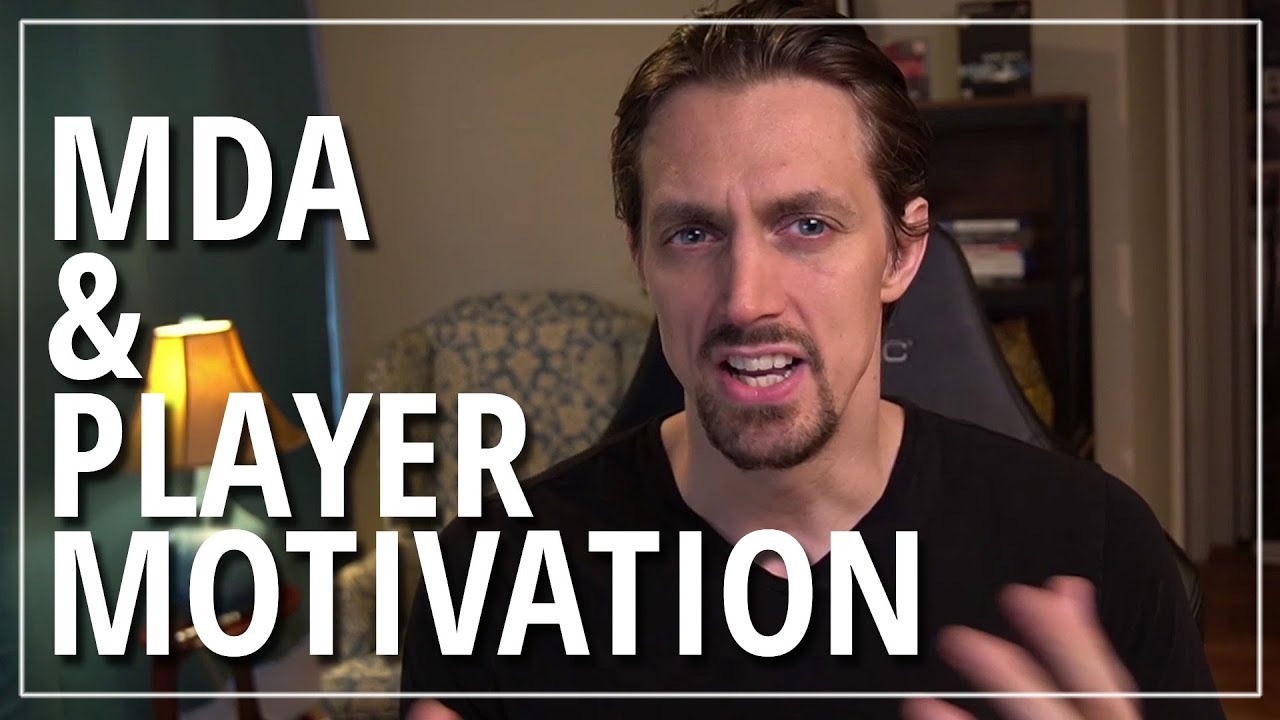
Game Design & Analysis - MDA and Player Motivation
Автор: DrBo6
Загружено: 2021-09-07
Просмотров: 5406
Описание:
OVERVIEW
In this week's video lecture, Bob discusses our favorite formal design approach for games: MDA. This well-established industry methodology has been around for years and is always a great starting point to build shared vocabulary to help your game development team create a game that meets its intended emotional outcomes. In the second part of the video, Bob introduces the viewer to player motivation research and personality types as a fertile soil to derive inspiration from to upgrade their understanding of the MDA framework.
CONTENT
0:06 Space Pirates part 1
2:35 Overemphasizing mechanics
3:15 Recap on the elemental tetrad
4:32 The MDA framework
5:51 Mechanics
6:16 Dynamics
6:50 Aesthetics
7:11 Designing backwards
9:12 Space Pirates part 2
11:28 8 kinds of fun
16:23 Richard Bartle's Player Types
17:44 Jason Vandeberghe's Domains of Play
20:28 John Sherry et al.'s Player Motivation Model
21:49 Quantic Foundry's Player Motivation Model
22:58 Slide with lots of aesthetics
23:18 Making informed decisions
24:20 Wrap up with Reggie
LEARNING OUTCOMES
Upon completion of this module, students are expected to be able to
understand the differences between Mechanics, Dynamics and Aesthetics
situate MDA alongside Jesse Schell's Elemental Tetrad
apply the MDA framework
explain two player personality models
explain two player motivation models
expand the MDA model using empirical research
FURTHER READING
Bartle, R. (1996). Players who suit MUDs: Hearts, Diamonds, Clubs and Spades. Journal of MUD Research, 1(1).
Gosling, S. D., Rentfrow, P. J., & Swann Jr., W. B. (2003). A very brief measure of the Big-Five personality domains. Journal of Research in Personality, 37(6), 504–528.
Hunicke, R., LeBlanc, M., & Zubek, R. (2008). MDA: A Formal Approach to Game Design and Game Research. Game Developers Conference.
Vandenberghe, J. (2016). Engines of Play: How Player Motivation Changes Over Time. [Video]. Youtube.
de Vette, F., Tabak, M., Hermens, H. J., & Vollenbroek, M. (2018). Mapping game preferences of older adults: A field study towards tailored gamified applications. Proceedings of the 10th Nordic Conference on Human-Computer Interaction, 93–101.
Sherry, J. L., Lucas, K., Greenberg, B. S., & Lachlan, K. (2006). Video game uses and gratifications as predictors of use and game preference. Playing Video Games: Motives, Responses, and Consequences, 213–224.
De Schutter, B. (2020). Games and Behaviorism. [Video]. YouTube.
GAMES
Apex Legends
Assassin's Creed series
Battleship
Captain Sonar
Cookie Clicker
Divinity: Original Sin 2
Final Fantasy VII (Remake)
Gone Home
Half-Life: Alyx
Her Story
Layers of Fear
League of Legends
Pong
Pokémon Series
Pro Evolution Soccer series
Second Life
Sherlock: Consulting Detective
Sky: Children of the Light
The Sims
Resident Evil series
World of Warcraft
SUGGESTED TOPICS FOR DISCUSSION
What is your favorite aesthetic in games and why?
What is an aesthetic that is entirely underutilized?
Discuss a player motivation that has not been mentioned in this lecture.
Повторяем попытку...
Доступные форматы для скачивания:
Скачать видео
-
Информация по загрузке: