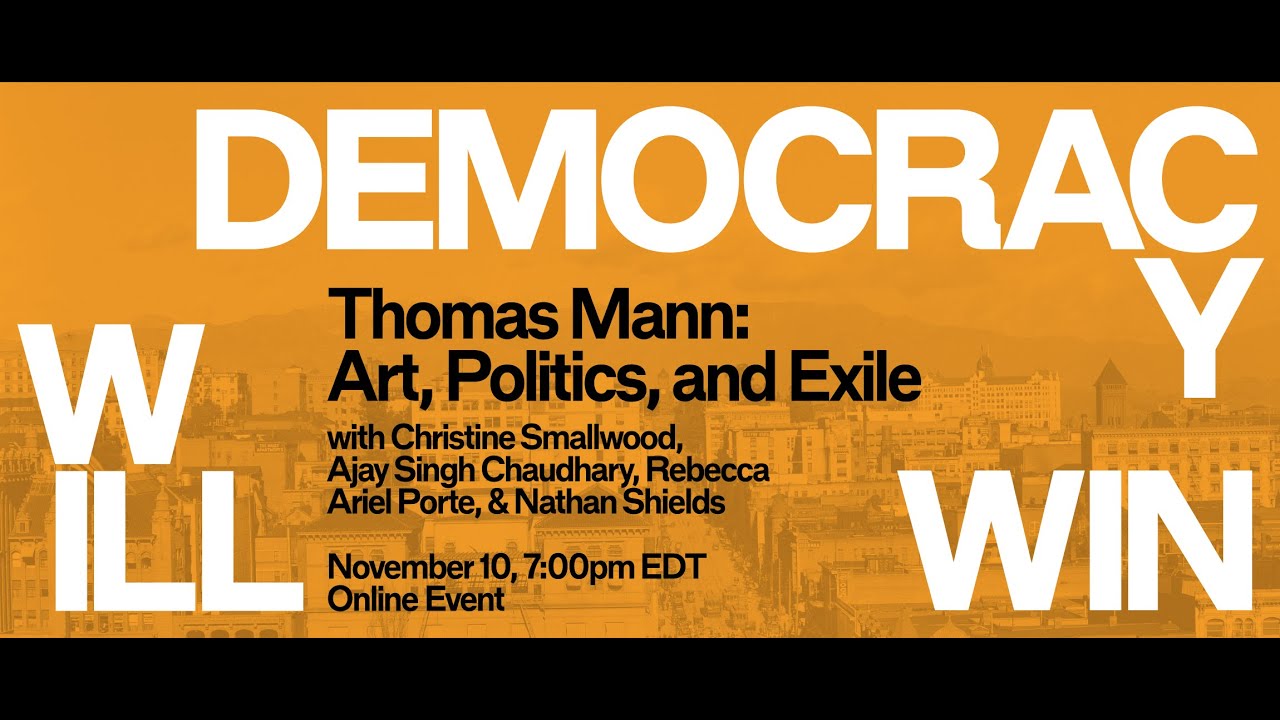
Thomas Mann: Art, Politics, and Exile
Автор: The Brooklyn Institute for Social Research
Загружено: 2021-11-12
Просмотров: 1054
Описание:
In 1914, Thomas Mann extolled World War I as “a purification, a liberation, an enormous hope.” In 1918, with Germany in a state of collapse, he proclaimed that democracy was anti-German (and that leftist intellectuals such as his brother Heinrich were Zivilisationsliterat—outsider cosmopolitans). Yet, in the 1930s and ‘40s, Mann was among the world’s foremost defenders of democracy, a pronounced anti-Nazi, and, in exile, a neighbor and companion to the German-speaking intellectual cosmopolitans he once derided—Arnold Schoenberg, Bertolt Brecht, Max Horkheimer, and Theodor Adorno, among others. How can we understand Mann’s political trajectory—from monarchist to liberal to, by some lights, radical—and what kind of light does it cast on his written work, from the metaphysical Magic Mountain to the allegorical Doctor Faustus (written partly with the assistance of Adorno) and beyond?
In Thomas Mann: Art, Politics, and Exile, co-presented by Goethe-Institut New York, BISR faculty Christine Smallwood, Nathan Shields, and Rebecca Ariel Porte explore the art and politics of Thomas Mann. What explains Mann’s shifting political beliefs and allegiances, and in what ways was it reflected in his fictional writing? How was Mann shaped by the German émigré community of artists and intellectuals that made up, in the 1940s, what Mann called “German California”? How did Mann understand the relationship between art, the artist, and politics? How, ultimately, did Mann understand the rise of fascism: as a sudden eruption of mass hysteria; or—as portions of Doctor Faustus seemingly suggest—a thing made possible by the very humanist culture to which Mann once pledged his absolute allegiance?
The conversation gets underway at the 6:30 mark.
Повторяем попытку...
Доступные форматы для скачивания:
Скачать видео
-
Информация по загрузке: