The Last Sword Duel | True Story!
Автор: Magical History
Загружено: 2024-05-22
Просмотров: 9882
Описание:
The last official sword duel in history. We talked about gun duels and the extinction of dueling culture.
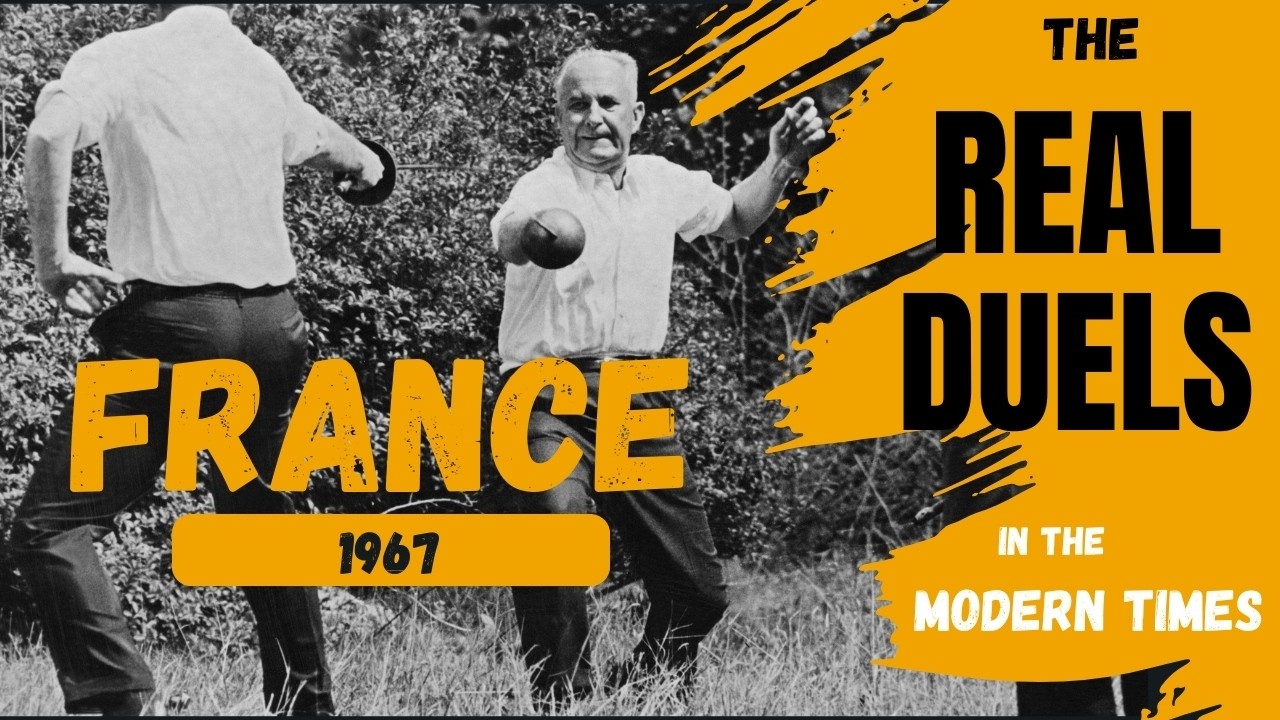
Step back in time to 1967, a year marked by the intensity of the Vietnam War, the electrifying energy of rock and roll, and the awe-inspiring wonders of space exploration. Amidst this backdrop of global upheaval, an unlikely event unfolded in France – a sword duel between two politicians, Gaston Defferre and René Ribière.
In an era dominated by firearms, this duel marked a surprising resurgence of an ancient tradition. It all began with a heated exchange in the French National Assembly, where Defferre's insult towards Ribière sparked a challenge that would culminate in a clash of steel.
On a private estate in Neuilly-sur-Seine, west of Paris, the two politicians faced off, their swords glinting under the watchful eye of referee Jean de Lipkowski, the then-Minister of Foreign Affairs. Despite the head of state's attempt to intervene, the duel proceeded, driven by the clash of egos and the adherence to a fading code of honor.
The duel commenced, and Defferre swiftly struck Ribière's arm twice. Ribière, determined to continue, pressed on, only to receive another blow from Defferre's sword. Recognizing the potential for further injury, referee Lipkowski intervened, bringing the duel to an end.
Though the exact impact of the duel on Ribière's impending wedding remains unclear, both politicians went on to live long and healthy lives. This incident serves as a stark reminder of an era when duels, though rare, were not entirely obsolete.
While sword duels might seem like relics of a bygone era, they were once a common practice among the elite. In the 1950s, film director Willy Rozier challenged film critic Francois Chalais to a duel over negative reviews of his movie "56 Rue Pigalle." The duel, based on the first-blood rule, saw Rozier emerge victorious, fulfilling every director's dream of settling a score with a critic.
Even the literary world was not immune to the allure of the duel. In 1897, the renowned French writer Marcel Proust engaged in a duel with critic Jean Lorrain, who had penned an article disparaging Proust's homosexuality and literary talents. Both parties fired at each other, but no injuries resulted, and the duel concluded honorably.
The footage of the Defferre-Ribière duel, however, likely involved a staged 'hit' for the camera. This brings us to the realm of pistol duels, which became far more prevalent in the 19th century.
Contrary to popular belief, the absolute accuracy of pistols was not the sole factor driving the popularity of duels in the 19th century. While pistols had certainly improved since their early days, they were still far from the precision instruments we know today.
Moreover, real duels did not follow a rigid '10 paces, turn, and fire' rule as often depicted in films. This cinematic trope likely originated from theatrical productions and romanticized accounts of duels.
The myth of the quick-draw duel in the Wild West is another common misconception. While films often depict these duels as dramatic and action-packed, reality was far less glamorous. There is no credible evidence to support the existence of quick-draw duels. In some cases, duels did occur rapidly, but these were often spontaneous clashes rather than pre-arranged encounters.
As pistol technology advanced, duels began to decline. By the 1840s, they had become virtually obsolete. This decline can be attributed to two factors: increased accuracy, which made duels even more dangerous, and a growing societal disapproval of the practice.
Pistol duels, once associated with honor and bravery, were a violent tradition deeply embedded in 19th-century society. Yet, the reality of duels was far more complex and perilous than their cinematic portrayals. Quick-draw duels were largely a myth, and the practice eventually waned due to advancements in pistol technology and shifting societal attitudes.
Unlike their cinematic portrayals, real duels did not follow a rigid '10 paces, turn, and fire' rule. Duelists would stand at a predetermined distance, and a command would be given to determine who would fire first.
This system, however, placed the second shooter at a significant disadvantage. If wounded or shaken by the first shot, aiming accurately became a challenge, making duels even more perilous.
The myth of the quick-draw duel in the Wild West is another common misconception. While films often depict these duels as dramatic and action-packed, reality was far less glamorous. There is no credible evidence to support the existence of quick-draw duels. In some cases, duels did occur rapidly, but these were often spontaneous clashes rather than pre-arranged encounters.
Повторяем попытку...
Доступные форматы для скачивания:
Скачать видео
-
Информация по загрузке: