Common Yellowthroat
Автор: Hoosier Bird
Загружено: 2025-06-28
Просмотров: 918
Описание:
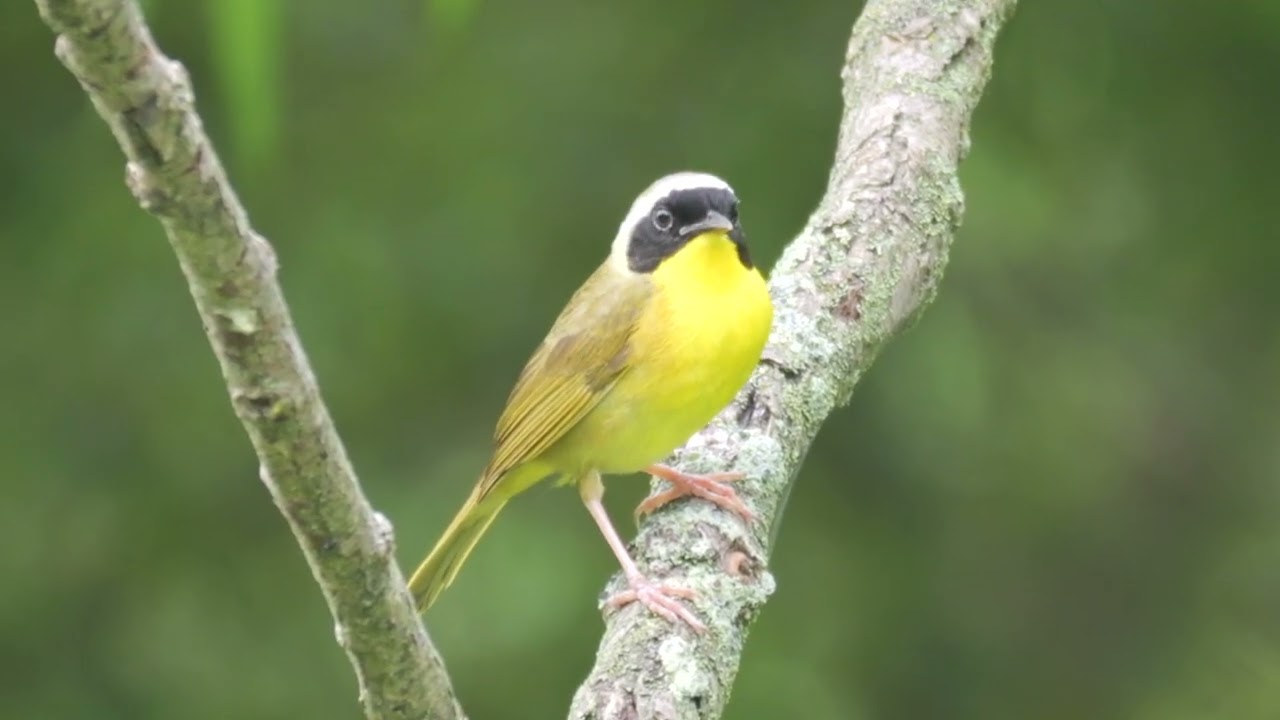
The Common Yellowthroat is a delightful little warbler that brings a splash of color and character to wetlands and thickets across North America. Males are instantly recognizable by their bold black facial mask, which contrasts with a bright yellow throat and olive back — a look that’s earned them the nickname “bandit warbler.” Females lack the mask but still carry a warm yellow wash on the throat and undertail. These birds are most often found in dense, low vegetation near water, where they forage for insects and spiders. Despite their secretive habits, they’re widespread and adaptable, nesting in everything from cattail marshes to overgrown fields.
What often gives them away is their voice. The male’s song is a distinctive, rolling “witchety-witchety-witchety” — a phrase that cuts through the morning air like a signature tune. It’s short, snappy, and repeated frequently, especially during breeding season when males may sing up to 300 times an hour to defend territory and attract mates A. Both sexes also use a sharp “chuck” call when alarmed. The song’s rhythm and tone can vary slightly by region, but its cadence is unmistakable once you’ve tuned into it. In fact, many birders hear the Common Yellowthroat long before they ever see it — a fitting trait for a bird that thrives in the shadows of the underbrush.
The Common Yellowthroat thrives in dense, low vegetation, especially in wet or marshy environments. You’ll often find them skulking through cattail stands, reed beds, and tangled thickets at the edges of ponds, streams, and wetlands. Their preference for thick cover makes them masters of concealment — they’re far more often heard than seen.
While wetlands are their stronghold, they’re surprisingly adaptable. During migration and in winter, they’ll also turn up in overgrown fields, brushy pastures, and even suburban areas with enough shrubby cover. What they’re really after is dense, tangled vegetation close to the ground, which offers both food and protection. This habitat choice not only supports their insectivorous diet but also provides safe nesting sites, often just a few feet off the ground in grasses or shrubs.
Повторяем попытку...
Доступные форматы для скачивания:
Скачать видео
-
Информация по загрузке: