Saul & Labaya: Defeat, Escape, Pursuit, Death | King David in the Amarna Letters| EA 245 | Chapter 8
Автор: PG Cavalcanti
Загружено: 2025-03-15
Просмотров: 1272
Описание:
Early access to the full series:
www.patreon.com/PGCavalcanti
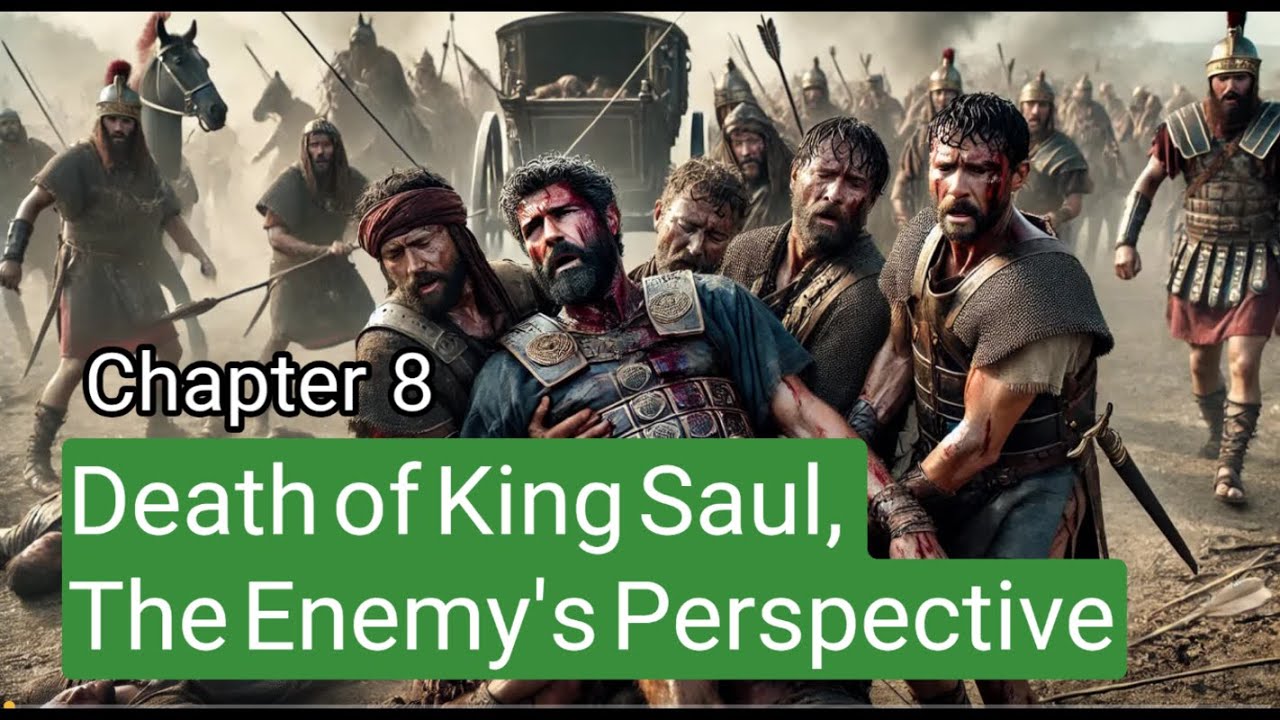
he battle at Mount Gilboa, where King Saul and his sons perished, closely mirrors the conflict described in the Amarna Letters involving the King of Gath and the Habiru forces. Both accounts emphasize the pursuit of key leaders — Saul in the Bible and Labaya in the Amarna texts — and describe their final moments in similar detail. The Amarna Letters report that Labaya initially escaped capture after one of the pro-Egyptian leaders, Surata, accepted a ransom to release him. However, Labaya was eventually killed in pursuit, a fate that aligns with the biblical narrative of Saul's desperate flight and death at the hands of his own men or by his own hand. The King of Gath's frustration at being overlooked in Pharaoh's rewards mirrors the tension described in the aftermath of Saul’s defeat, reinforcing the striking synchronism between the two records.
Further connections emerge between the Bible’s account of Saul’s death and the Amarna description of Labaya's final moments. In the biblical narrative, Saul, critically wounded, pleaded with his men to end his life, ultimately dying either by their hands or through suicide. The Amarna Letters present a similar scenario in which Labaya’s death may have resulted from his own men delivering the final blow. The mention of Bal-mehr, Labaya's military general in the Amarna texts, adds another parallel to the Bible, where Abner, Saul’s trusted commander, played a pivotal role. This alignment of names and events supports the theory that the Amarna Letters and the biblical account describe the same historical conflict, with Saul's death marking the collapse of Israel's first monarchy and the subsequent power struggle that allowed David to emerge as the new leader.
The aftermath of Saul’s death further illustrates these connections. The Amarna Letters describe the sons of Labaya regrouping and seeking alliances to reclaim their father's influence, a situation reflected in the biblical account of Ish-Baal ruling part of Israel while David consolidated power over Judah. Amarna Letter 250, written by Bal-mehr, reveals that the sons of Labaya attempted to recruit him against Egypt, echoing the biblical conflict between David and Ish-Baal’s supporters. Additionally, Amarna Letter 289 links Tagi of Gintikirmil (identified with David) directly to the sons of Labaya, further suggesting David’s integration into Saul's family through his marriage to Mikhal. The presence of Mephibosheth, Saul’s grandson and an ally of David, adds another layer to this complex web of alliances, further reinforcing the identification of biblical figures within the Amarna record.
Suggested translation of the Amarna Letters:
https://www.academia.edu/93430919/Mor...
Published Study:
https://www.academia.edu/121163258/Le...
Contact E-mail:
[email protected]
Повторяем попытку...
Доступные форматы для скачивания:
Скачать видео
-
Информация по загрузке: