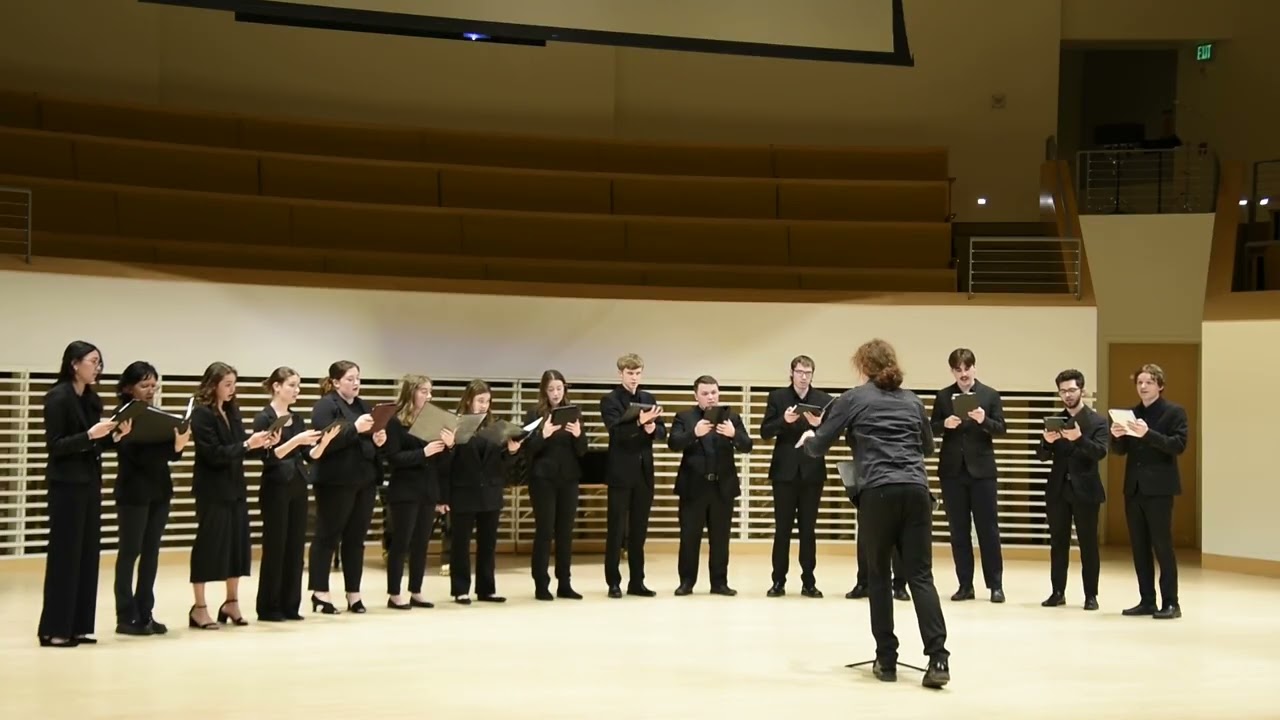
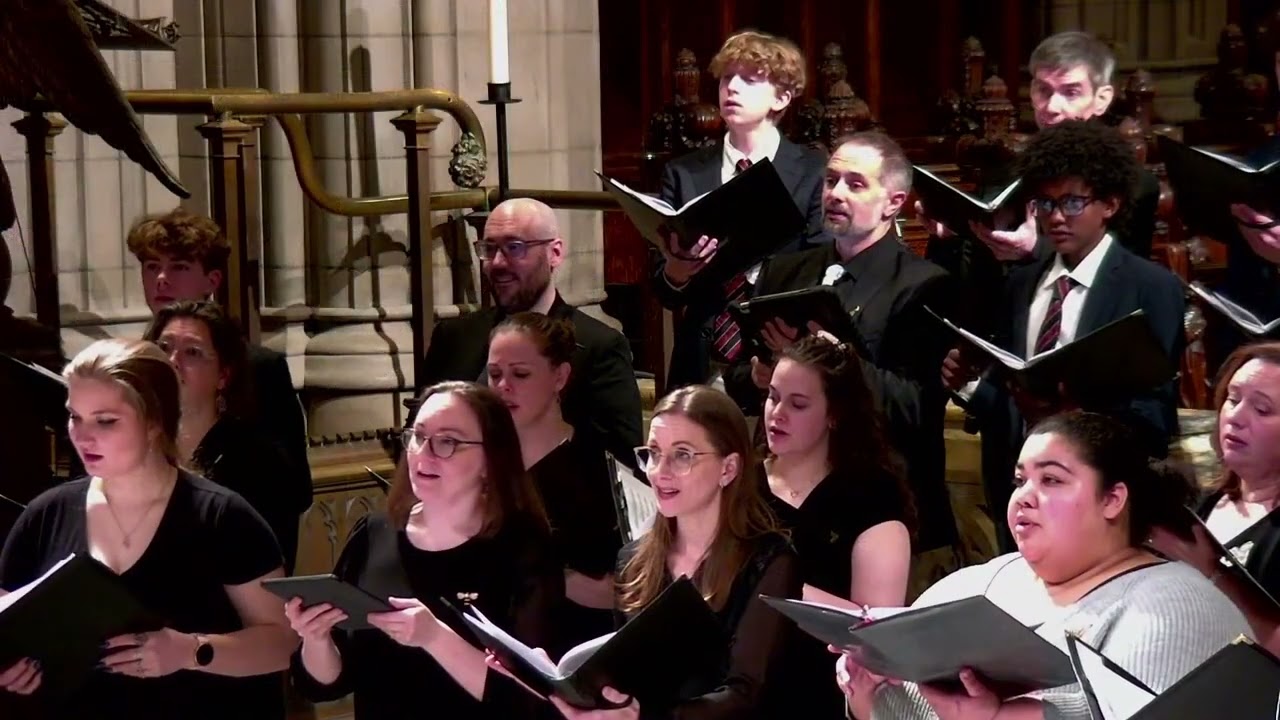
Lumina: When David Heard by Anna Stirling Pope, 2006 live performance, Adelaide Town Hall
Автор: LuminaVocalEnsemble
Загружено: 2025-05-24
Просмотров: 160
Описание:
Original 2004 composition by Anna Stirling Pope
Live performance by Lumina Vocal Ensemble conducted by Anna Pope in the Adelaide Town Hall 2006.
Performers: Alan McKie (soloist as David), Rachel Sag (solo)
Jenn Tranter, Saam Thorne, Beth Christian, Carolyn Wilkins, Nicola Hardie-Campbell
Elsie Mann, Penny Dally, Callie Wood, Skye Newton, Marjolijn Kindt, Rosemary Byron-Scott
Paul Talbot, David Watts, Tim Muecke, Bernard Mageean
Jeff Oates, Kenneth Pope, Chris Guntner, Matt Winefield, Graeme Burgan
Notes from the Anna Stirling Pope, composer, including text:
“When David Heard would have to be one of my favourite choral texts. There are many great settings by composers from Weelkes and Tomkins in the Renaissance to David Whitacre in the current day. Every setting bristles with emotion, building to the impassioned cry of a father in torment: ‘Would God, I had died for thee’.
“When I won an ArtSA grant to compose an extended choral work in 2004, I knew I wanted to write about this story. I wrote the words first, expanding on the traditional text to include more about David’s emotional struggle. Absalom was both his son and his enemy. David’s men killed Absalom to protect David. David’s loyalties are divided, and he cannot punish his men for doing what they thought was right. Thus, he must grieve in private – dealing with the crippling guilt and pain.
“The music flowed easily from the words, oscillating between dissonance and resolution as it paints the picture of a great man’s struggle. For most of the time, the choir is a ‘Greek chorus’ commenting on the action – telling the story. The role of David is played by a bass soloist, yet as the piece develops, the choir becomes less commentators and more involved in the emotional journey.
“The work starts by setting the scene, describing the time when David first hears the news, and his initial reaction as he weeps in his chamber.
When David heard Absalom, his son, was slain by his men
[‘Greek chorus’: The men of David killed David’s son]
Absalom my son, oh my son
[Beloved yet treacherous, seeking power, would overthrow his father [patricide] who loved him]
What loyalty? David’s men – loved the father, slew the son.
How David wept, wept in his room, his chamber over the gate. His cries rang out!
Such weeping, such pain: “Oh, my son!”
Desolation, guilt-written grief, mourning, despair and loneliness.
“Oh, my son Absalom. My son!
It is my spears which pierced you, lay the blame at my door,
it is not me who should forgive, but I who should seek forgiveness, my son”.
Then comes a fugue, depicting David’s strength and greatness. Reminding us that it wasn’t his role as King that made him great, nor even his fame as a warrior, but the fact that he was able to show emotion and forgiveness.
The great man, so great a man must feel great pain
The pain of loss, guilt, rage, loneliness. “Absalom, still my son”
Great pain for a great man, a man made greater still by his forgiveness, so great a man, he wept:
“Would God I had died for you, O God, I would have died for you, O Absalom my son.
The central portion of the work focuses on David’s regret that he is old (represented by mutterings and elaborations in triplets) contrasting with the youth of his son (straight quavers), the two patterns overlapping and intertwining to show his inner turmoil.
Absalom. I am old and yet I still live.
You were the future, my future, I am old. Now, the future is dead! Absalom!”
David wept, he wept, oh how he wept:
“Would God I’d died. O God! My God, my son Absalom!”
By the time we reach the soprano solo, the chorus have become invested in the tragedy and pathos of the story, eventually stepping back to allow David’s words of grief to come through.
Pierced with spears through his heart, jagged tears ripped his flesh open,
how can we bear to think on it?
His murderers, they flung his bleeding body into the pit,
then crushed his bones with piles of stones,
“For my sake, O Absalom! Absalom, my son”.
“How hard it is to bear the grief, yet harder still [still my son]
that I must hide it on my men [the grief, the pain]
lest they find me disloyal, lest I should show ingratitude.
My son, my enemy. My life, so different now.
My enemy is slain, yet never can I rejoice.
The bitterness of aloes fills my throat, it chokes me.”
Towards the end, the choir descends with David into madness and desolation, before finally emerging into a place of peace and resignation. Where all is resolved, or is it? The last notes we hear suggest otherwise, as two sopranos overlap to signal lingering conflict.
Thus, alone, David wept.
His dearly beloved son, Absalom, he never could hate,
Not his enemy, but his own son, his own guilt, his own pain, “O Absalom, Absalom!
Requiescat in pace..." [rest in peace]."
Purchase score here: https://www.luminavocal.com.au/produc...
Find other scores and CDs @luminavocal : https://luminavocal.com.au
Latest news: / luminavocal
Повторяем попытку...

Доступные форматы для скачивания:
Скачать видео
-
Информация по загрузке: